Tiger shrimp
Caridina mariae · also called Tiger shrimp, Caridina cf. cantonensis 'Tiger', Black tiger shrimp, Blue tiger shrimp
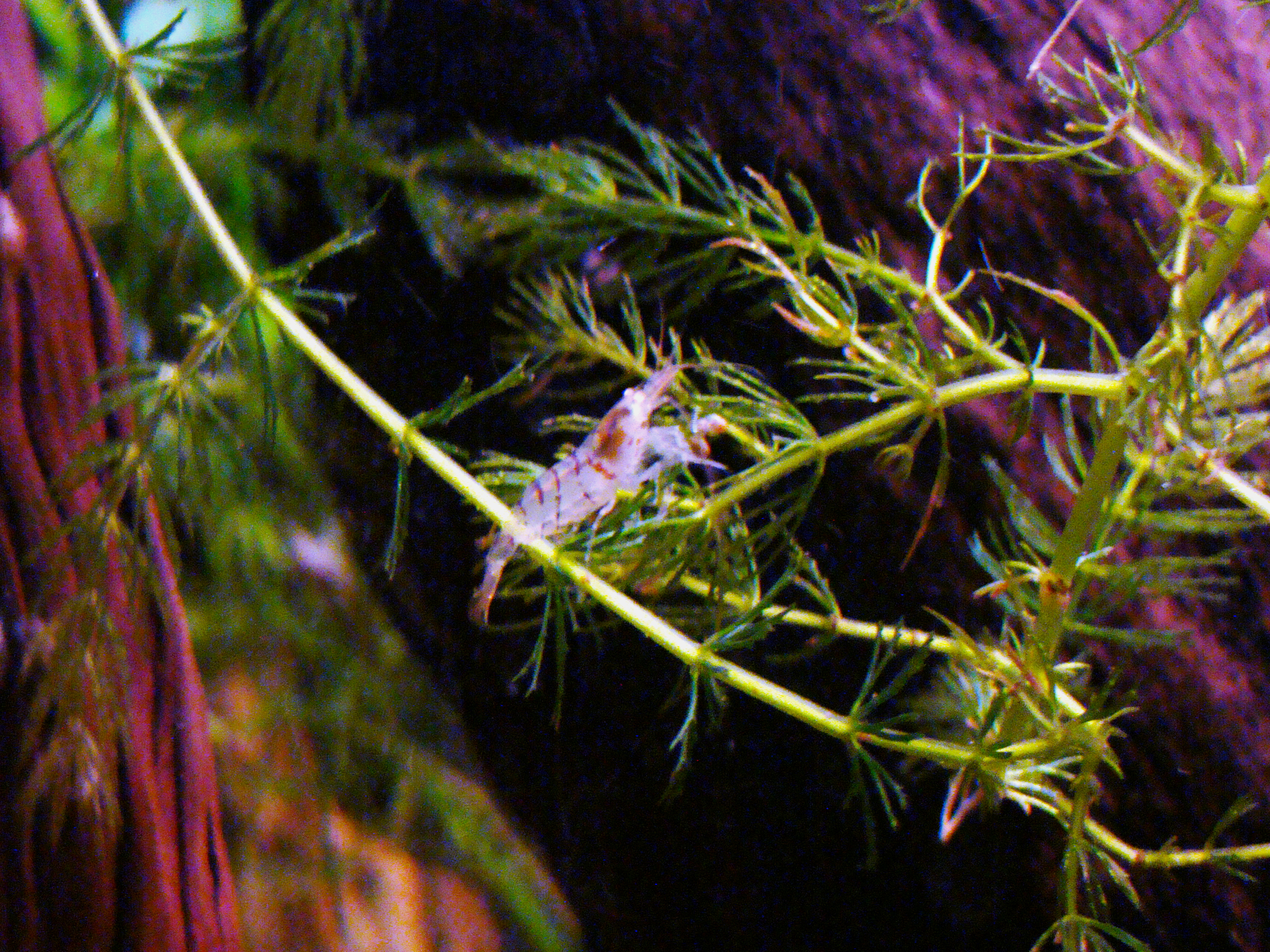
A translucent dwarf shrimp marked with dark vertical 'tiger' stripes and often an orange head, available in many selectively bred color forms. It is a soft-water Caridina that is a good step up from beginner Neocaridina once your water chemistry is dialed in.
🩺 Need expert help with your tiger shrimp?
Connect with a specialist near you or ask a licensed vet — never substitute online guidance for hands-on care in an emergency.
Quick facts
| Size | Dwarf; adults about 1-1.2 in (2.5-3 cm). |
| Lifespan | 1–2 years |
| Social needs | group |
| Native region | Southern China (selectively bred from wild Caridina populations) |
| Origin | Old World |
| Climate | ⛅ Subtropical |
| Water type | 💧 Freshwater |
| Family | Atyidae |
| Genus | Caridina |
Part of the Freshwater shrimp
Small atyid and palaemonid shrimp kept in planted aquariums as peaceful algae-grazers and colorful colony animals. Care ranges from beginner-friendly Neocaridina to demanding species like the Sulawesi shrimp that need precise, stable water chemistry.
Habitat & space requirements
From the minimum an animal needs to be kept humanely, up to the ideal setup. Bigger is almost always better — minimums are floors, not targets.
Life & growth stages
How this animal changes through its life — each stage often has its own care, diet and space needs.
Color & pattern variants
Natural variants occur in the wild; selectively bred (man-made) variants were developed in captivity.
representativeTangerine Tiger
A soft orange-tinted Caridina mariae form that is generally hardier and more water-tolerant than the high-grade selective lines.
Tip: The easiest tiger and a good gateway to Caridina — it tolerates a wider GH/TDS range than blue/black lines, so start here before attempting the demanding color morphs.
representativeRed Tiger / Red-eye Tiger →
The wild-type tiger pattern: translucent body with dark stripes and red eyes; the original form all selective lines descend from.
Tip: Hardiest of the tigers and the standard 'first Caridina' — keep them separate from orange-eye lines if you want to preserve OET stock, as crossing dilutes the orange eye.
representativeSuper Tiger (Caridina cantonensis 'Super Tiger') →
A heavily striped, larger-banded tiger form with bold black-on-amber stripes; named for its exaggerated 'super' striping.
Tip: Needs the same soft, acidic, stable water as bee/crystal shrimp — run remineralized RO over active aquasoil and avoid sudden water-change swings that trigger bad molts.
representativeBlack Tiger
Selectively bred line with an intense dark, near-black body and contrasting orange eyes; a popular high-grade tiger form.
Tip: The deep black holds best on dark substrate and stable soft water (TDS ~120-150, pH ~6.5-7.2); strong color is heritable, so cull pale individuals to keep the line dark.
representativeBlue Tiger
A line bred for blue body coloration with dark stripes and orange eyes; the blue intensity varies by grade.
Tip: Blue is fragile — it washes out under stress, bright light, or high TDS, so keep parameters rock-steady and lighting subdued to preserve the color you paid for.
representativeOrange-eye Tiger (OET)
Tigers selected for bright orange eyes, available in both blue-body and black-body versions; the orange eye is the defining heritable trait.
Tip: Orange eyes are recessive-leaning and easy to lose — keep an OET-only colony rather than mixing with red-eye tigers so the eye trait stays fixed.
representativeGalaxy Tiger / Fishbone Tiger →
A modern designer line crossing tiger genetics with high-grade bee shrimp to add white spotting ('galaxy') and fishbone-pattern legs; a premium collector hybrid.
Tip: Demanding and pricey — keep precise low-TDS soft water and a single dedicated tank; these complex hybrid lines throw variable offspring, so expect heavy culling to maintain the pattern.
representativeOrange-Eye Blue Tiger (OEBT) →
The most prized tiger: a deep blue body crossed with dark tiger stripes and bright orange eyes, combining the blue-tiger and orange-eye traits. Blue intensity ranges from pale 'royal blue' to near-black, and the orange eye is the defining recessive-leaning trait.
Tip: OEBT are far more demanding than tangerine or wild tigers: hold soft, stable low-TDS water and subdued lighting, since stress, bright light, or high TDS wash the blue toward grey. Keep an OEBT-only colony so the orange eye and blue body stay fixed.
Habitat & enclosure
Substrate
Equipment & setup
Diet
Behavior & temperament
Health
Tips, DIY & hacks
Sources
- The Shrimp Farm - Tiger Shrimp Care Guide (care guide)
- SeriouslyFish - Caridina mariae (database)
- Wikipedia: Tiger shrimp (wiki)