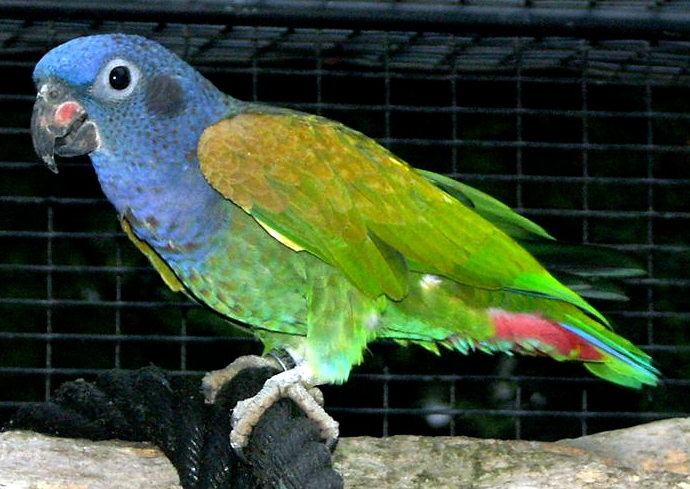
Photo: The original uploader was Yve5 at French Wikipedia . · CC BY-SA 2.5
A stocky, even-tempered medium parrot with a deep blue head and bronzy-green body, the blue-headed pionus is quieter and more laid-back than many parrots of similar size, making it a good choice for keepers wanting a companion bird with a calmer disposition.
ℹ️
Educational only. KinStation content is reviewed by licensed veterinarians but cannot replace an in-person exam. Always consult a licensed veterinarian or board-certified specialist for diagnosis, treatment, or any decision affecting your pet's health.
🩺 Need expert help with your blue-headed pionus?
Connect with a specialist near you or ask a licensed vet — never substitute online guidance for hands-on care in an emergency.
Medium parrot: about 27-28 cm (11 in) long, weight roughly 225-280 g; stocky build with a short, square tail.
Lifespan
25–40 years
Social needs
pair
Native region
Tropical Central and South America, from Costa Rica through Colombia, Venezuela, and the Guianas south into the Amazon B
Origin
New World
Climate
🌴 Tropical
Family
Psittacidae
Genus
Pionus
Part of the Small & Medium Parrots
Compact New World and African parrots prized as companion birds for their manageable size, character, and (often) quieter temperaments compared with macaws and large amazons. They still require daily interaction, enrichment, and species-appropriate diets.
From the minimum an animal needs to be kept humanely, up to the ideal setup. Bigger is almost always better — minimums are floors, not targets.
Photo coming soon
Minimum
Medium parrot cage + daily out time
30 × 24 × 36 in, ¾ in bar spacing
Blue-headed pionus are 11 in, stocky, mid-size parrots, quieter than conures or amazons. Cage 30 × 24 × 36 in with ¾ in bar spacing minimum, paired with 3+ hours daily out-of-cage time. Heat-stress sensitive — keep room below 30 °C and provide bath water.
Photo coming soon
Recommended
Flight cage + foraging stand
36 × 24 × 48 in + foraging play gym
A 36 × 24 × 48 in flight cage with varied natural perches, shreddable foraging toys, and an active gym. Pionus are calmer than amazons, less needy than conures — good middle-ground apartment parrot if they have flight and shower time.
Photo coming soon
Ideal
Aviary or paired bird-room
Walk-in aviary or bird-safe room, paired
A walk-in aviary or bird-safe room with mate or companion, branches, foraging stations, and frequent showers. Pionus 'pant' when stressed or overheated — large airy space and bathing reduce respiratory strain.
Life & growth stages
How this animal changes through its life — each stage often has its own care, diet and space needs.
Photo coming soon
Egg
Birds develop inside a hard-shelled egg incubated by the parent(s). Egg size, shell color, and clutch size vary by species; the embryo develops over days to weeks before hatching.
Photo coming soon
Hatchling / Chick
Hatchlings are either altricial — naked, blind, and dependent on parents (typical of parrots and songbirds) — or precocial — downy, mobile, and self-feeding soon after hatching (typical of poultry and waterfowl). Down gives way to the first feathers.
Photo coming soon
Juvenile / Fledgling
Fledglings grow in their juvenile plumage and begin to fly and feed themselves, though they may still beg from parents at first. Juvenile feathering is often duller than the adult and is replaced as the bird matures.
Adult
Adults attain full body size and mature plumage, and are capable of breeding. Many species show distinct adult coloration, and in sexually dimorphic birds males and females differ in plumage, size, or markings.
(c) emily18_, some rights reserved (CC BY-NC) via iNaturalist — https://www.inaturalist.org/observations/284364320
Color & pattern variants
Natural variants occur in the wild; selectively bred (man-made) variants were developed in captivity.
Natural
representative
Subspecies P. m. menstruus
The widespread nominate form with a deep blue head and neck, green body, and red undertail coverts (vent).
representative
Subspecies P. m. reichenowi
A regional form (eastern Brazil) showing variation in the extent of blue and breast coloration; differences are subtle and mainly of interest to specialists.
Habitat & enclosure
Provide a roomy cage of at least 60 x 75 x 90 cm (24 x 30 x 36 in) for a single bird, larger is better, with bar spacing around 1.6-2.2 cm (5/8-7/8 in). Pionus parrots are active fliers and benefit from horizontal space and daily out-of-cage exercise. Keep ambient temperatures around 18-29 C (65-85 F) and avoid drafts, smoke, and PTFE/Teflon fumes, which are lethal to birds. Offer 10-12 hours of dark, quiet sleep and full-spectrum lighting if natural light is limited. Pionus are prone to stress wheezing when overheated or excited, so good ventilation matters.
Substrate
Line the cage tray with plain newspaper, paper towel, or unprinted paper changed daily to monitor droppings and maintain hygiene. Avoid loose bedding such as corncob or walnut-shell, which can support mold and pose aspergillosis and ingestion risks.
Equipment & setup
Sturdy cage with secure latches, natural-wood perches of varying diameter, stainless steel bowls, a selection of destructible and foraging toys, a play stand for out-of-cage time, full-spectrum lighting, and a cage cover or dark sleep area. Provide bathing opportunities (shallow dish or gentle misting) to support feather condition.
Diet
Feed a quality formulated pellet as the dietary base (about 50-70%), supplemented with varied fresh vegetables, leafy greens, and modest amounts of fruit. Offer sprouts, cooked legumes, and a small portion of seed/nuts as foraging treats. Pionus tend toward obesity, so limit fatty seeds and nuts. Avoid avocado, chocolate, caffeine, alcohol, and salty/sugary foods. Provide fresh water daily.
Behavior & temperament
Generally gentle, mellow, and less nippy than many parrots, the blue-headed pionus often bonds closely but is typically less demanding of constant attention than macaws or conures. They are moderate in volume with a somewhat raspy or wheezy call and limited talking ability compared to amazons. When frightened or excited they may make a distinctive wheezing/hissing sound and emit a musky odor; this is normal and not illness. They can be kept singly with daily interaction or in compatible pairs.
Health
Watch for obesity, vitamin A deficiency from seed-heavy diets, aspergillosis (pionus are considered somewhat susceptible to fungal respiratory infections), psittacosis (zoonotic), and fatty liver disease. The normal stress wheeze should be distinguished from genuine respiratory distress; persistent labored breathing, tail-bobbing, or discharge warrants an avian vet. Annual checkups and a clean, well-ventilated environment reduce fungal risk.
Tips, DIY & hacks
Because pionus are prone to weight gain, emphasize foraging and flight exercise over rich treats. Their calmer nature suits households wanting a quieter parrot, but they still need daily engagement to stay tame and content. Introduce new foods and toys gradually, as pionus can be somewhat shy or neophobic. Source captive-bred, closed-banded birds. Maintain excellent ventilation and hygiene given their fungal-infection sensitivity.