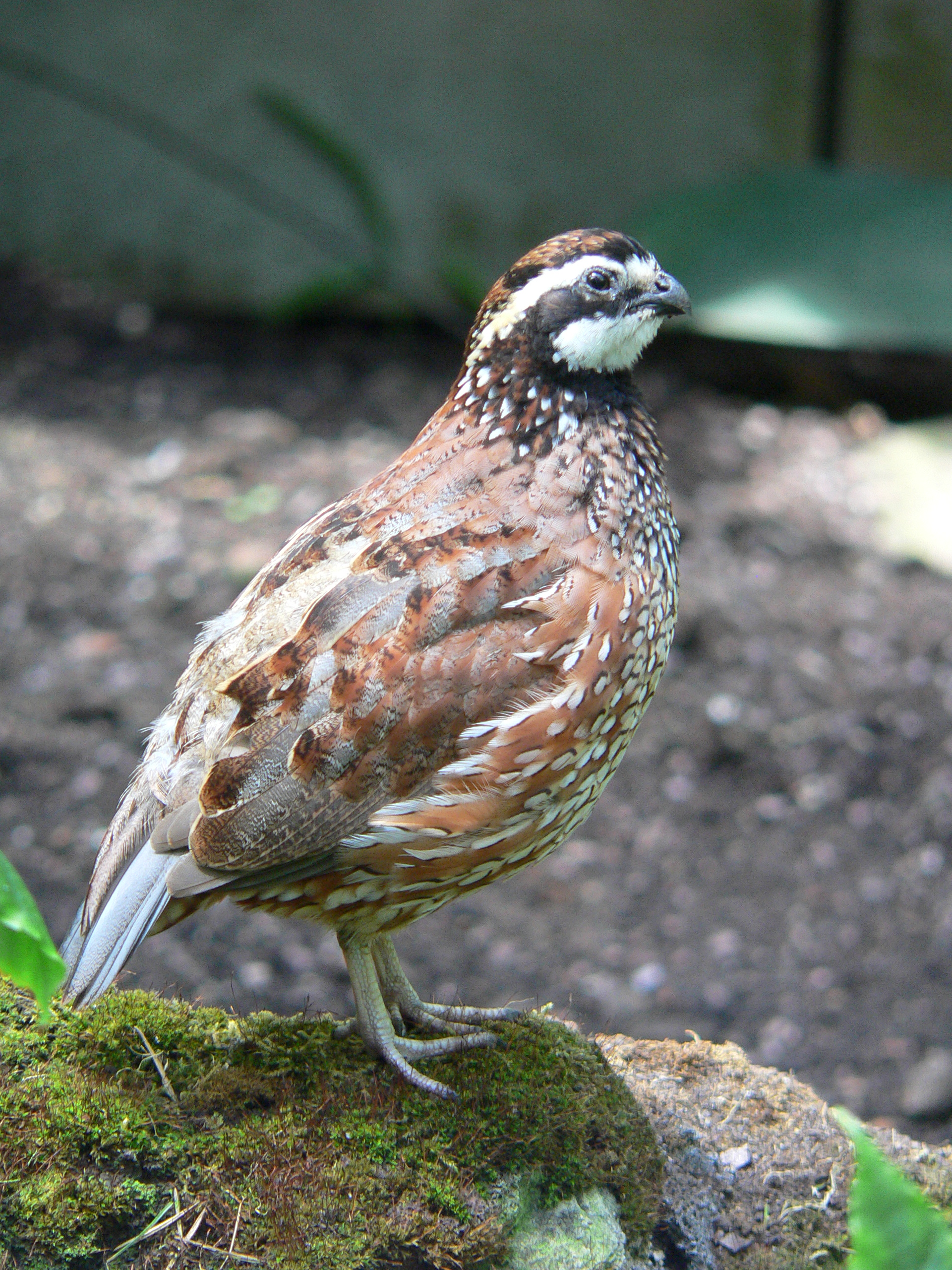
A native North American quail raised for release, hunting stock, conservation, and ornament. Flightier and more seasonal than coturnix, kept in covered ground pens with cover, and often regulated as a game species.
ℹ️
Educational only. KinStation content is reviewed by licensed veterinarians but cannot replace an in-person exam. Always consult a licensed veterinarian or board-certified specialist for diagnosis, treatment, or any decision affecting your pet's health.
🩺 Need expert help with your northern bobwhite?
Connect with a specialist near you or ask a licensed vet — never substitute online guidance for hands-on care in an emergency.
Small: ~150-200 g, ~24-28 cm long. Plump-bodied New World quail with a short tail.
Lifespan
2–5 years
Social needs
group
Native region
Eastern and central North America, south into Mexico
Origin
New World
Climate
🍂 Temperate
Family
Odontophoridae
Genus
Colinus
Part of the Quail
Small, ground-dwelling gamebirds kept for eggs, meat, and as space-efficient backyard poultry. Quick to mature and quiet, they suit urban and small-space keepers but flush vertically and need low, soft-topped housing.
From the minimum an animal needs to be kept humanely, up to the ideal setup. Bigger is almost always better — minimums are floors, not targets.
Photo coming soon
Minimum
Aviary + cover (per bird)
≈ 4 sq ft floor / bird
Northern bobwhites are small ground-dwelling New World quail that pair monogamously in spring. A welfare minimum is 4 sq ft of floor per bird in a covered aviary with dense ground cover, padded or low-flight-friendly ceiling, sand bath, hides, grit, calcium, and ½ in hardware cloth — they explode upwards when startled.
Photo coming soon
Recommended
Planted ground aviary
≈ 8 sq ft floor / bird, planted
An 8 sq ft per bird planted aviary with hides, sand bath, varied grasses, and a padded ceiling gives bobwhites room to forage, dust-bathe, and pair off. Provide insect protein, grit, calcium, and a winter draught-free shelter — they tolerate cold but hate damp.
Photo coming soon
Ideal
Bioactive native-habitat aviary
≈ 15+ sq ft floor / bird, planted
A 15+ sq ft per bird bioactive aviary planted with native grasses, brush piles, and a padded ceiling delivers welfare ideal for this declining native species. Single-pair or covey housing during breeding, ample insect forage, and a quiet retreat area — bobwhites are seasonal monogamists and need space to express full breeding behaviour.
Life & growth stages
How this animal changes through its life — each stage often has its own care, diet and space needs.
Photo coming soon
Egg
Birds develop inside a hard-shelled egg incubated by the parent(s). Egg size, shell color, and clutch size vary by species; the embryo develops over days to weeks before hatching.
Photo coming soon
Hatchling / Chick
Hatchlings are either altricial — naked, blind, and dependent on parents (typical of parrots and songbirds) — or precocial — downy, mobile, and self-feeding soon after hatching (typical of poultry and waterfowl). Down gives way to the first feathers.
Photo coming soon
Juvenile / Fledgling
Fledglings grow in their juvenile plumage and begin to fly and feed themselves, though they may still beg from parents at first. Juvenile feathering is often duller than the adult and is replaced as the bird matures.
Adult
Adults attain full body size and mature plumage, and are capable of breeding. Many species show distinct adult coloration, and in sexually dimorphic birds males and females differ in plumage, size, or markings.
(c) Laura Mae, some rights reserved (CC BY) via iNaturalist — https://www.inaturalist.org/observations/124242207
Color & pattern variants
Natural variants occur in the wild; selectively bred (man-made) variants were developed in captivity.
Bobwhites need **covered ground pens with plenty of low cover** and a **soft or low roof** because they **flush explosively** and injure their heads on hard ceilings. Provide **dense brush, grasses, or hides**, dry sheltered corners, and ample space — overcrowding triggers picking and cannibalism in this nervous species. They are **more seasonal and weather-sensitive** than coturnix; provide draft-free, dry winter shelter and shade in heat. As a native game species, they're prey to everything, so predator-proof all mesh and bury an apron. In the wild they form coveys; captive birds do best in stable groups with cover to retreat into.
Substrate
Use **natural ground with grass/brush cover** where possible, or **pine shavings, hemp, or sand** with added **hides and cover** in pens. Keep it dry and well-drained; damp ground breeds parasites. A **dust-bath** supports parasite control. Chick brooders need a **non-slip, dry surface**. Plentiful low cover (brush piles, conifer boughs, cover crops) reduces stress and picking in this easily-spooked species.
Equipment & setup
Provide a **covered ground pen with a soft/low roof**, **abundant cover and hides**, **feeders**, and **shallow/nipple waterers** (drown-proofed for the tiny chicks). A **brooder with heat plate/lamp** rears chicks; they need very steady warmth early. An **incubator** supports reliable hatches. **Anti-pick measures** are sometimes used in dense flight-conditioning pens, though cover and space are the better fix. Predator-proof mesh and buried apron are essential for this prey species.
Diet
Feed a **high-protein gamebird starter (~28-30%) for chicks**, stepping down to a gamebird breeder/maintenance ration (~20-24%) for adults. Provide **grit** and **oyster shell** for laying hens. They naturally eat seeds, insects, and greens. **Shallow, drown-proof water** is critical — bobwhite chicks are very tiny and drown easily. Clean water at all times. Avoid chicken layer feed, which is too low in protein for quail.
Behavior & temperament
Bobwhites are **shy, nervous, covey-forming gamebirds** — far less tame than coturnix and prone to **panic-flushing**. They are **seasonal breeders** (spring/summer) and pair off in the breeding season, when **males whistle the famous 'bob-WHITE' call** and can become territorial; outside breeding they covey up. They need lots of cover to feel secure or they pick at each other. Hens may sit in good conditions but captive breeding is often supported by incubation. They are best regarded as ornamental, conservation, or hunting-stock birds rather than handled pets.
Health
Nervous and prone to **stress-related feather-picking and cannibalism** when crowded or under-covered — space and cover are the key prevention. Other risks include **ulcerative enteritis ('quail disease')**, **coccidiosis**, **internal parasites** (cecal worms, gapeworm), and **head/wing trauma** from flushing. Chicks are extremely delicate (chilling, drowning, starving early). They can carry **avian influenza**; practice biosecurity. A gamebird-experienced vet is helpful. Minimizing disturbance and providing cover are central to keeping them healthy.
Tips, DIY & hacks
Bobwhites suit keepers interested in **native gamebirds, hunting-preserve stock, or conservation/release** more than hands-on pet-keeping — they stay wild and skittish. Give them **lots of cover and space** to prevent stress-picking, and **soft-topped pens** to avoid flush injuries. **Incubate eggs** for dependable hatches. Keep separate from chickens to reduce disease risk. **Check your state's wildlife regulations first** — as a native game species, many US states **require a game-bird breeder's, propagation, or possession permit** to keep, raise, or release bobwhites, and release is often regulated; rules vary by state.