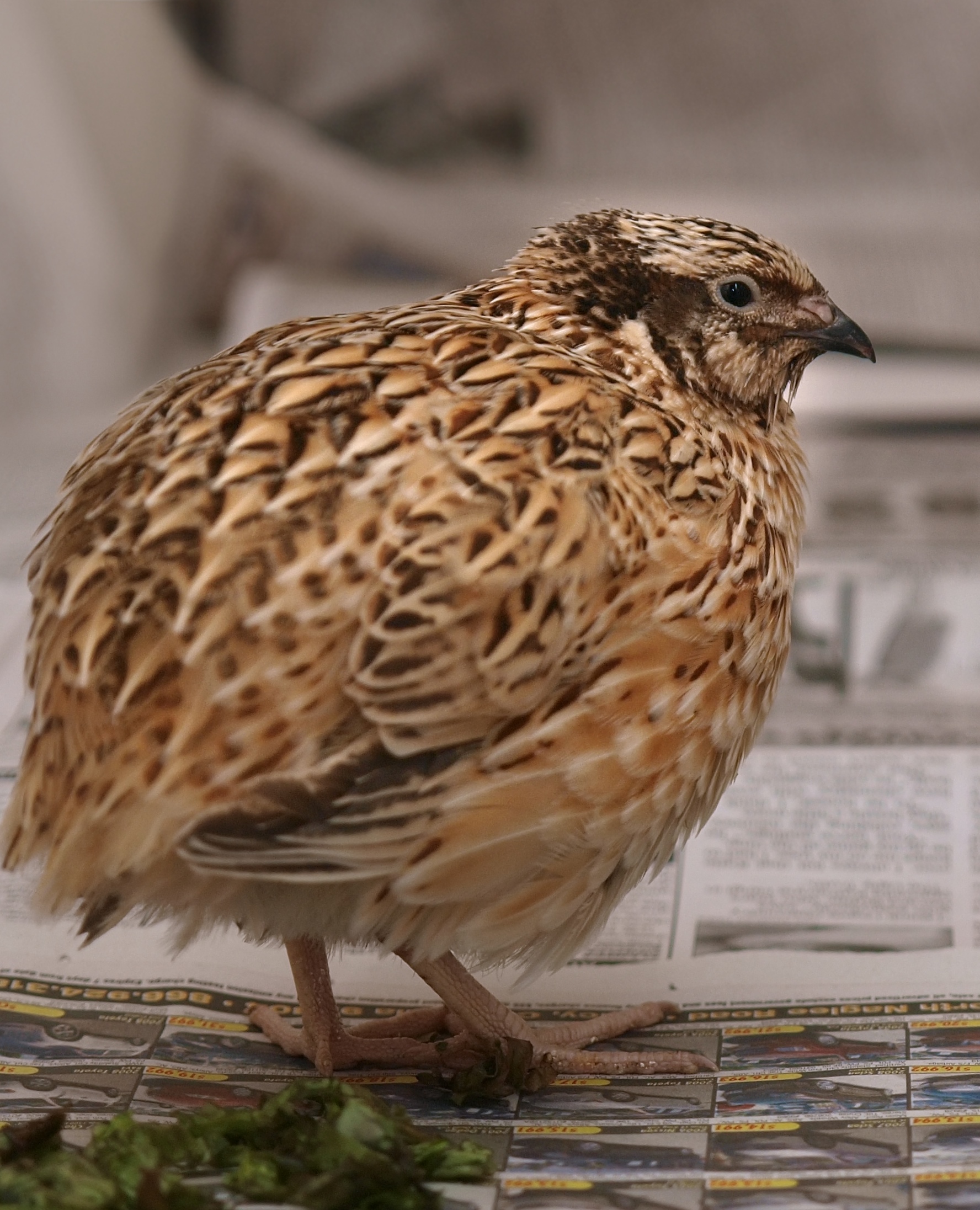
The fastest, most beginner-friendly poultry to raise — tiny quail that mature in six weeks and lay prolifically. Ideal for small spaces and urban keepers, raised for eggs, meat, and as low-maintenance ground birds.
ℹ️
Educational only. KinStation content is reviewed by licensed veterinarians but cannot replace an in-person exam. Always consult a licensed veterinarian or board-certified specialist for diagnosis, treatment, or any decision affecting your pet's health.
🩺 Need expert help with your coturnix quail?
Connect with a specialist near you or ask a licensed vet — never substitute online guidance for hands-on care in an emergency.
Tiny: ~120-300 g (jumbo strains larger). Compact, ground-dwelling, ~15-20 cm long.
Lifespan
2–4 years
Social needs
group
Native region
East Asia (domesticated from wild Japanese quail of Asia)
Origin
Old World
Climate
🍂 Temperate
Family
Phasianidae
Genus
Coturnix
Part of the Quail
Small, ground-dwelling gamebirds kept for eggs, meat, and as space-efficient backyard poultry. Quick to mature and quiet, they suit urban and small-space keepers but flush vertically and need low, soft-topped housing.
From the minimum an animal needs to be kept humanely, up to the ideal setup. Bigger is almost always better — minimums are floors, not targets.
Photo coming soon
Minimum
Cage with padded ceiling
1 sq ft per bird, ≤ 12 in tall + soft ceiling
Coturnix (Japanese) quail need 1 sq ft of floor per bird with a CEILING under 12 in OR a soft (mesh / fabric) ceiling — they flush vertically and break their necks on hard tops. One male per 3–5 hens to prevent over-mating injury. Provide sand for dust bathing.
Photo coming soon
Recommended
Aviary pen with cover
2 sq ft per bird in a 4×8 ft pen with low planted cover
A 4 × 8 ft aviary pen with low planted cover (grasses, brush), sand/dust-bath area, dim hiding nooks, and a soft mesh or fabric ceiling. More floor space and cover reduces fighting and feather-plucking. Provide daily fresh greens and grit.
Photo coming soon
Ideal
Naturalistic ground aviary
4+ sq ft per bird in a planted ground aviary, soft ceiling
A large ground-level aviary planted with native grasses, mulched dust-bath corners, hides, and a soft ceiling for safe vertical flushing. Closest to wild Japanese quail behavior; quail with cover and space rarely pluck and lay better. Predator-proof bottom essential.
Life & growth stages
How this animal changes through its life — each stage often has its own care, diet and space needs.
Photo coming soon
Egg
Birds develop inside a hard-shelled egg incubated by the parent(s). Egg size, shell color, and clutch size vary by species; the embryo develops over days to weeks before hatching.
Photo coming soon
Hatchling / Chick
Hatchlings are either altricial — naked, blind, and dependent on parents (typical of parrots and songbirds) — or precocial — downy, mobile, and self-feeding soon after hatching (typical of poultry and waterfowl). Down gives way to the first feathers.
Photo coming soon
Juvenile / Fledgling
Fledglings grow in their juvenile plumage and begin to fly and feed themselves, though they may still beg from parents at first. Juvenile feathering is often duller than the adult and is replaced as the bird matures.
Adult
Adults attain full body size and mature plumage, and are capable of breeding. Many species show distinct adult coloration, and in sexually dimorphic birds males and females differ in plumage, size, or markings.
(c) te0006, some rights reserved (CC BY-NC) via iNaturalist — https://www.inaturalist.org/observations/180241989
Color & pattern variants
Natural variants occur in the wild; selectively bred (man-made) variants were developed in captivity.
Coturnix are kept **on the ground or in low cages**, not high coops — they are floor-dwellers that **flush straight up when startled** and can hurt their heads, so use a **low ceiling (~30 cm) or a padded/soft top**. Allow roughly **0.09 m² (1 sq ft) per bird** as a minimum, more is better; overcrowding causes pecking. Provide **dense low cover or hides**, a **dust-bath**, and shelter from drafts, rain, and predators (they're prey for nearly everything — secure all mesh). Many keepers house them in **rabbit-hutch-style ground pens** or **wire battery cages**; ground pens are kinder but need parasite/cleaning management. They tolerate cold if dry and draft-free, and need shade in heat.
Substrate
For ground pens use **pine shavings, hemp, or sand**, kept dry and spot-cleaned often (quail are messy and ammonia builds fast in small spaces). Wire-floor cages keep birds cleaner but need a **resting mat** to prevent foot sores — bare wire long-term causes bumblefoot. Provide a **sand/dust-bath box** for parasite control. Avoid cedar. Keep bedding dry to control smell and disease.
Equipment & setup
Use a **low-topped ground pen or cage** with a **soft or padded ceiling**, **shallow or nipple waterers** (drown-proofed for chicks), **feeders**, **hides**, and a **dust-bath**. An **incubator** is needed since hens won't sit. Chicks need a **brooder with a heat plate/lamp** and shallow, marble-filled water. A **light timer** (~14-16 hrs) keeps hens laying. In cold climates, dry bedding and a draft-free pen suffice; in heat, shade and extra water are vital.
Diet
Feed a **high-protein gamebird/turkey starter (~24-30% protein)** — quail need far more protein than chickens, and standard chicken layer feed is inadequate for them. Adults can move to a gamebird breeder/maintenance feed (~20-24%) with added **calcium (oyster shell or in-feed)** for the prolific layers. Provide **fine grit**. **Clean water in shallow or nipple drinkers** at all times — chicks drown easily, so use marbles or pebbles in shallow dishes. They eat insects and seeds too. Good protein and calcium keep their heavy egg output healthy.
Behavior & temperament
Coturnix are **social, busy ground-foragers** kept in groups, but **males can be aggressive and over-mate hens**, causing bald backs and injuries — keep a **low ratio (about 1 male to 4-6 hens)** or keep hens alone (they lay without a male). They **flush vertically** when startled and panic-launch into ceilings, so low/soft tops are essential. They're not especially cuddly but are calm and easy to handle gently. Hens rarely go broody in captivity (the broodiness was bred out), so eggs are incubated artificially. They dust-bathe enthusiastically.
Health
Generally healthy and short-lived; main issues are **head injuries** from flushing, **over-mating injuries** from too many males, **ulcerative enteritis ('quail disease')**, **coccidiosis**, internal parasites, and **vent/egg-laying problems** in the hard-laying hens (ensure adequate calcium). Crowding causes **feather-picking and cannibalism**. Chicks are tiny and fragile — keep them very warm and prevent drowning. They can carry **avian influenza**; basic biosecurity applies. An avian vet helps, though their short lifespan and small size limit treatment options.
Tips, DIY & hacks
Coturnix are the **ideal beginner and urban poultry**: quiet, tiny, mature in ~6-8 weeks, and lay almost daily on **24-28% protein gamebird feed**. Keep a **low male-to-female ratio** (or all hens) to prevent over-mating and noise. Use a **low soft-topped pen** so panic-flushing doesn't cause head injuries, and **incubate eggs** (broodiness is bred out). Add a **dust bath** and keep bedding dry to control odor in small spaces. They're widely **legal even where chickens are restricted**, but always check local ordinances. Jumbo strains give bigger eggs and meat.