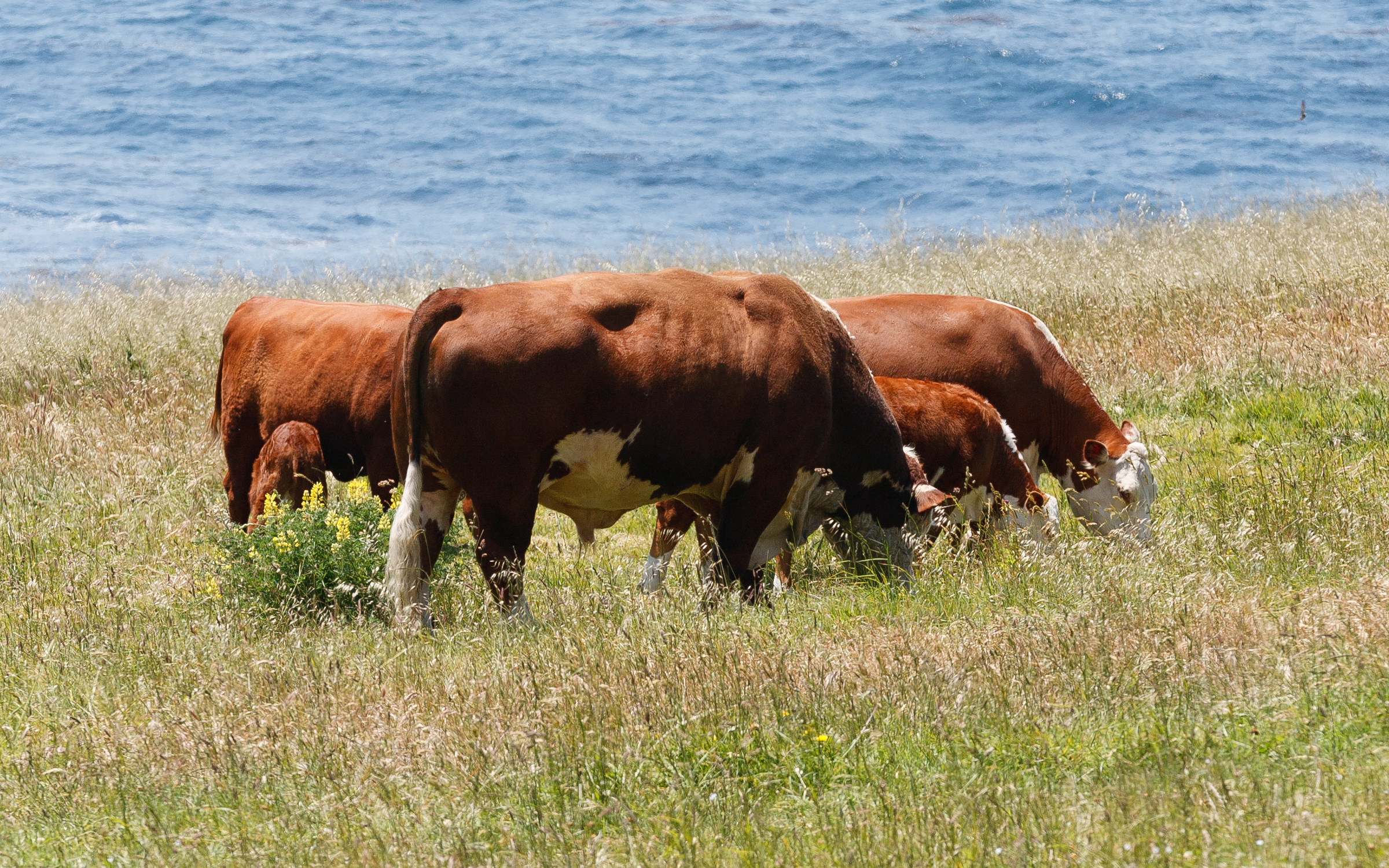
Cattle are large, social grazing ruminants kept for milk, beef, draft, and increasingly as gentle homestead companions (especially miniature breeds). They need substantial pasture or hay, water, sturdy fencing and handling facilities, and herd companionship; their size demands respect and safe handling, particularly with bulls.
ℹ️
Educational only. KinStation content is reviewed by licensed veterinarians but cannot replace an in-person exam. Always consult a licensed veterinarian or board-certified specialist for diagnosis, treatment, or any decision affecting your pet's health.
🩺 Need expert help with your cattle?
Connect with a specialist near you or ask a licensed vet — never substitute online guidance for hands-on care in an emergency.
Large: standard cows 1,000-1,500 lb and bulls 1,800-2,400+ lb; miniature cattle breeds run roughly 500-700 lb and stand under 42-48 in at the hip.
Lifespan
15–22 years
Social needs
group
Native region
Near East / Eurasia (domesticated from the now-extinct wild aurochs)
Origin
Old World
Climate
🌍 Varied
Family
Bovidae
Genus
Bos
Part of the Cattle
Domestic cattle kept for milk, beef, draft, and as gentle homestead companions — from full-size dairy and beef breeds to miniature Dexters and Highlands. Large, social grazing ruminants that need pasture, herd company, safe handling facilities, and respect for their size.
From the minimum an animal needs to be kept humanely, up to the ideal setup. Bigger is almost always better — minimums are floors, not targets.
Photo coming soon
Minimum
Herd-mate + improved pasture
1.5–2 ac per head on improved pasture + shade + water
Cattle are herd animals — never keep one alone. Improved pasture at 1.5–2 ac per head, year-round shade, an unlimited clean water source, mineral block, and a windbreak or 3-sided shelter for weather. Sturdy perimeter fence.
Photo coming soon
Recommended
Rotational pasture + calving shelter
2–5 ac per head, rotated + barn for calving
Rotate across 3+ paddocks for forage and parasite management. Provide a windbreak or barn for calving, free-choice minerals, clean water, and a working chute for vet/hoof work and tagging.
Photo coming soon
Ideal
Managed pasture + working facilities
Managed rotation, chute, calving barn, herd-mates
Large managed pasture rotation with proper working chute, calving barn, herd companions, and a scheduled vet, hoof, and parasite program. Cattle cover dairy, beef, and dual-purpose breeds — all are large herd grazers with substantial pasture, water, and shelter needs.
Life & growth stages
How this animal changes through its life — each stage often has its own care, diet and space needs.
Photo coming soon
Newborn
Newborn mammals are nursed on their mother's milk. Many are born helpless — blind, deaf, and sparsely furred (altricial, as in dogs, cats, and rodents) — while others stand and follow within hours (precocial, as in hoofed livestock).
Photo coming soon
Juvenile
After weaning, juveniles grow quickly and become increasingly active, playful, and independent. Adult coat, proportions, and (in many species) the permanent teeth come in as they approach full size.
Photo coming soon
Adult
Adults reach full body size and sexual maturity, with the species' mature coat and build. Sexual dimorphism — differences in size, mane, horns, or markings — is pronounced in some mammals and subtle in others.
Senior
Senior animals show aging signs such as graying fur, reduced activity, and a greater need for veterinary monitoring of joints, teeth, and organ function. Lifespan and the onset of old age vary widely by species and size.
Color & pattern variants
Natural variants occur in the wild; selectively bred (man-made) variants were developed in captivity.
Cattle are pasture grazers that need significant land — a common rule of thumb is roughly **1.5-2 acres of good pasture per standard cow-calf pair** (far less for miniatures, far more on poor ground), plus stored hay for winter and drought. Provide a windbreak, shade trees or a three-sided shelter, and a dry loafing area; cattle are cold-hardy with shelter but suffer in heat and need shade and ample water. Fencing must be strong — woven wire, multi-strand barbed or high-tensile electric, or board fence at appropriate height — because a determined or spooked cow goes through weak fence. Critically, you also need a **handling system** (a corral, alley/chute, and head gate or at minimum a small catch pen) to safely restrain a 1,000+ lb animal for vet work, hoof trims, and loading. Mud management around feeders and water keeps feet and udders healthy.
Substrate
On pasture, the 'substrate' is well-drained sod; rotate grazing to avoid pugging and parasite buildup, and keep high-traffic areas (gates, feeders, water) from turning into deep mud, which causes foot rot and lameness. Bedded shelters and calving pens use clean, dry **straw**; corn stalks, wood shavings, or sand are also used (sand bedding is popular in dairy free-stalls for udder health). A **deep-bedded pack** in a loafing shed keeps cattle clean and warm in winter and composts afterward. The key principle across all systems is keeping cattle dry underfoot and out of accumulated manure to protect feet, udders, and respiratory health.
Equipment & setup
Essentials scale with the animal's size: strong perimeter fencing, water troughs (heated or with a tank de-icer in freezing climates), a hay feeder/ring to cut waste, a shade/shelter structure, and a **free-choice mineral feeder**. The non-negotiable for safety is a **handling system** — a catch pen, alley, and head gate/chute — so you can restrain cattle for vaccinations, hoof trims, AI/pregnancy checks, and loading without danger. Add a livestock scale or weight tape, hoof-care tools (often a professional trimmer for big cattle), ID ear tags, halters for tame/show animals, and for dairy a milking setup. A stock trailer and a relationship with a bovine vet round out a working setup.
Diet
Cattle are **grazing ruminants** whose diet is built on forage: pasture grass in season and **grass or grass/legume hay** (and/or silage) when grazing is short. Provide **free-choice cattle minerals** (a loose mix or mineral block, region-specific for selenium, copper, and other needs) and unlimited clean water — a lactating dairy cow can drink 30+ gallons a day. Grain/concentrate is used to finish beef cattle and support high-producing dairy cows but isn't necessary for pet or low-production cattle and can cause acidosis and bloat if introduced carelessly. Watch for **bloat** on lush legume (clover/alfalfa) pasture and grass tetany (low magnesium) on fast spring grass; manage transitions gradually. Keep cattle away from toxic plants (yew, wilted cherry leaves, nitrate-accumulating weeds) and moldy feed.
Behavior & temperament
Cattle are social herd animals with a strong dominance hierarchy and a wide flight zone; they feel secure in a group and stressed when alone, so keep at least two. They are creatures of routine, have good memories, and can become genuinely tame and affectionate — hand-raised and miniature cattle often act like big, friendly dogs — but their **sheer size and strength make safe, low-stress handling essential**. Use their flight zone and 'point of balance' to move them calmly (the Temple-Grandin approach); never trap yourself against a fence with an animal. **Bulls are dangerous** and account for many livestock-related human injuries and deaths; most small keepers run steers (castrated) or cows and avoid keeping a bull. Cows are protective mothers around newborn calves. Cattle low-stress-handle best when they trust a consistent, quiet handler.
Health
Work with a large-animal vet for a vaccination and health plan (commonly clostridial 'blackleg'/7- or 8-way, respiratory, and reproductive vaccines depending on region and use). Routine care includes **hoof trimming**, parasite control (internal worms, lice, and in many regions fly and tick control), and body-condition monitoring. Major concerns: bloat, grass tetany, milk fever and ketosis around calving in dairy cows, respiratory disease ('shipping fever'), mastitis in milkers, foot rot, and pinkeye. Calving can require assistance, so know the signs of dystocia and have a vet on call. Many regions legally require **disease testing and ID** (e.g., brucellosis, tuberculosis testing, and official ear-tag/EID identification) for movement and sale — check your state/national rules.
Tips, DIY & hacks
Never keep just one cow — cattle are herd animals and a single animal is stressed and harder to handle. **Skip the bull** unless you're seriously breeding; keep steers or cows for safety. Invest early in a simple **handling facility** (even a sturdy catch pen and head gate); trying to doctor or load an unrestrained 1,000-lb animal is how people get hurt. Learn low-stress stockmanship — working the flight zone calmly beats chasing every time. **Miniature breeds** (Dexter, miniature Hereford, mini Highland/Zebu) are popular for small acreages: they eat less, are easier to handle, and fit hobby-farm budgets, but they're still strong animals that need fencing and minerals. Manage bloat and grass tetany risk on lush pasture, and check your local ID/testing requirements before buying or moving cattle.