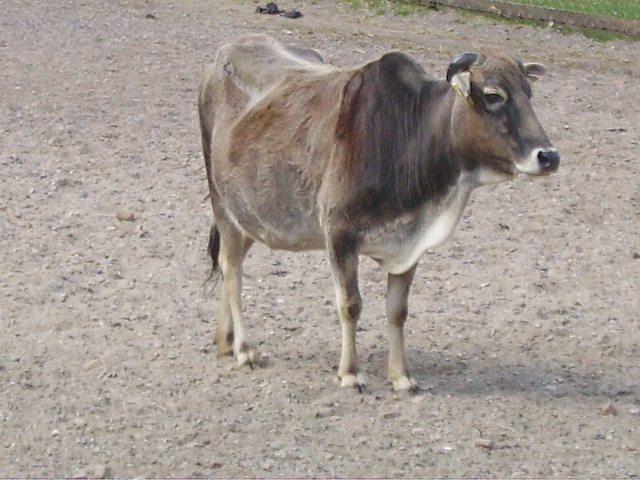
The miniature zebu is a small, naturally compact humped (Bos indicus) breed prized as a hardy, heat-tolerant, and unusually tame homestead and companion bovine. Their small size and gentle, dog-like temperament make them one of the most manageable cattle to keep, though they're still herd animals needing companionship, fencing, and ruminant care. (Zebu taxonomy is debated: some authorities treat it as the species Bos indicus, others as the subspecies Bos taurus indicus.)
ℹ️
Educational only. KinStation content is reviewed by licensed veterinarians but cannot replace an in-person exam. Always consult a licensed veterinarian or board-certified specialist for diagnosis, treatment, or any decision affecting your pet's health.
🩺 Need expert help with your miniature zebu?
Connect with a specialist near you or ask a licensed vet — never substitute online guidance for hands-on care in an emergency.
Small: stands roughly 36-42 in (under 42 in at maturity to qualify as miniature) and typically weighs 300-500 lb, much smaller than standard cattle.
Lifespan
18–22 years
Social needs
group
Native region
South Asia (Bos indicus humped cattle; the miniature type associated with the Indian subcontinent/Sri Lanka)
Origin
Old World
Climate
⛅ Subtropical
Family
Bovidae
Genus
Bos
Part of the Cattle
Domestic cattle kept for milk, beef, draft, and as gentle homestead companions — from full-size dairy and beef breeds to miniature Dexters and Highlands. Large, social grazing ruminants that need pasture, herd company, safe handling facilities, and respect for their size.
From the minimum an animal needs to be kept humanely, up to the ideal setup. Bigger is almost always better — minimums are floors, not targets.
Photo coming soon
Minimum
Pair + paddock + shed
0.5 ac per cow + 3-sided shed + companion cattle
Miniature zebus are small humped cattle but still herd animals. Welfare floor: pair + dry paddock + shelter + clean water.
Photo coming soon
Recommended
Rotational pasture
1 ac per cow + barn + rotation
Rotational grazing + barn for calving/handling + minerals + parasite + vaccination schedule.
Photo coming soon
Ideal
Managed pasture + herd
2+ ac per cow + barn + chute + herd
Acreage + working chute for handling + herd companions. Zebus tolerate heat and humidity better than Bos taurus breeds.
Life & growth stages
How this animal changes through its life — each stage often has its own care, diet and space needs.
Photo coming soon
Newborn
Newborn mammals are nursed on their mother's milk. Many are born helpless — blind, deaf, and sparsely furred (altricial, as in dogs, cats, and rodents) — while others stand and follow within hours (precocial, as in hoofed livestock).
Photo coming soon
Juvenile
After weaning, juveniles grow quickly and become increasingly active, playful, and independent. Adult coat, proportions, and (in many species) the permanent teeth come in as they approach full size.
Photo coming soon
Adult
Adults reach full body size and sexual maturity, with the species' mature coat and build. Sexual dimorphism — differences in size, mane, horns, or markings — is pronounced in some mammals and subtle in others.
Senior
Senior animals show aging signs such as graying fur, reduced activity, and a greater need for veterinary monitoring of joints, teeth, and organ function. Lifespan and the onset of old age vary widely by species and size.
Color & pattern variants
Natural variants occur in the wild; selectively bred (man-made) variants were developed in captivity.
Being far smaller than standard cattle, miniature zebu need correspondingly less land — a small herd does well on a modest pasture with a shade/shelter structure and a dry loafing area, though they still require room to graze and exercise. They are exceptionally **heat- and humidity-tolerant** (a Bos indicus trait — loose skin, the hump, and sweat-gland adaptations) and handle Southern/tropical climates that standard cattle struggle in, but they are **less cold-hardy** and need a draft-free, well-bedded shelter and possibly extra feed and protection in hard winters. Fence as you would any cattle (woven wire or electric); their smaller size means fencing can be lighter than for full-size cattle, but they're agile and a sturdy catch pen for handling is still essential. Provide shade and ample water in summer.
Substrate
On pasture, well-drained sod with rotational grazing keeps feet healthy and parasites down; keep gates, feeders, and water areas from becoming deep mud. Bed shelters and calving areas with clean, dry **straw** (extra bedding matters more for cold-sensitive zebu in winter); wood shavings or a deep-litter pack also work for a warm, dry sleeping area. The principle is the same as for standard cattle — keep them dry underfoot and out of accumulated manure to protect hooves and udders — but their smaller size makes bedding and clean-out far less labor-intensive than for big cattle.
Equipment & setup
A scaled-down cattle setup: pasture fencing (woven wire or electric), a shade/shelter structure with good bedding for winter, water troughs (heated in freezing climates), a hay feeder, and a **free-choice mineral feeder**. A small **handling/catch pen with a head gate** sized for miniatures makes vet work, hoof trims, and loading safe and easy — a major appeal of the breed is that their small size makes handling facilities cheaper and less intimidating than for full cattle. Add halters for the (usually very tame) animals, hoof-care tools, ID tags, and a relationship with a bovine vet. A standard livestock or even horse trailer transports them easily.
Diet
Miniature zebu are **grazing ruminants** fed like other cattle but in much smaller quantities: good pasture in season and **grass hay** when grazing is short, with **free-choice cattle minerals** and unlimited clean water. Their efficient metabolism (an adaptation to lean tropical environments) means they're **easy keepers prone to obesity** — they need very little or no grain, and overfeeding rich feed or unlimited high-energy hay leads to overweight animals with joint and metabolic strain. Provide a region-appropriate loose mineral (selenium/copper as needed). Manage bloat risk on lush legume pasture and introduce any concentrate slowly. Body-condition-score regularly and adjust forage to keep them trim.
Behavior & temperament
Miniature zebu are renowned for a **calm, friendly, almost dog-like temperament** — well-socialized and bottle-raised animals halter-train easily, follow their owners, and are common at petting farms and as 4-H/companion cattle. They are intelligent, curious, and social herd animals that must have a companion (another zebu or compatible bovine) to thrive. Despite small size they are still cattle: they have horns (most zebu are horned), can be protective around calves, and **intact bulls still carry bull behavior and should be handled with caution** — most keepers run cows and steers. Their manageable scale plus mild disposition makes them one of the easiest cattle for first-time or hobby keepers to handle safely.
Health
Care mirrors other cattle, scaled to their size: a vet-guided vaccination plan (clostridial/blackleg and region-appropriate vaccines), **hoof trimming**, parasite control, and body-condition monitoring with special attention to **preventing obesity**. They are hardy and long-lived (often 20+ years) and notably parasite- and heat-resilient, but watch the usual ruminant concerns — bloat, foot rot in muddy conditions, and calving difficulty (their small pelvis can mean dystocia, especially in heifers or if bred to oversized sires, so breed carefully). Provide cold-weather shelter and extra feed in winter, since their tropical origins make them less cold-tolerant. As with all cattle, check local **ID and disease-testing requirements** for movement and sale.
Tips, DIY & hacks
Miniature zebu are one of the best 'gateway' cattle for hobby farms — small enough to handle, gentle, long-lived, and striking. **Buy registered, truly miniature stock** (height-verified under the breed standard) from reputable breeders, since 'mini' is sometimes loosely applied. Keep at least **two** — they're herd animals. Watch their weight: they're such easy keepers that obesity is the main husbandry mistake, so go light on grain and rich hay. Bottle-raise or heavily socialize calves for the friendliest, most halter-trainable adults. Provide **extra winter shelter and feed** in cold climates, as their tropical Bos indicus heritage makes them less cold-hardy than European breeds. Breed cautiously to avoid calving problems in such a small-framed animal, and run steers/cows rather than a bull for a low-risk companion herd.