The world's most common domestic bird, kept for eggs, meat, and as engaging backyard pets. Hardy, social flock animals that are forgiving for first-time poultry keepers but need predator-proof housing and a companion or two.
ℹ️
Educational only. KinStation content is reviewed by licensed veterinarians but cannot replace an in-person exam. Always consult a licensed veterinarian or board-certified specialist for diagnosis, treatment, or any decision affecting your pet's health.
🩺 Need expert help with your chicken?
Connect with a specialist near you or ask a licensed vet — never substitute online guidance for hands-on care in an emergency.
Bantams ~0.5-1 kg; standard breeds 2-4.5 kg, 30-45 cm tall. Roosters larger than hens.
Lifespan
5–10 years
Social needs
group
Native region
Southeast Asia (descended from the red junglefowl)
Origin
Old World
Climate
🌍 Varied
Family
Phasianidae
Genus
Gallus
Part of the Chickens
Domestic fowl descended from the Southeast Asian red junglefowl, kept worldwide for eggs, meat, and companionship. Hardy, social, and available in hundreds of breeds from tiny bantams to large dual-purpose birds.
More chickens coming soon.
Habitat & space requirements
From the minimum an animal needs to be kept humanely, up to the ideal setup. Bigger is almost always better — minimums are floors, not targets.
Minimum
Standard backyard coop + run
4 sq ft coop + 10 sq ft run per bird
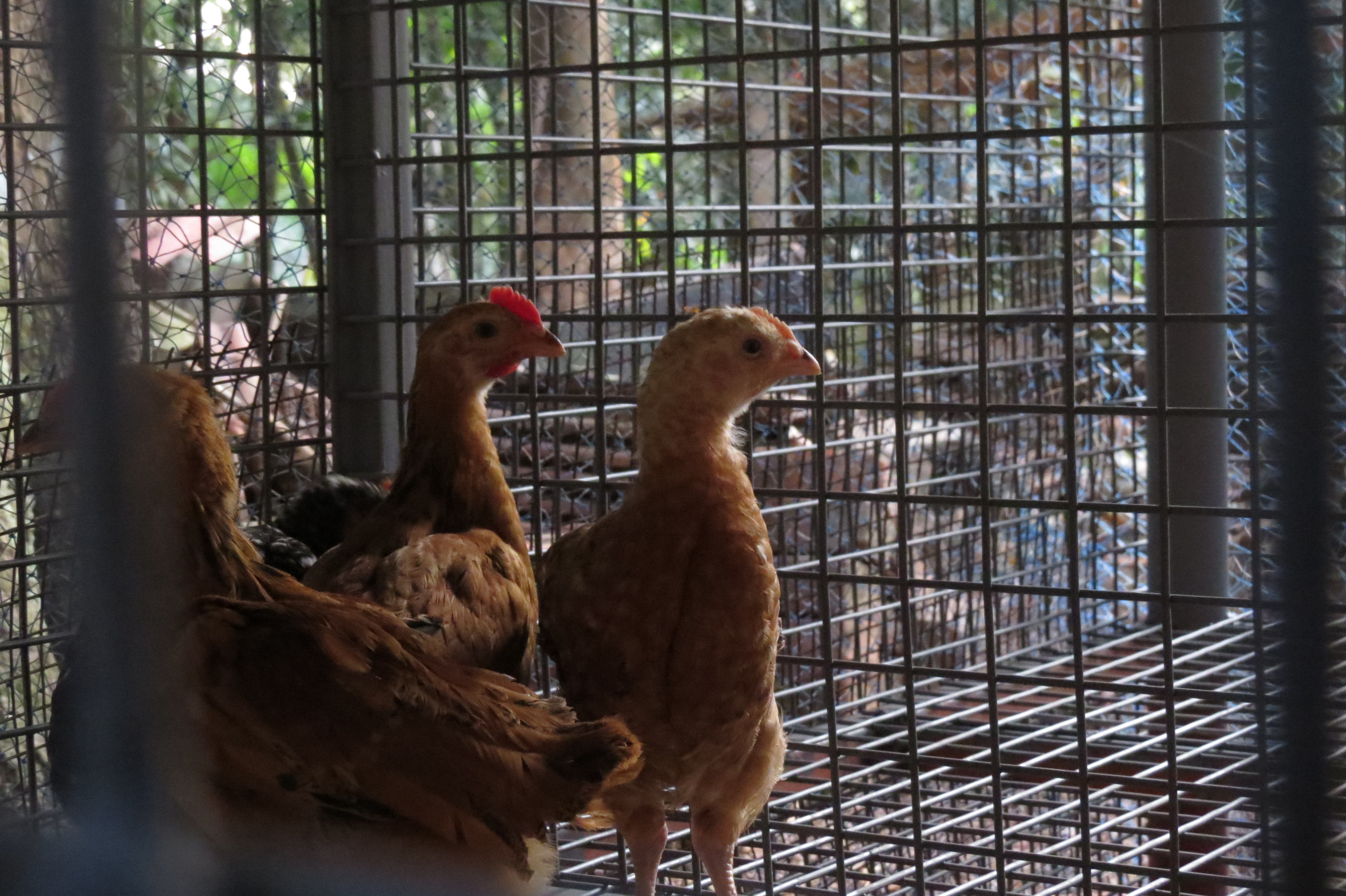
For a generic domestic chicken (Gallus gallus domesticus), the welfare-floor backyard standard is 4 sq ft of coop floor per bird, 10 sq ft of secure outdoor run, one nest box per 4 hens, a 2 ft roost, and predator-proof hardware-cloth fencing. Smaller bantams can go to ~2/4 sq ft; broiler/heavy breeds need ~5/15.
Varghese K James / CC BY-SA 4.0 (Wikimedia Commons)
Recommended
Walk-in coop + covered run
5 sq ft coop + 15 sq ft covered run per bird + dust bath
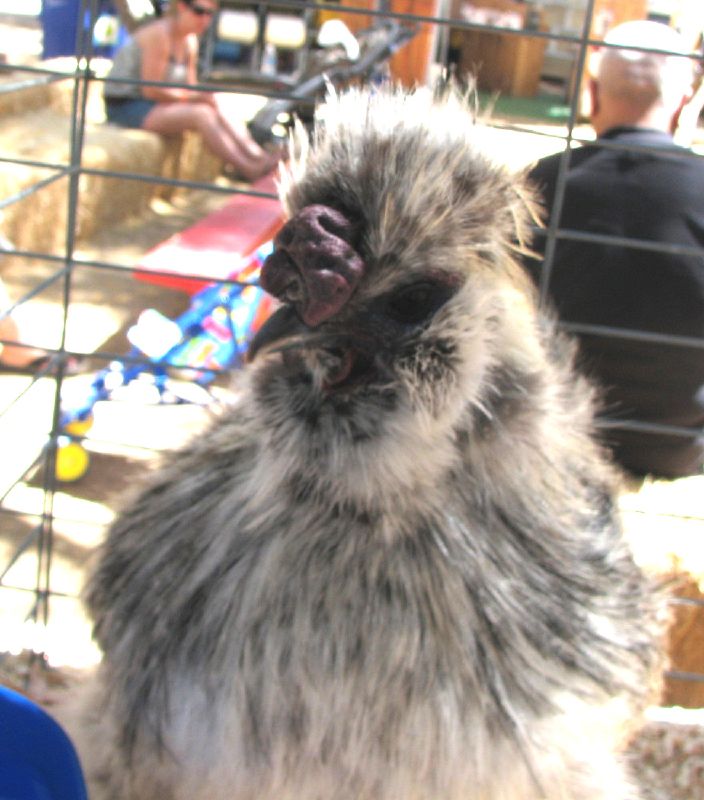
A walk-in deep-litter coop with droppings tray, a covered run with foraging clutter, a sand dust-bath box, and roost perches. Mixed-age flocks need a hide so juveniles escape pecking; provide free-choice oyster shell and grit.
Putneypics / CC BY 2.0 (Wikimedia Commons)
Photo coming soon
Ideal
Free-range with secure coop
Free-range yard or rotated paddocks + 6 sq ft coop per bird
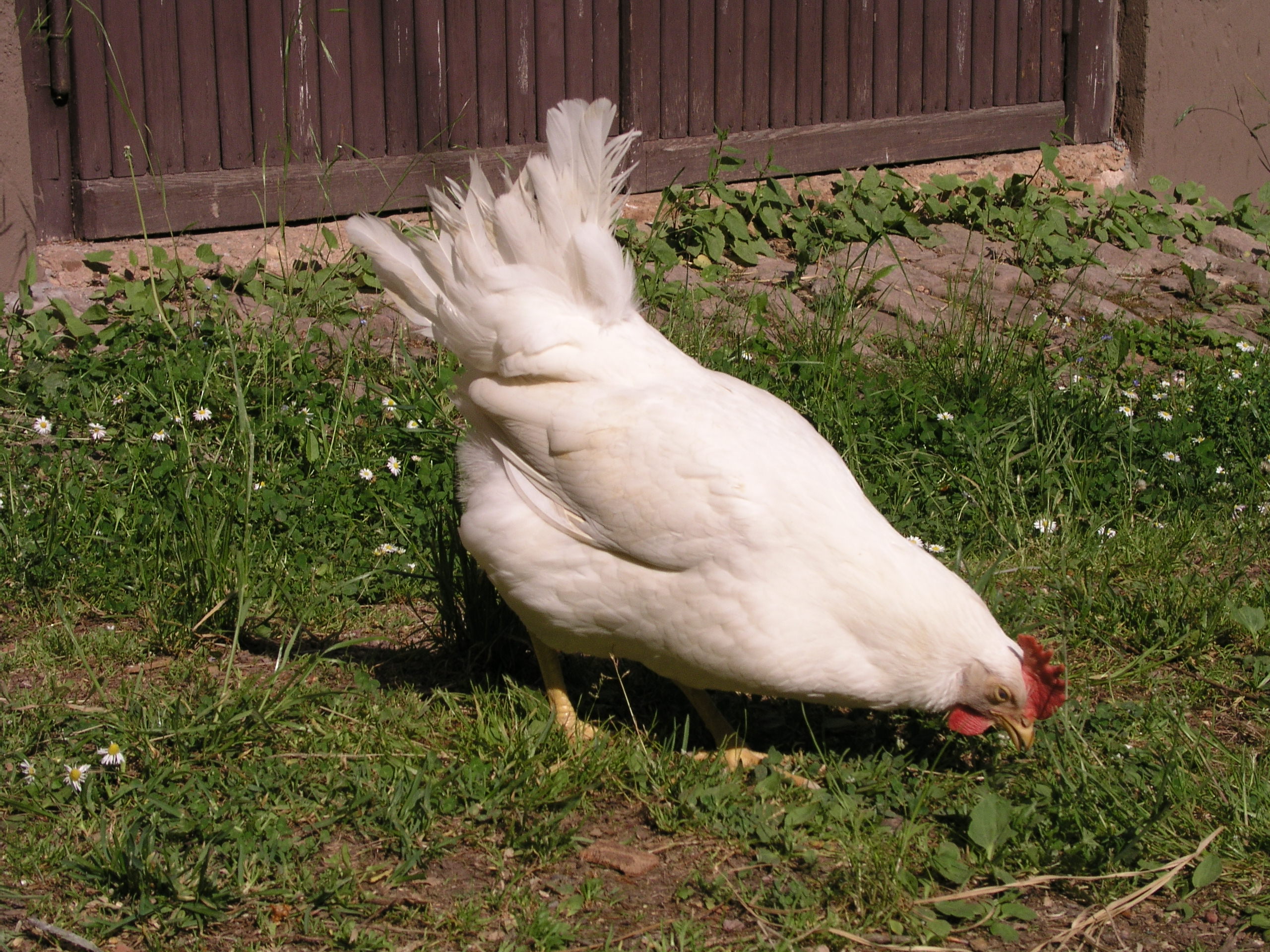
Free-range or paddock-rotated grass, locked into a predator-proof coop at dusk. Chickens reach peak welfare on pasture with bugs, grasses, and dust-bath access — lay better, healthier eggs, and rarely suffer feather-pecking compared to confined flocks.
Life & growth stages
How this animal changes through its life — each stage often has its own care, diet and space needs.
Egg
Birds develop inside a hard-shelled egg incubated by the parent(s). Egg size, shell color, and clutch size vary by species; the embryo develops over days to weeks before hatching.
Leo219, CC BY-SA 4.0, via Wikimedia Commons
Hatchling / Chick
Hatchlings are either altricial — naked, blind, and dependent on parents (typical of parrots and songbirds) — or precocial — downy, mobile, and self-feeding soon after hatching (typical of poultry and waterfowl). Down gives way to the first feathers.
Uberprutser, CC BY-SA 3.0, via Wikimedia Commons
Photo coming soon
Juvenile / Fledgling
Fledglings grow in their juvenile plumage and begin to fly and feed themselves, though they may still beg from parents at first. Juvenile feathering is often duller than the adult and is replaced as the bird matures.
Adult
Adults attain full body size and mature plumage, and are capable of breeding. Many species show distinct adult coloration, and in sexually dimorphic birds males and females differ in plumage, size, or markings.
(c) D. N., some rights reserved (CC BY-NC) via iNaturalist — https://www.inaturalist.org/observations/312084723
Color & pattern variants
Natural variants occur in the wild; selectively bred (man-made) variants were developed in captivity.
Chickens need a **predator-proof coop** for roosting and laying plus an attached **run** or supervised free-range time. Provide a minimum of **~0.3-0.4 m² (3-4 sq ft) of coop floor per standard bird** and **~0.9 m² (10 sq ft) of run per bird** — more is always better and reduces pecking. Inside the coop: an elevated **roosting bar** (~20-25 cm of perch length per bird), one **nest box per 3-4 hens** filled with soft bedding, and good ventilation near the roof without direct drafts at roost height. Hardware-cloth (not chicken wire) over windows and a buried apron deter raccoons, foxes, hawks, snakes, and weasels. They tolerate cold well if dry and draft-free; heat above ~32°C is more dangerous than cold.
Substrate
Inside the coop use **pine shavings, hemp, or straw** as deep bedding; many keepers run a **deep-litter system** where droppings compost in place with regular topping-up and turning. Sand is popular in runs for easy raking. Avoid **cedar shavings** (aromatic oils irritate avian airways) and dusty sawdust. Nest boxes get a soft, frequently refreshed layer of straw or shavings. Keep bedding dry — damp litter drives ammonia, respiratory disease, and bumblefoot.
Equipment & setup
Core gear: a **gravity or nipple waterer** and a **feeder** (treadle feeders foil rodents), **nest boxes**, **roosting bars**, **hardware cloth**, and a secure door (an **automatic coop door** on a timer is a popular upgrade). Raising chicks needs a **brooder** with a **heat lamp or radiant brooder plate** (start ~35°C, drop ~3°C/week) plus chick-safe waterer. In hot climates add shade and extra water; in cold climates a heated waterer base prevents freezing. A **dust-bath box** (sand + a little wood ash/diatomaceous earth) supports natural parasite control.
Diet
Feed a **complete formulated ration** matched to life stage: chick starter (medicated or not) → grower → **layer feed (~16% protein, added calcium)** for laying hens, or all-flock/maintenance feed for mixed groups and roosters. Offer **insoluble grit** free-choice so they can grind food, and **oyster shell separately** so layers self-regulate calcium. Treats (scratch grains, kitchen scraps, mealworms, greens) should stay under ~10% of intake or eggshell quality and body condition suffer. **Fresh water at all times** is essential — a hen drinks ~0.5 L/day and far more in heat. Avoid avocado, raw dried beans, moldy food, and heavily salted scraps.
Behavior & temperament
Chickens are intelligent, **highly social flock birds** with a real pecking order — never keep a single chicken. They dust-bathe, forage, sunbathe, and roost communally at dusk. A rooster is not required for eggs (only for fertile ones) and brings crowing plus potential aggression; many municipalities ban them. Hens 'talk' constantly and some learn to be lap-friendly with gentle daily handling from chick age. Introductions of new birds should be done gradually ('look but don't touch' for a week) to avoid serious bullying.
Health
Common issues include **external parasites** (mites, lice — check vents at night), **internal worms**, **respiratory infections** (mycoplasma, infectious bronchitis), **coccidiosis** in young birds, **bumblefoot** (foot abscess), **egg binding**, and reproductive disorders in older high-production hens. **Marek's disease** is a serious viral threat — vaccinate chicks at the hatchery. Practice biosecurity: quarantine new birds, control rodents, and report signs of **avian influenza** (sudden deaths, swollen heads) to authorities. Find an **avian/poultry-savvy vet** before you need one; many small-animal vets do not treat poultry.
Tips, DIY & hacks
DIY a deep-litter coop to cut cleaning to a few times a year and harvest free compost. A simple **automatic door** plus **covered run** dramatically reduces predator losses. Collect eggs daily to discourage egg-eating and broodiness. Add **apple cider vinegar** to plastic (never metal) waterers and rotate fresh greens for enrichment. Clip one wing's flight feathers if lightweight birds escape fences. **Check local ordinances first** — many cities cap flock size, ban roosters, or require coop setbacks. Handle birds calmly and regularly so health checks (weight, vent, feet) are stress-free.