The darkling beetle is best known as the superworm — its larval stage is a staple feeder insect, but the full beetle life cycle is easy and fascinating to keep. A great beginner project for watching complete metamorphosis.
ℹ️
Educational only. KinStation content is reviewed by licensed veterinarians but cannot replace an in-person exam. Always consult a licensed veterinarian or board-certified specialist for diagnosis, treatment, or any decision affecting your pet's health.
🩺 Need expert help with your darkling beetle (superworm)?
Connect with a specialist near you or ask a licensed vet — never substitute online guidance for hands-on care in an emergency.
Larvae (superworms) up to 5-6 cm; adult beetles ~2.5-3 cm, matte black.
Lifespan
0–1 years
Social needs
group
Native region
Central and South America; bred worldwide
Origin
New World
Climate
🌴 Tropical
Family
Tenebrionidae
Genus
Zophobas
Part of the Beetles
Kept beetles (order Coleoptera), including rhinoceros, stag, and flower beetles, are display invertebrates with a buried larval (grub) stage that feeds on decaying wood or leaf litter and a short-lived adult stage. Most are docile and harmless to handle, but many are non-native and tightly regulated, with live import banned or permit-restricted in countries like the US.
From the minimum an animal needs to be kept humanely, up to the ideal setup. Bigger is almost always better — minimums are floors, not targets.
Photo coming soon
Minimum
Mealworm/superworm bin
Shoebox bin with 2 in bran/oats
Darkling beetles (Zophobas morio / Tenebrio molitor) — the adult of mealworms/superworms — keep in bran or oats with a slice of carrot or potato for moisture. No water dish.
Photo coming soon
Recommended
Larger colony bin
10 gal bin with grain substrate
Larger bin with grain substrate, cardboard hides, and rotating fresh vegetables for moisture. Easy bioactive setup that produces feeder larvae on a schedule.
Photo coming soon
Ideal
Bioactive feeder colony
20 gal long colony bin
Larger colony bin that self-sustains, producing eggs → larvae → pupae → beetles continuously. The most common live feeder colony for keepers of reptiles/inverts.
Life & growth stages
How this animal changes through its life — each stage often has its own care, diet and space needs.
Photo coming soon
Egg
Insects begin as eggs, laid singly or in clusters on or near a food source. Egg size, shape, and incubation time vary widely; some are glued to surfaces, others inserted into plant tissue or soil.
Larva / Nymph
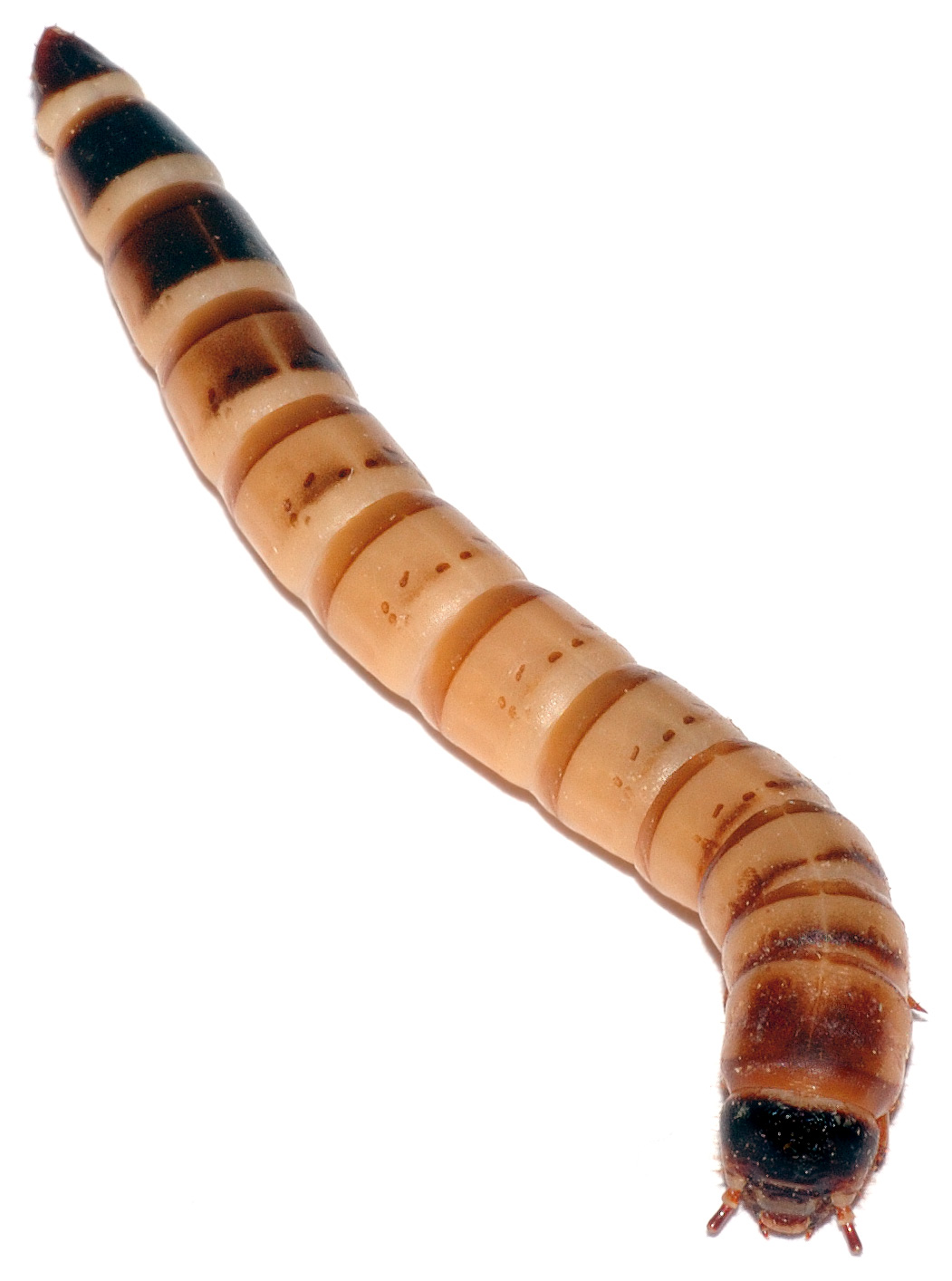
The immature stage either looks grub- or caterpillar-like and very different from the adult (a larva, in beetles, flies, and butterflies) or like a wingless miniature adult (a nymph, in roaches, mantises, and stick insects). It eats and molts repeatedly as it grows.
André Karwath (Aka), CC BY-SA 2.5, via Wikimedia Commons
Pupa
In insects with complete metamorphosis, the larva pupates — often in a cocoon, chrysalis, or sealed cell — and its body is reorganized into the adult form. Nymph-developing insects skip a true pupa and molt straight to the adult.
Zophobasatratusowner123, CC BY 4.0, via Wikimedia Commons
Adult
The adult is the sexually mature, usually winged stage with the species' full coloration and form. Adults are typically the dispersing and reproducing stage, and in many insects do not grow further once mature.
Habitat & enclosure
Keep larvae and beetles in a ventilated plastic tub with a deep bedding of bran or oats. To pupate, superworms must be isolated individually (in small cups or egg-carton cells) — crowded larvae won't pupate. Beetles and the resulting larvae live communally in the same bran bedding at room temperature.
Substrate
Several centimeters of wheat bran or rolled oats serves as both substrate and food; keep it dry, and add a slice of veg for moisture rather than misting.
Equipment & setup
Ventilated tub, bran/oat bedding, small isolation cups or an egg carton for pupation, and veg for moisture. No heat needed, though warmth speeds the cycle.
Diet
An omnivore: the bran/oat bedding is itself food, supplemented with vegetable and fruit pieces (carrot, potato, apple) for moisture, plus occasional protein. No standing water — moisture comes from fresh veg, which should be replaced before it molds.
Behavior & temperament
Goes through complete metamorphosis: larva (superworm), pupa, then beetle. Beetles are nocturnal, flightless ground-dwellers that burrow in the bedding. Adults and larvae are cannibalistic toward soft pupae and freshly molted individuals, so separate pupae.
Health
Very hardy. Main issues are mold from too much moist food and failed pupation when larvae aren't isolated. Keep bedding dry and crumbly, isolate mature superworms to pupate, and remove rotting veg promptly. Mites appear if conditions stay too damp.
Tips, DIY & hacks
To breed: isolate fat superworms individually until they curl, pupate, and emerge as beetles, then return beetles to bran to lay eggs. Keep everything dry and crumbly — excess moisture is the main cause of failure.