The Derasa clam is the hardiest and most forgiving of the popularly kept giant clams, with wavy gold, brown, blue, and green mantle patterns. Its tolerance of lower light makes it the best Tridacna for newer reefkeepers.
ℹ️
Educational only. KinStation content is reviewed by licensed veterinarians but cannot replace an in-person exam. Always consult a licensed veterinarian or board-certified specialist for diagnosis, treatment, or any decision affecting your pet's health.
🩺 Need expert help with your derasa clam?
Connect with a specialist near you or ask a licensed vet — never substitute online guidance for hands-on care in an emergency.
One of the largest aquarium clams: commonly 12-18 in (30-45 cm), reaching ~24 in (60 cm) in the wild.
Lifespan
30–100 years
Social needs
solo
Native region
Western Pacific and eastern Indian Ocean, including the Great Barrier Reef, Indonesia, the Philippines, and the South Ch
Origin
Old World
Climate
🌴 Tropical
Water type
🌊 Marine
Family
Cardiidae
Genus
Tridacna
Part of the Clams (Tridacna)
Tridacna giant clams are photosynthetic reef bivalves with brilliantly colored mantles. They host symbiotic zooxanthellae, demand strong light and pristine calcium/alkalinity, and add living color and natural filtration to mature reef aquariums.
From the minimum an animal needs to be kept humanely, up to the ideal setup. Bigger is almost always better — minimums are floors, not targets.
Photo coming soon
Minimum
Stable reef clam tank
30+ gal mature reef
Tridacna derasa is the most beginner-friendly giant clam — needs stable reef chemistry (Ca 420 ppm, Alk 8–9 dKH, Mg 1300 ppm), moderate-high light, and gentle flow. Place on hard rock, not sand.
Photo coming soon
Recommended
Mid-light reef display
50+ gal with strong LED/T5
A 50+ gal reef with strong LED or T5 lighting (PAR 150–250 at clam depth), excellent skimming, and dosed calcium/alkalinity supports derasa growth — they can exceed 18 in shell length in time.
Photo coming soon
Ideal
Mature SPS-grade reef
75+ gal SPS reef, ICP-tested
Mature SPS-grade reef with ICP-tested chemistry, automated calcium/alkalinity dosing, and stable lighting. Tridacnas are photosynthetic — filter feeders, but most nutrition comes from zooxanthellae.
Life & growth stages
How this animal changes through its life — each stage often has its own care, diet and space needs.
Photo coming soon
Larva
Most marine invertebrates hatch into microscopic planktonic larvae (such as the zoea of crustaceans or the bipinnaria/veliger of echinoderms and mollusks) that drift and feed in the water column. The larva looks nothing like the adult and undergoes major reorganization.
Photo coming soon
Juvenile
After settling out of the plankton, the juvenile takes on a recognizable miniature of the adult body plan — a tiny shell, a small star, or a translucent shrimp. Crustaceans grow by molting, shedding the exoskeleton to enlarge.
Adult
Adults reach full size and reproductive maturity with the species' mature shell, shape, or coloration. Many continue to molt or grow throughout life, and some show sex differences in size or claw/appendage shape.
Color & pattern variants
Natural variants occur in the wild; selectively bred (man-made) variants were developed in captivity.
Natural
representative
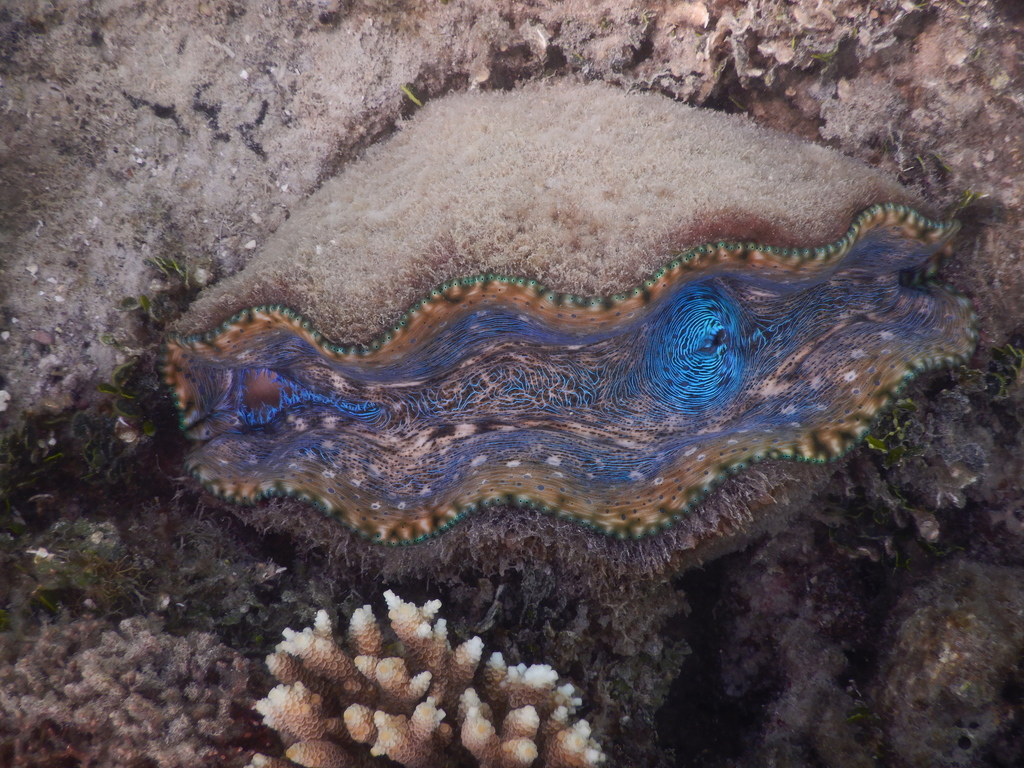
Gold/Brown Wave Derasa
The classic Derasa coloration: wavy gold, brown, and cream mantle striping. Hardy, fast-growing, and the most common and affordable form.
representative
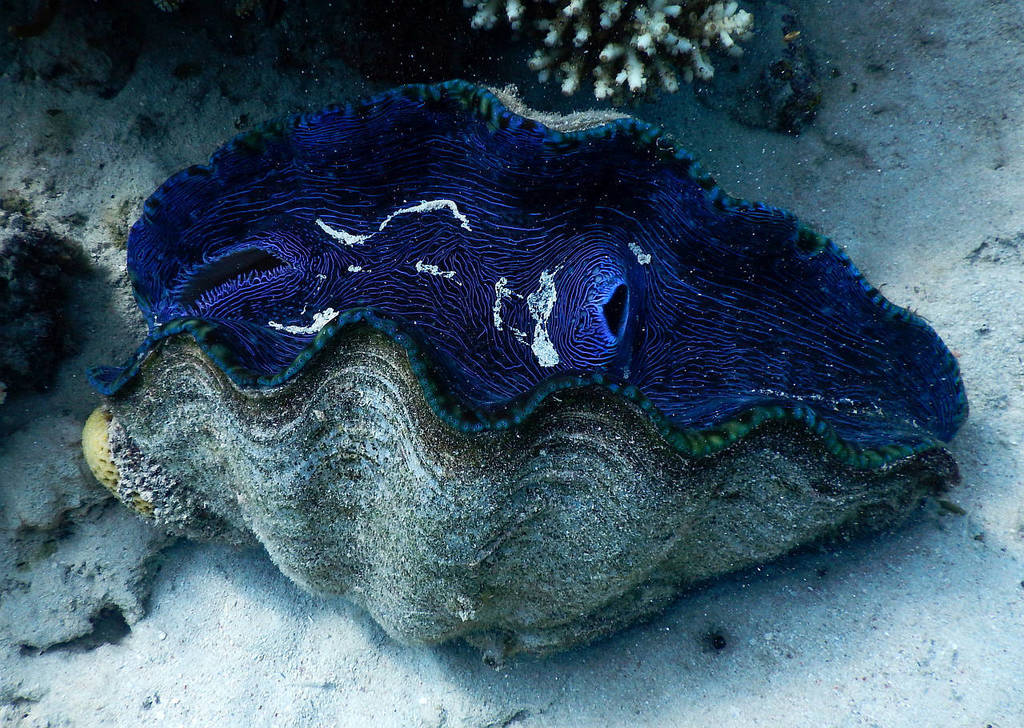
Blue/Green Derasa
Selected specimens showing blue and green iridescence overlaid on the wavy pattern. More striking and somewhat pricier than standard gold-brown clams.
Habitat & enclosure
House in an established reef aquarium of at least 75-100 gallons (285-380 L) to accommodate its large adult size and bioload. Target params: salinity 1.024-1.026 SG, temperature 76-82 F (24-28 C), pH 8.1-8.4, alkalinity 8-11 dKH, calcium 400-450 ppm, magnesium 1280-1350 ppm. Derasas naturally inhabit slightly deeper water than Maximas, so they adapt to a wider range of lighting and are more tolerant of imperfect conditions. A small amount of nitrate (2-5 ppm) supports the zooxanthellae.
Substrate
Smaller Derasas attach to rock via byssal threads and should be started on a flat rock or rubble; larger, heavy adults can be placed directly on a sand bed since they no longer rely heavily on byssal attachment. Give the clam a stable footing where it cannot topple, and leave space around it for its considerable adult footprint.
Equipment & setup
Moderate-to-strong reef lighting (roughly 150-300 PAR) from T5, LED, or metal halide is sufficient; Derasas do not demand the extreme light Maximas require. A protein skimmer, mature live rock, and stable calcium/alkalinity dosing (two-part or calcium reactor) support its fast shell growth. Provide moderate, varied flow to keep the mantle clean. Because it grows large, ensure your tank volume and chemistry can keep pace with its calcium demand.
Diet
Like all Tridacna, the Derasa is primarily photosynthetic, drawing energy from symbiotic zooxanthellae under reef lighting. It also absorbs dissolved nitrate, ammonium, and phosphate from the water as a large clam, so an established tank with a moderate bioload often feeds it passively. Small specimens benefit from phytoplankton or dedicated clam food a few times per week until they exceed ~2-3 in.
Behavior & temperament
Sessile and peaceful. The Derasa attaches by byssal threads but, being a heavy-shelled species, larger adults often simply rest on the substrate. It displays a wavy, fluted mantle and reacts to shadows by retracting; a clam that stays gaping and unresponsive is unwell. It poses no threat to tankmates but can be nibbled by angelfish, certain wrasses, or pufferfish, so stock companions carefully.
Health
Derasas are the most disease-resistant common Tridacna but are still vulnerable to Pyramidellid parasite snails (check around the shell hinge), pinched-mantle protozoan infection, and predation when small. Watch for failure to expand the mantle, a persistently gaping siphon, or bleaching (loss of color from zooxanthellae expulsion under sudden light/temperature stress). Maintain steady alkalinity and calcium to prevent shell-growth banding and weak shell deposition.
Tips, DIY & hacks
Derasa is the ideal 'first clam' for a reefkeeper moving up from softies and LPS. Place it lower in the tank or on the substrate and acclimate to lighting over a week or so. Plan for its large adult size before buying, as it will outgrow nano tanks. Inspect for parasite snails at purchase and quarantine. All Tridacna are CITES Appendix II species, so insist on documented aquacultured stock, which is widely available for Derasa and reduces pressure on wild populations.

 representative
 representative