The Maxima clam is the most iconic and colorful of the giant clams, prized for electric blue, teal, gold, and green mantles. It is a high-light, photosynthetic bivalve best suited to mature SPS-grade reef systems.
ℹ️
Educational only. KinStation content is reviewed by licensed veterinarians but cannot replace an in-person exam. Always consult a licensed veterinarian or board-certified specialist for diagnosis, treatment, or any decision affecting your pet's health.
🩺 Need expert help with your maxima clam?
Connect with a specialist near you or ask a licensed vet — never substitute online guidance for hands-on care in an emergency.
Commonly 6-12 in (15-30 cm) in aquaria; can reach ~14 in (35 cm) in the wild.
Lifespan
20–50 years
Social needs
solo
Native region
Indo-Pacific: Red Sea and East Africa across to the central Pacific, on shallow reef flats and lagoon margins.
Origin
Old World
Climate
🌴 Tropical
Water type
🌊 Marine
Family
Cardiidae
Genus
Tridacna
Part of the Clams (Tridacna)
Tridacna giant clams are photosynthetic reef bivalves with brilliantly colored mantles. They host symbiotic zooxanthellae, demand strong light and pristine calcium/alkalinity, and add living color and natural filtration to mature reef aquariums.
From the minimum an animal needs to be kept humanely, up to the ideal setup. Bigger is almost always better — minimums are floors, not targets.
Photo coming soon
Minimum
High-light reef clam tank
30+ gal high-PAR reef
Tridacna maxima needs high light (PAR 300–500) — most demanding common Tridacna species. Stable salinity (1.025), Ca 420 ppm, Alk 8–9 dKH, attached to rock not buried in sand.
Photo coming soon
Recommended
Strong SPS-style reef
50+ gal with metal halide / strong LED
A reef with metal halide or strong reef LED lighting providing high PAR at clam height, gentle non-direct flow, and dosed major elements. Smaller adult size than derasa (≈ 12 in) but more colourful.
Photo coming soon
Ideal
Premium mature SPS reef
75+ gal mature SPS, ICP-tested
Premium mature SPS reef with ICP-tested water, automated dosing, and PAR 400+ at the clam. Maxima clams show the most vivid mantle colours under intense light — but only thrive when chemistry is rock-stable.
Life & growth stages
How this animal changes through its life — each stage often has its own care, diet and space needs.
Photo coming soon
Larva
Most marine invertebrates hatch into microscopic planktonic larvae (such as the zoea of crustaceans or the bipinnaria/veliger of echinoderms and mollusks) that drift and feed in the water column. The larva looks nothing like the adult and undergoes major reorganization.
Photo coming soon
Juvenile
After settling out of the plankton, the juvenile takes on a recognizable miniature of the adult body plan — a tiny shell, a small star, or a translucent shrimp. Crustaceans grow by molting, shedding the exoskeleton to enlarge.
Adult
Adults reach full size and reproductive maturity with the species' mature shell, shape, or coloration. Many continue to molt or grow throughout life, and some show sex differences in size or claw/appendage shape.
Color & pattern variants
Natural variants occur in the wild; selectively bred (man-made) variants were developed in captivity.
Natural
representative
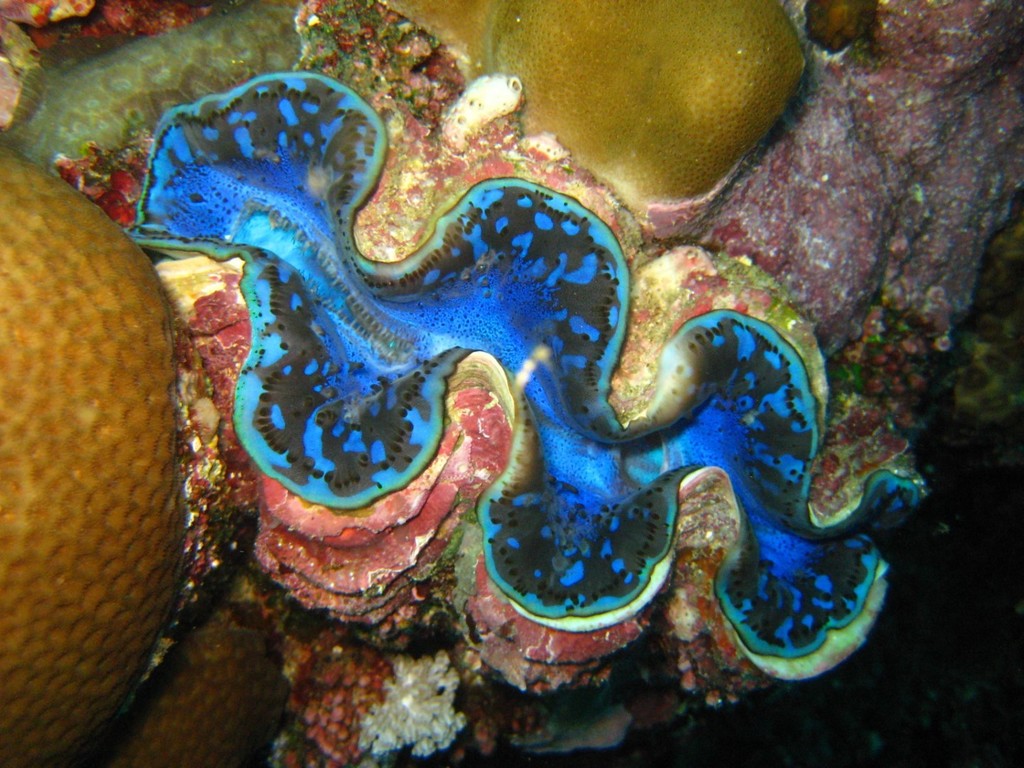
Electric Blue Maxima
Wild and aquacultured Maximas selected for intense, near-fluorescent blue mantles. The most sought-after and typically the most expensive color form.
representative
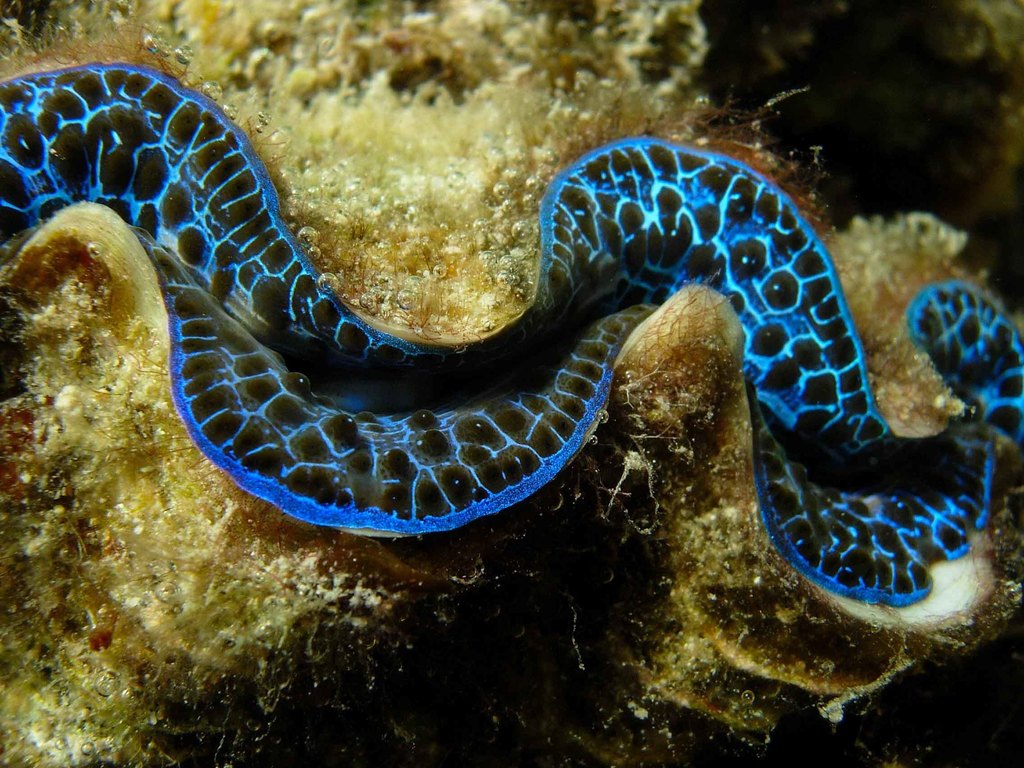
Teal / Gold Maxima
Mantles blending teal, gold, and green with characteristic banded or speckled patterns. Often slightly hardier and more affordable than pure blues.
Habitat & enclosure
Keep in a well-established reef aquarium of at least 50 gallons (190 L) with stable, pristine water. Target params: salinity 1.024-1.026 SG, temperature 76-82 F (24-28 C), pH 8.1-8.4, alkalinity 8-11 dKH, calcium 400-450 ppm, magnesium 1280-1350 ppm. Maxima clams come from shallow, sun-drenched reef flats and need very high light to thrive. Nitrate should be low but not zero (2-5 ppm is ideal, as some dissolved nutrients feed the zooxanthellae); phosphate around 0.03-0.08 ppm.
Substrate
Maxima clams attach by byssal threads to hard substrate and should be placed on a flat rock or rubble, NOT on sand. Placing them on bare sand exposes the byssal opening to predators and prevents secure attachment. Provide a stable, flat-topped rock so the clam can orient itself and anchor; small clams will glue themselves down within days.
Equipment & setup
Strong lighting is essential: high-output T5 or quality reef LEDs delivering roughly 200-400+ PAR at the clam's placement (Maximas tolerate, and prefer, the highest light of the commonly kept clams). A protein skimmer, mature live rock, and stable dosing (two-part or calcium reactor) keep calcium/alkalinity/magnesium in range for shell growth. Moderate, indirect water flow keeps the mantle clean without blasting it. A refugium or light feeding regimen sustains small clams.
Diet
Maxima clams derive most of their energy from symbiotic zooxanthellae (photosynthesis), which is why intense light is non-negotiable. Smaller specimens (under ~2 in) also depend heavily on filter-feeding and benefit from phytoplankton or dedicated clam foods (e.g., live Nannochloropsis/Isochrysis or commercial phyto) several times weekly. Larger clams absorb dissolved nutrients (nitrate, ammonium, phosphate) directly from the water column and need little supplemental feeding if the tank carries a light bioload.
Behavior & temperament
Sessile and non-aggressive once it byssally attaches to rock. It is harmless to other livestock but is itself vulnerable. A healthy clam keeps its mantle fully expanded and its incurrent siphon open with a smooth, oval shape; it will retract sharply and quickly to passing shadows, which is a normal, healthy startle response. Do not handle or relocate it once settled unless necessary, as severing the byssal threads can be fatal.
Health
The biggest killers are pinched-mantle protozoan infections, Pyramidellid snail parasites (tiny white snails that cluster near the shell hinge and suck fluids), and bristleworm/predatory snail attacks on small clams. Inspect new arrivals carefully and quarantine. A gaping incurrent siphon, mantle that won't expand, or a 'gaping' clam that no longer reacts to shadows signals decline. Iodine and trace elements support shell growth; rapid alkalinity swings cause stress and shell-banding scars.
Tips, DIY & hacks
Place Maximas high in the tank, on a rock near the light, and acclimate them slowly to your lighting over 1-2 weeks to avoid bleaching. Never lift a clam out of water by its shell while gaping; let it close first. Scrape Pyramidellid snails off at the hinge and inspect weekly. Buy aquacultured specimens when possible: they ship better, adapt faster, and reduce wild-collection pressure. All Tridacna are listed on CITES Appendix II, so legal import requires proper permits; aquacultured stock is the norm and simplifies legality. Avoid placing near aggressive clams of other species or near anemones that may wander.

 representative
 representative