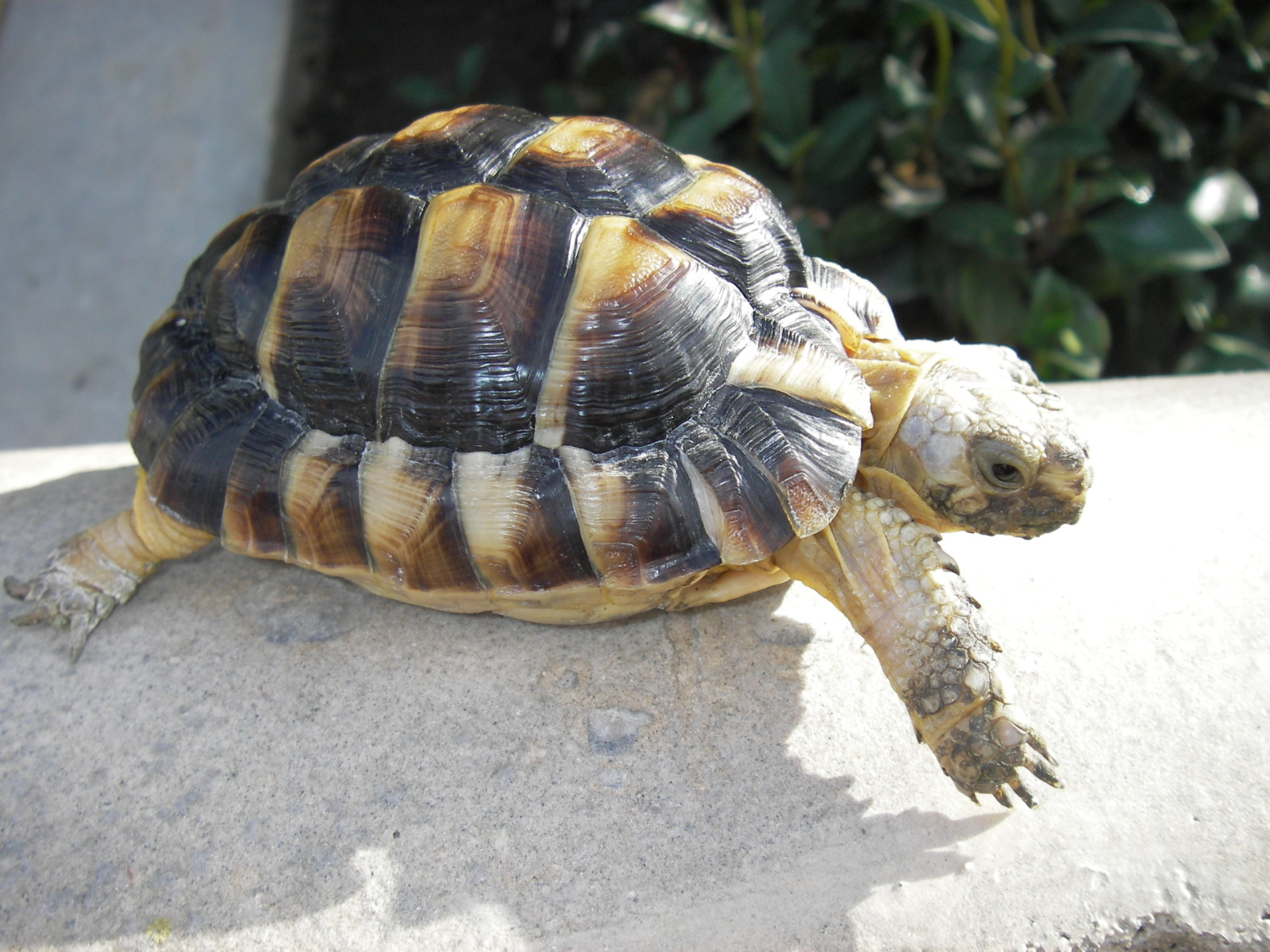
A tiny, critically endangered desert tortoise from North Africa and the Levant, now virtually extinct in Egypt. CITES Appendix I and protected — only legitimate captive-bred, paperwork-documented animals should ever be kept.
ℹ️
Educational only. KinStation content is reviewed by licensed veterinarians but cannot replace an in-person exam. Always consult a licensed veterinarian or board-certified specialist for diagnosis, treatment, or any decision affecting your pet's health.
🩺 Need expert help with your egyptian tortoise?
Connect with a specialist near you or ask a licensed vet — never substitute online guidance for hands-on care in an emergency.
One of the world's smallest tortoises; 3-5 in (8-13 cm), females larger
Lifespan
50–100 years
Social needs
solo
Native region
North Africa (Libya, formerly Egypt) and the Levant (Israel)
Origin
Old World
Climate
🏜️ Arid
Family
Testudinidae
Genus
Testudo
Part of the Tortoises
Tortoises are land-dwelling chelonians with high domed shells, elephantine legs, and long lifespans. Most are herbivorous grazers needing UVB lighting, calcium-rich low-protein diets, spacious enclosures, and (for temperate species) controlled brumation.
From the minimum an animal needs to be kept humanely, up to the ideal setup. Bigger is almost always better — minimums are floors, not targets.
Photo coming soon
Minimum
Indoor table
4 × 2 ft tortoise table
Testudo kleinmanni is the smallest Mediterranean tortoise (4–5 in, critically endangered). Minimum is an open 4×2 table with dry substrate, basking 35 °C, 10–12% UVB, hide. Captive-bred only — wild trade is decimating them.
Photo coming soon
Recommended
Larger indoor table
6 × 2 ft+ with substrate zones
A 6×2 table with multiple substrate zones, basking gradient, hide, and edible Mediterranean plants. Avoid glass tanks — airflow and lack of reflections matter.
Photo coming soon
Ideal
Outdoor enclosure (seasonal)
Outdoor predator-proof pen, sunny
Seasonal outdoor predator-proof pen with natural sun, edible weed planting, hides, and dig zones. Captive-bred only — supporting wild trade harms conservation.
Life & growth stages
How this animal changes through its life — each stage often has its own care, diet and space needs.
Photo coming soon
Egg / Neonate
Most reptiles lay leathery- or hard-shelled eggs incubated by ambient warmth, though some snakes and lizards give live birth. Incubation temperature can influence sex and development in many species.
Photo coming soon
Hatchling
Hatchlings emerge as fully formed miniatures of the adult, often using an egg tooth to slit the shell. They are independent from birth but small and vulnerable, and may show brighter or different juvenile patterning.
Photo coming soon
Juvenile
Juveniles grow steadily, shedding their skin periodically as they enlarge. Coloration and proportions shift toward the adult form, and growth rate depends heavily on temperature, diet, and basking/UVB access.
Adult
Adults reach the species' full length and mass and become sexually mature. Many reptiles show sex differences in size, coloration, or features (such as larger heads, hemipenal bulges, or femoral pores), and continue to shed throughout life.
Habitat & enclosure
Provide a warm, dry, arid setup. Indoors, an open tortoise table of at least 3x2 ft (90x60 cm) for one adult; a small group needs much more floor space. Basking spot 95-100 F (35-38 C) with a gradient down to the mid-70s F (24 C) and a cooler night drop. Low humidity (20-40%) with one humid hide for hydration. This species is heat-loving but cannot tolerate cold or damp; it does NOT brumate and aestivates in extreme summer heat instead.
Substrate
A dry, sandy-loam or topsoil/sand mix that allows shallow scrapes, kept dry on top. A single humid hide (damp sphagnum) aids hydration without dampening the whole enclosure. Avoid pure sand (impaction risk) and any consistently wet substrate.
Equipment & setup
Strong basking lamp for a hot spot, high-output UVB tube (T5 10-12%), thermometers/hygrometer, a low-sided water dish, and at least one humid hide plus a dry hide. A digital scale for monitoring this delicate species' weight is essential.
Diet
Herbivore adapted to sparse desert vegetation. Feed a very high-fiber, low-protein mix of dried and fresh weeds, grasses, and flowers: dandelion, plantain, clover, mallow, hibiscus, cactus pad (spineless Opuntia), and quality grass hays. No fruit, no animal protein, no commercial 'tortoise pellets' as a staple. Dust with calcium; offer cuttlebone. A shallow water dish should always be available despite their dry origins.
Behavior & temperament
Shy, gentle, and surprisingly active and personable for such a small tortoise; males may 'head-bob' and court females persistently. Being small and delicate, they are easily stressed and should be handled minimally. Not a hands-on pet — best appreciated as a display animal in a naturalistic arid enclosure.
Health
Highly sensitive to cold and damp — respiratory infections and runny noses are quickly fatal if husbandry is wrong. Other risks include MBD without proper UVB/calcium, dehydration, and shell pyramiding. Their rarity and slow reproduction mean every animal matters; work with a reptile vet experienced in chelonians. Source only from reputable captive breeders with documentation.
Tips, DIY & hacks
Legality first: T. kleinmanni is CITES Appendix I and protected; in the US, interstate sale typically requires captive-bred documentation and you should keep all paperwork. Never buy wild-caught or undocumented animals — doing so fuels the trade that nearly wiped them out. Keep them hot, dry, and stress-free, and offer a humid hide for hydration.