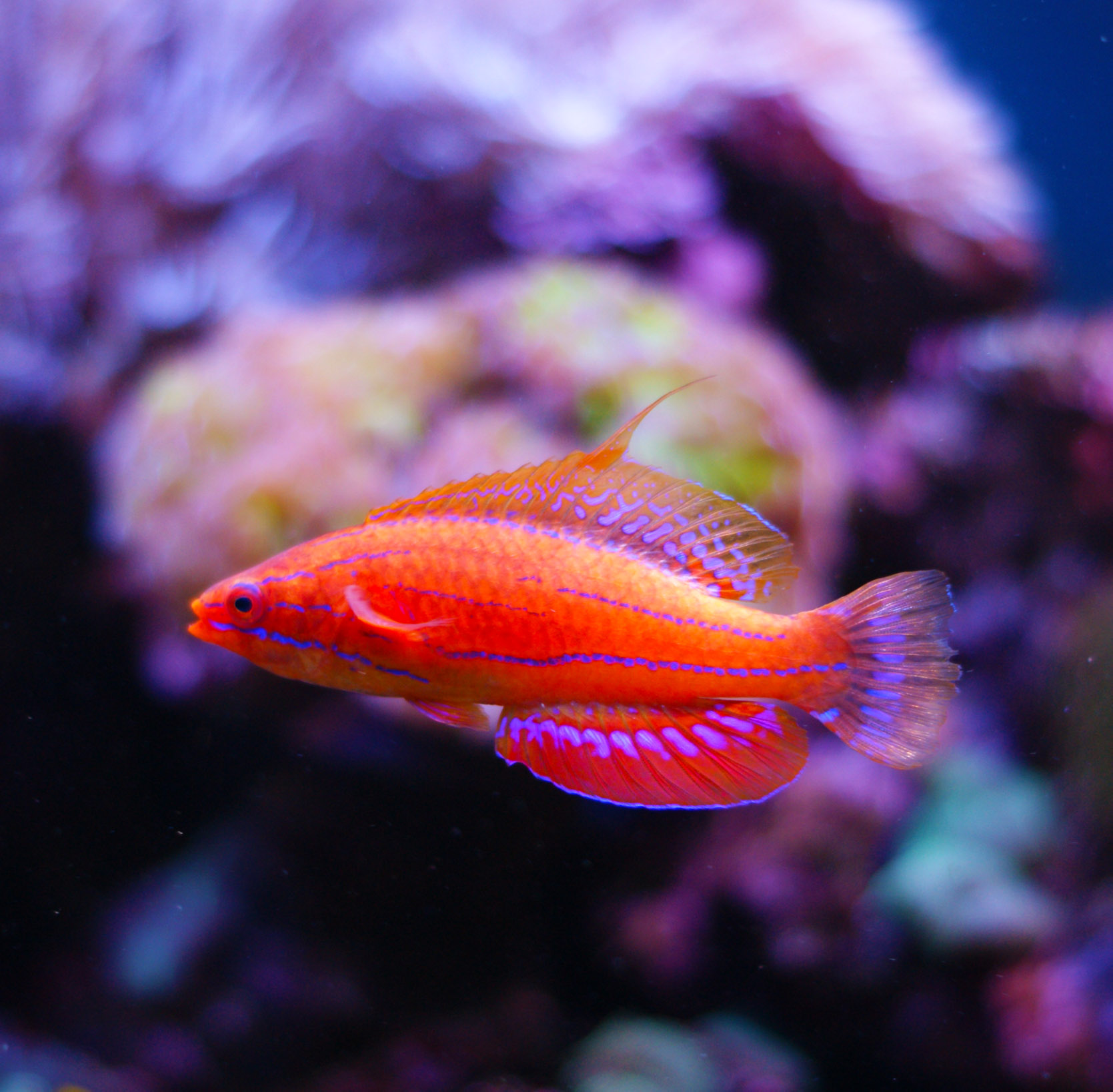
A small, peaceful reef wrasse whose terminal males erupt into a dazzling color display, flaring red, blue, and yellow finnage as they court females. Reef-safe and one of the best community wrasses, though its small size demands peaceful tankmates.
ℹ️
Educational only. KinStation content is reviewed by licensed veterinarians but cannot replace an in-person exam. Always consult a licensed veterinarian or board-certified specialist for diagnosis, treatment, or any decision affecting your pet's health.
🩺 Need expert help with your flasher wrasse?
Connect with a specialist near you or ask a licensed vet — never substitute online guidance for hands-on care in an emergency.
Western Pacific, from the Philippines and Indonesia to Micronesia
Origin
Old World
Climate
🌴 Tropical
Water type
🌊 Marine
Family
Labridae
Genus
Paracheilinus
Part of the Wrasses
Wrasses (family Labridae) are an enormous, diverse group of active, colorful reef fish ranging from tiny fairy and flasher wrasses to large predators. Many sand-diving species sleep buried in the substrate, most are accomplished jumpers, and several are prized for controlling pest invertebrates in reef aquariums.
From the minimum an animal needs to be kept humanely, up to the ideal setup. Bigger is almost always better — minimums are floors, not targets.
Photo coming soon
Minimum
Single reef-safe wrasse
30 gal / 114 L reef
Paracheilinus species reach 2.5–3 in. 30-gal reef minimum with mature live rock, tight lid (jumpers), and peaceful tankmates. Single male per tank — they spar.
Photo coming soon
Recommended
Harem reef display
55 gal / 208 L reef
55-gal reef with one male and 2–3 females, mature rockwork, and peaceful tankmates. Males flash brilliant nuptial colours during courtship — one of the most active reef-safe wrasses.
Photo coming soon
Ideal
Mature display harem
75 gal+ / 284 L+ mature reef
Mature 75-gal+ reef with deep aquascape, harem, and peaceful community. Continual flashing displays from well-fed males.
Life & growth stages
How this animal changes through its life — each stage often has its own care, diet and space needs.
Photo coming soon
Egg
Fish eggs are small, translucent spheres, often laid in clutches on plants, substrate, or in a nest — or carried/brooded by a parent in livebearing and mouth-brooding species. A dark eye spot and the curled embryo become visible inside as development progresses.
Photo coming soon
Fry
Newly hatched fry are tiny and semi-transparent, frequently still carrying a yolk sac that fuels them before they feed freely. They lack full fin structure and adult coloration, staying near cover until they can swim and forage on their own.
Photo coming soon
Juvenile
Juveniles look like miniature adults but with developing fins and muted or different markings; many species shift pattern and color as they mature. Growth is rapid at this stage given clean water and steady feeding.
Adult
Adults show the species' full size, finnage, and mature coloration, and are sexually mature. Many fish develop sex-specific differences in size, color, or fin shape, which can intensify during breeding.
Habitat & enclosure
Provide a minimum of 30 gallons (more for a harem) with abundant live rock for cover and open water above the rockwork where flasher wrasses swim and display. A tightly fitting lid is essential, as these small wrasses are strong jumpers, particularly when startled or newly added.
Maintain stable tropical reef parameters: temperature 72-82 F (22-28 C), pH 8.1-8.4, salinity 1.023-1.026 specific gravity, and moderate flow. A mature, calm reef with plenty of natural zooplankton supports their best color and behavior.
Substrate
A fine sand bed suits the display; flasher wrasses do not burrow but shelter among rocks at night. Generous live rock provides the cover and overnight retreats they rely on.
Equipment & setup
Run a marine system with a protein skimmer, strong biological filtration, and a reliable heater; add a chiller where needed. Provide moderate flow and standard reef lighting, and fit a tight, gap-free lid because these fish jump readily. A refugium to culture copepods is a valuable addition.
Diet
A planktivore that feeds in the water column on zooplankton and small crustaceans such as copepods. In the aquarium it readily accepts frozen mysis and brine shrimp, cyclops, and finely ground marine flakes and pellets, but its small mouth requires small food items.
Feed two to three small meals daily, as these tiny, high-energy fish lose weight quickly if underfed. A mature refugium or pod-rich reef helps keep them in condition between feedings.
Behavior & temperament
Among the most peaceful and reef-safe of all wrasses, harmless to corals and ornamental invertebrates, making it an ideal community reef fish. It is best kept as a single male with several females, where the male performs his spectacular flashing display to court the group. It mixes well with other peaceful fish and even with fairy wrasses if the tank is large enough.
Keep one male per harem in a typical tank, as rival males will compete. House it only with calm tankmates, since boisterous or large fish will outcompete and stress this delicate species.
Health
Hardy once settled but stress-prone on arrival; the leading cause of loss is jumping from an uncovered tank in the first days, so a secure lid is critical. It is susceptible to ich and marine velvet after shipping, so quarantine new fish and keep parameters stable.
Wrasses can be sensitive to copper, so treat with care. Because of their small size and fast metabolism, underfeeding is a common quiet killer; frequent small feedings keep them robust.
Tips, DIY & hacks
Add flashers to an established, peaceful reef and keep a refugium or pod-dosing routine to sustain their tiny appetites. Keep the lid closed, drip-acclimate, and quarantine before introduction. Add females first or the whole harem together, with one male, to encourage the male's full flashing display.