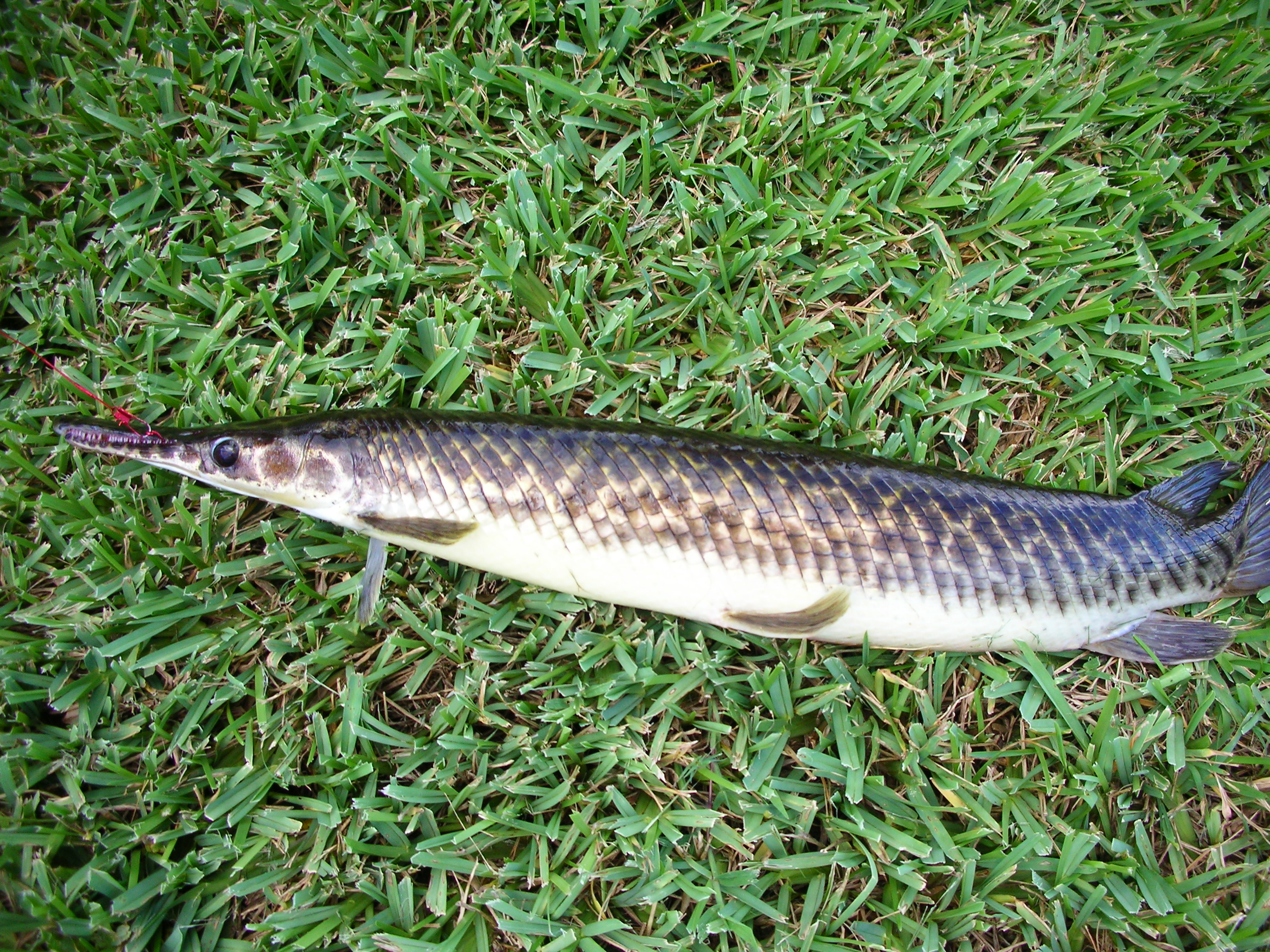
A North American gar with a long toothy snout and tough ganoid-scale armor that gulps air from the surface. It is a large, long-lived ambush predator that quickly outgrows all but the biggest aquaria and is best suited to large indoor ponds or public-aquarium-scale systems.
ℹ️
Educational only. KinStation content is reviewed by licensed veterinarians but cannot replace an in-person exam. Always consult a licensed veterinarian or board-certified specialist for diagnosis, treatment, or any decision affecting your pet's health.
🩺 Need expert help with your florida gar?
Connect with a specialist near you or ask a licensed vet — never substitute online guidance for hands-on care in an emergency.
From the minimum an animal needs to be kept humanely, up to the ideal setup. Bigger is almost always better — minimums are floors, not targets.
Photo coming soon
Minimum
Sub-adult species tank
180 gal / 681 L long
Lepisosteus platyrhincus reaches 24–36 in. 180-gal long is a strict minimum for sub-adults; adults need a pond. Strong filtration, sand substrate, tight lid, peaceful large tankmates, and live or frozen meaty foods.
Photo coming soon
Recommended
Large adult tank
300 gal / 1135 L long, 8 ft
300-gal 8-foot tank for adult Florida gar with large open swim space, strong filtration, tight lid, and large peaceful tankmates. Even this is borderline — gar are pond fish at heart.
Photo coming soon
Ideal
Indoor pond
Heated indoor pond, 500 gal+
Heated indoor pond (500–1000+ gallons) for one or more Florida gar. They need swim length and surface area — most home aquariums cannot accommodate this fish long-term.
Life & growth stages
How this animal changes through its life — each stage often has its own care, diet and space needs.
Photo coming soon
Egg
Fish eggs are small, translucent spheres, often laid in clutches on plants, substrate, or in a nest — or carried/brooded by a parent in livebearing and mouth-brooding species. A dark eye spot and the curled embryo become visible inside as development progresses.
Photo coming soon
Fry
Newly hatched fry are tiny and semi-transparent, frequently still carrying a yolk sac that fuels them before they feed freely. They lack full fin structure and adult coloration, staying near cover until they can swim and forage on their own.
Photo coming soon
Juvenile
Juveniles look like miniature adults but with developing fins and muted or different markings; many species shift pattern and color as they mature. Growth is rapid at this stage given clean water and steady feeding.
Adult
Adults show the species' full size, finnage, and mature coloration, and are sexually mature. Many fish develop sex-specific differences in size, color, or fin shape, which can intensify during breeding.
Habitat & enclosure
Adults require an enormous system: an aquarium of 300+ gallons (1100+ L) or, more realistically, a large indoor pond, with a long surface area for air-gulping. Soft to hard water, pH 6.5-8.0, temperature 68-82F (20-28C), with moderate flow and an open swimming lane near the surface where gars cruise. Provide a tight, sealed lid and an air gap, since gars are facultative air-breathers. Floating plants and dim, even lighting reduce skittish dashing into the glass.
Substrate
Use sand or smooth fine gravel, or bare-bottom for easier cleaning in very large systems. Avoid sharp decor that could damage the snout during sudden dashes. A simple, open layout with a few large smooth rocks or driftwood at the sides suits this open-water surface dweller.
Equipment & setup
Needs oversized filtration (large canisters, sumps, or pond filters), a robust heater with guard (or none if kept at room/pond temperature in suitable climates), and a strong, sealed cover to prevent jumping and allow air-breathing. Good surface agitation and oxygenation are important. Dim or shaded lighting reduces stress in this skittish species.
Diet
A strict piscivore/carnivore. Feed appropriately sized whole foods such as silversides, smelt, tilapia strips, earthworms, shrimp, and other thiaminase-free fish; vary the diet and supplement vitamin B1 if feeding thiaminase-rich fish to prevent deficiency. Most captive gars can be weaned onto dead/frozen foods and even large carnivore pellets with patience. Avoid feeding live feeder fish, which risk disease and nutritional imbalance.
Behavior & temperament
A calm, slow-cruising surface ambush predator that hangs motionless then strikes sideways with its toothed jaws. It is non-aggressive toward people but will eat any tankmate it can fit crosswise in its mouth, so companions must be large and non-nippy. Gars spook easily and can injure their snouts bolting into tank walls; a large footprint and cover help. Not a fish to handle; the jaws have many sharp teeth and the body is rigidly armored.
Health
Hardy and disease-resistant when given space and clean, well-oxygenated water, but stunting, spinal deformity, and snout damage result from undersized tanks. Snout abrasions from glass-surfing can become infected; smooth the environment and dim lights. Sensitive to organophosphate and some scaleless-fish treatments; medicate conservatively. Maintain strong biological filtration to handle a messy carnivore's heavy waste load.
Tips, DIY & hacks
Buy a gar only if you can house a meter-plus fish for two decades; this is the core welfare issue. Wean juveniles onto frozen/dead foods early and rotate fish species to avoid thiaminase-driven B1 deficiency. Gar eggs are toxic to humans and predators, though this is not a hobby concern; the real caution in the tank is the sharp teeth when netting. Note that native gars are regulated game fish in some US states (permits or possession rules may apply), so check local fish-and-wildlife law before keeping.