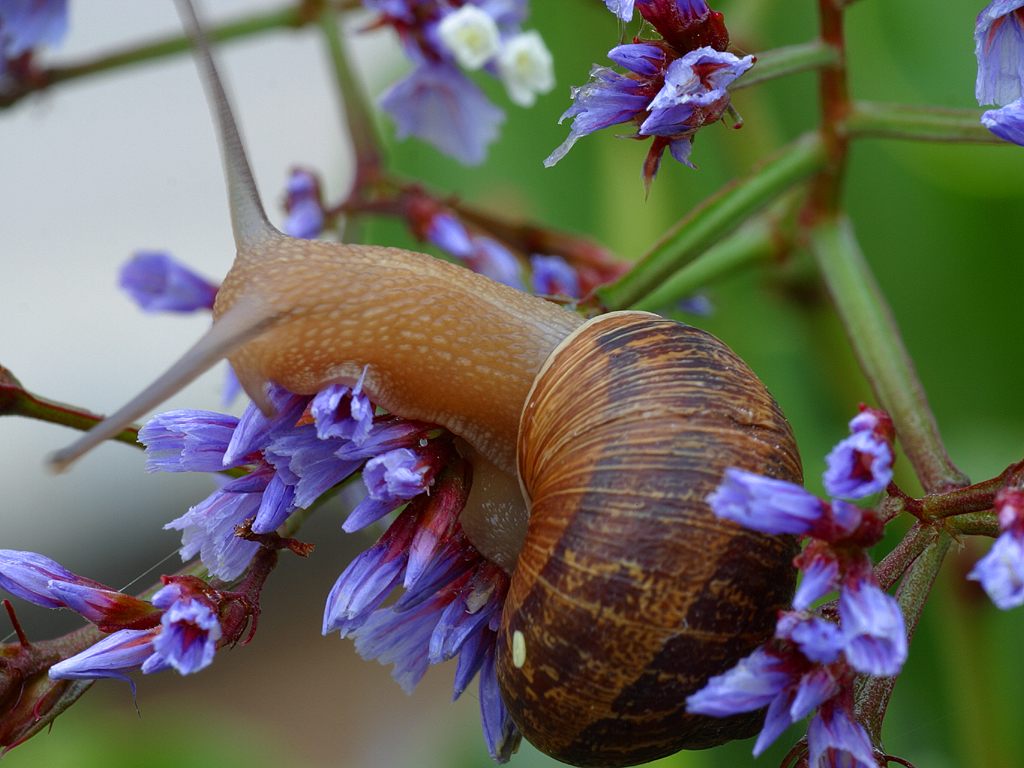
The common garden snail is an easy, low-cost first invertebrate that thrives in a simple humid tub on vegetables and calcium. It is a USDA-regulated agricultural pest: moving it across state lines requires a federal PPQ 526 permit, some states (e.g. Florida) prohibit keeping it, and it must never be released.
ℹ️
Educational only. KinStation content is reviewed by licensed veterinarians but cannot replace an in-person exam. Always consult a licensed veterinarian or board-certified specialist for diagnosis, treatment, or any decision affecting your pet's health.
🩺 Need expert help with your garden snail?
Connect with a specialist near you or ask a licensed vet — never substitute online guidance for hands-on care in an emergency.
Mediterranean and Western Europe; introduced worldwide
Origin
Old World
Climate
🍂 Temperate
Family
Helicidae
Genus
Cornu
Part of the Land snails
Land snails are slow, hardy, hermaphroditic gastropods kept in humid terrariums with calcium for shell growth; some species are heavily regulated as invasive pests.
From the minimum an animal needs to be kept humanely, up to the ideal setup. Bigger is almost always better — minimums are floors, not targets.
Photo coming soon
Minimum
Juvenile land snail terrarium
10 gal with 3 in coco substrate
Common garden snails (Cornu aspersum) need humid bioactive substrate (coco-fibre + leaf litter), calcium supplementation (cuttlebone), and a tight-fit lid. Fresh leafy greens daily.
Photo coming soon
Recommended
Bioactive group enclosure
10–20 gal bioactive, 75–85% RH
Bioactive group enclosure with springtails, isopods, leaf litter, calcium-rich substrate, and varied fresh produce. Snails are social and will breed readily — re-home young responsibly.
Photo coming soon
Ideal
Planted bioactive vivarium
20 gal+ planted bioactive
Planted bioactive vivarium with live plants, cleanup crew, calcium substrate, and stable humidity. Note: garden snails are non-native pests in many regions — keep escape-proof.
Life & growth stages
How this animal changes through its life — each stage often has its own care, diet and space needs.
Photo coming soon
Egg
These invertebrates lay eggs — often in a guarded clutch, a silk sac (spiders), or a brood (carried by female isopods). The eggs are small and soft and develop without a true larval or pupal transformation.
Photo coming soon
Juvenile
Juveniles hatch as miniature versions of the adult and grow by molting their exoskeleton (or, in snails, by enlarging the shell). They gain size, segments, or leg pairs and gradually take on adult coloration with each molt.
Adult
Adults reach full size and reproductive maturity with the species' mature form and coloration. Many arachnids and myriapods continue to molt as adults, and sexes can differ in size or in specialized appendages.
Habitat & enclosure
Keep a small group in a ventilated plastic or glass tub with moist substrate; a few liters per snail is plenty. Maintain room temperature and high humidity by misting. They are social-tolerant and do fine in groups. Provide hides and a calcium source.
Substrate
A few centimeters of moist coco fiber or topsoil for moisture and egg-laying; keep lightly damp and spot-clean.
Equipment & setup
Ventilated tub, cuttlebone, shallow water dish, spray bottle, and a couple of hides. No heating needed at room temperature.
Diet
A herbivore that eats lettuce, cucumber, carrot, dandelion, and other greens, with cuttlebone or eggshell for calcium. Avoid citrus and salty foods. A shallow water dish and regular misting keep them hydrated.
Behavior & temperament
Nocturnal grazers that retreat into the shell and seal it with a mucus epiphragm when dry. Hermaphroditic — any pair can mate and lay clutches of eggs in the soil. Gentle and easy to handle with damp hands.
Health
Very hardy. Shell damage and soft shells indicate calcium shortage — always offer cuttlebone. Keep substrate clean to avoid mites and mold. As a federally regulated crop pest it cannot legally be shipped across state lines without a USDA PPQ 526 permit, some states ban keeping it entirely, and it must never be released into the wild.
Tips, DIY & hacks
Check your state's rules before keeping — keeping is restricted or banned in some states. Source wild-caught snails only from pesticide-free areas, remove or freeze egg clutches to manage numbers, and never release captive snails outdoors.