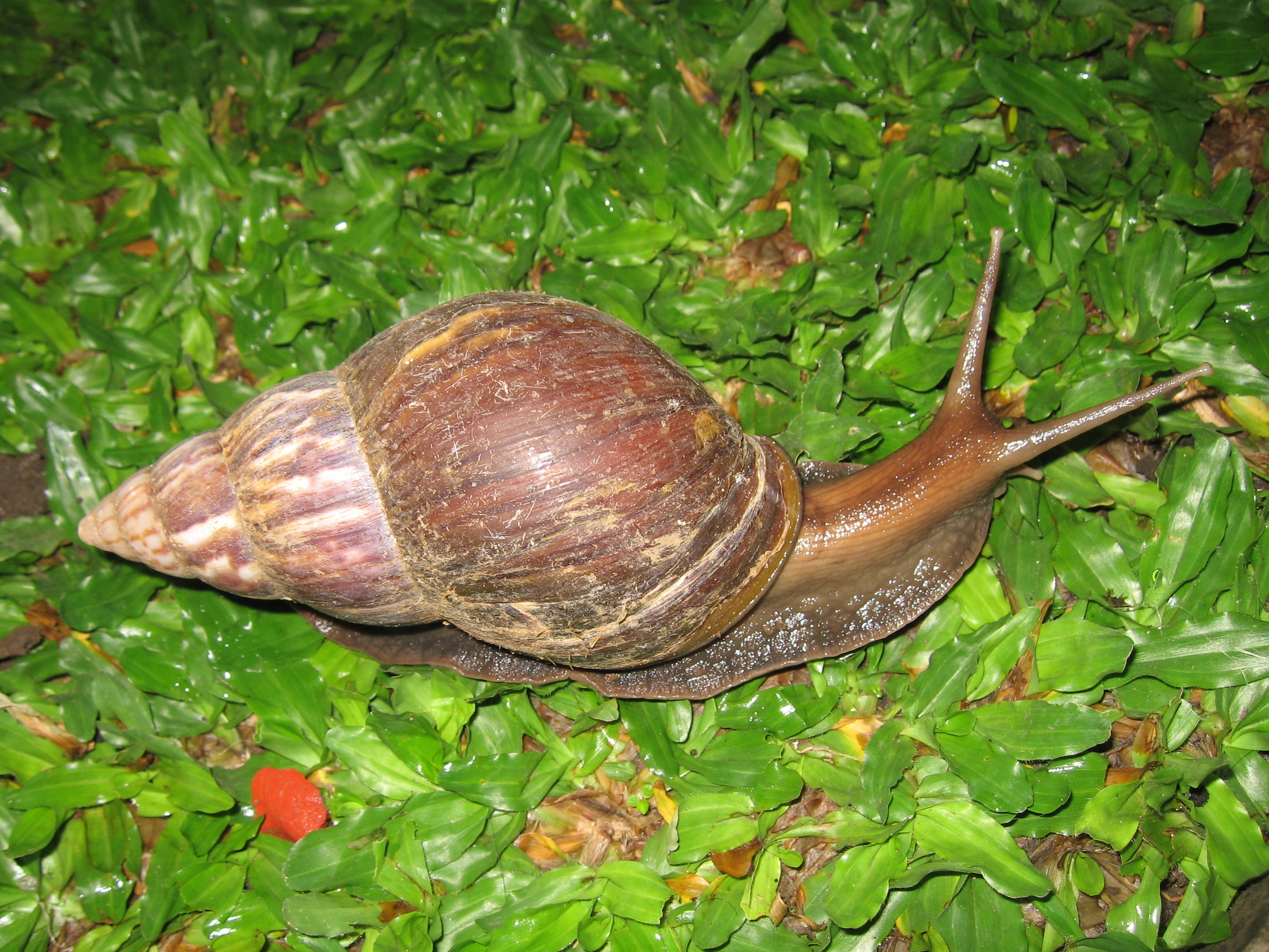
The giant African land snail is one of the world's largest land snails — easy to keep, long-lived, and hardy. Critically, it is a federally prohibited plant pest in the United States: possession, import, and interstate movement are illegal without a USDA APHIS permit, and it is regarded as a serious agricultural pest and human-health risk.
ℹ️
Educational only. KinStation content is reviewed by licensed veterinarians but cannot replace an in-person exam. Always consult a licensed veterinarian or board-certified specialist for diagnosis, treatment, or any decision affecting your pet's health.
🩺 Need expert help with your giant african land snail?
Connect with a specialist near you or ask a licensed vet — never substitute online guidance for hands-on care in an emergency.
Very large; shell up to 20 cm (8 in), body extends well beyond the shell.
Lifespan
5–9 years
Social needs
group
Native region
East Africa; invasive across the tropics
Origin
Old World
Climate
🌴 Tropical
Family
Achatinidae
Genus
Lissachatina
Part of the Land snails
Land snails are slow, hardy, hermaphroditic gastropods kept in humid terrariums with calcium for shell growth; some species are heavily regulated as invasive pests.
From the minimum an animal needs to be kept humanely, up to the ideal setup. Bigger is almost always better — minimums are floors, not targets.
Photo coming soon
Minimum
Juvenile GALS terrarium
10 gal with 4 in calcium-rich substrate
Giant African land snails (Achatina/Lissachatina spp.) grow to 8+ inches — coco-fibre + leaf litter substrate, cuttlebone, fresh produce, and 75–85% humidity. ILLEGAL in the US (federally banned) and many other countries — verify local law before keeping.
Photo coming soon
Recommended
Adult GALS bioactive
20 gal long bioactive, 80% RH
Larger bioactive enclosure with calcium-rich substrate, deep humid coco-fibre, multiple hides, and varied vegetable matter. Adults are giants — house solo or in pairs to limit egg production.
Photo coming soon
Ideal
Bioactive jungle vivarium
29 gal+ bioactive jungle, 80–85% RH
Bioactive jungle vivarium with isopods, springtails, live plants, and calcium-rich substrate. Long-lived (5–10 years). Eggs MUST be frozen / destroyed to prevent invasive release.
Life & growth stages
How this animal changes through its life — each stage often has its own care, diet and space needs.
Photo coming soon
Egg
These invertebrates lay eggs — often in a guarded clutch, a silk sac (spiders), or a brood (carried by female isopods). The eggs are small and soft and develop without a true larval or pupal transformation.
Photo coming soon
Juvenile
Juveniles hatch as miniature versions of the adult and grow by molting their exoskeleton (or, in snails, by enlarging the shell). They gain size, segments, or leg pairs and gradually take on adult coloration with each molt.
Adult
Adults reach full size and reproductive maturity with the species' mature form and coloration. Many arachnids and myriapods continue to molt as adults, and sexes can differ in size or in specialized appendages.
Habitat & enclosure
Where legal, keep in a glass terrarium (minimum ~30 L per adult) with a tight, ventilated lid and deep moist substrate for burrowing. Maintain warmth (20-28 C) and high humidity (70-90%) by misting. These snails are social-tolerant and can be kept in groups. In the US, keeping them at all is prohibited without a USDA APHIS permit — ordinary hobbyists cannot legally own one.
Substrate
Deep (8-10 cm) moist coco fiber or topsoil lets them burrow and lay eggs and holds humidity; keep damp and spot-clean waste.
Equipment & setup
Ventilated glass terrarium, deep substrate, cuttlebone for calcium, shallow water dish, spray bottle, and a heat mat or low bulb in cool rooms.
Diet
A herbivore/detritivore that eats leafy greens, cucumber, carrot, squash, and fruit, plus a constant calcium source (cuttlebone) for shell growth. Avoid salty, acidic, or processed foods. Provide a shallow water dish and mist for hydration.
Behavior & temperament
Nocturnal, slow grazers that burrow to rest and during dry spells (estivation). Hermaphroditic — any two adults can mate, and a single snail can lay hundreds of eggs, which is exactly why it is such a dangerous invasive. Docile and easy to handle with clean, wet hands.
Health
Hardy if humidity and calcium are adequate; shell cracks and thinning come from calcium deficiency. They can carry rat lungworm (Angiostrongylus), a human-health risk — wash hands after contact. Legality is the dominant concern: in the US, unpermitted possession is a federal offense and seized snails are destroyed.
Tips, DIY & hacks
Do NOT acquire or keep this species in the US without a USDA APHIS permit, and never release one outdoors. If keeping legally elsewhere, freeze unwanted eggs to prevent population explosions and always provide cuttlebone for shell health.