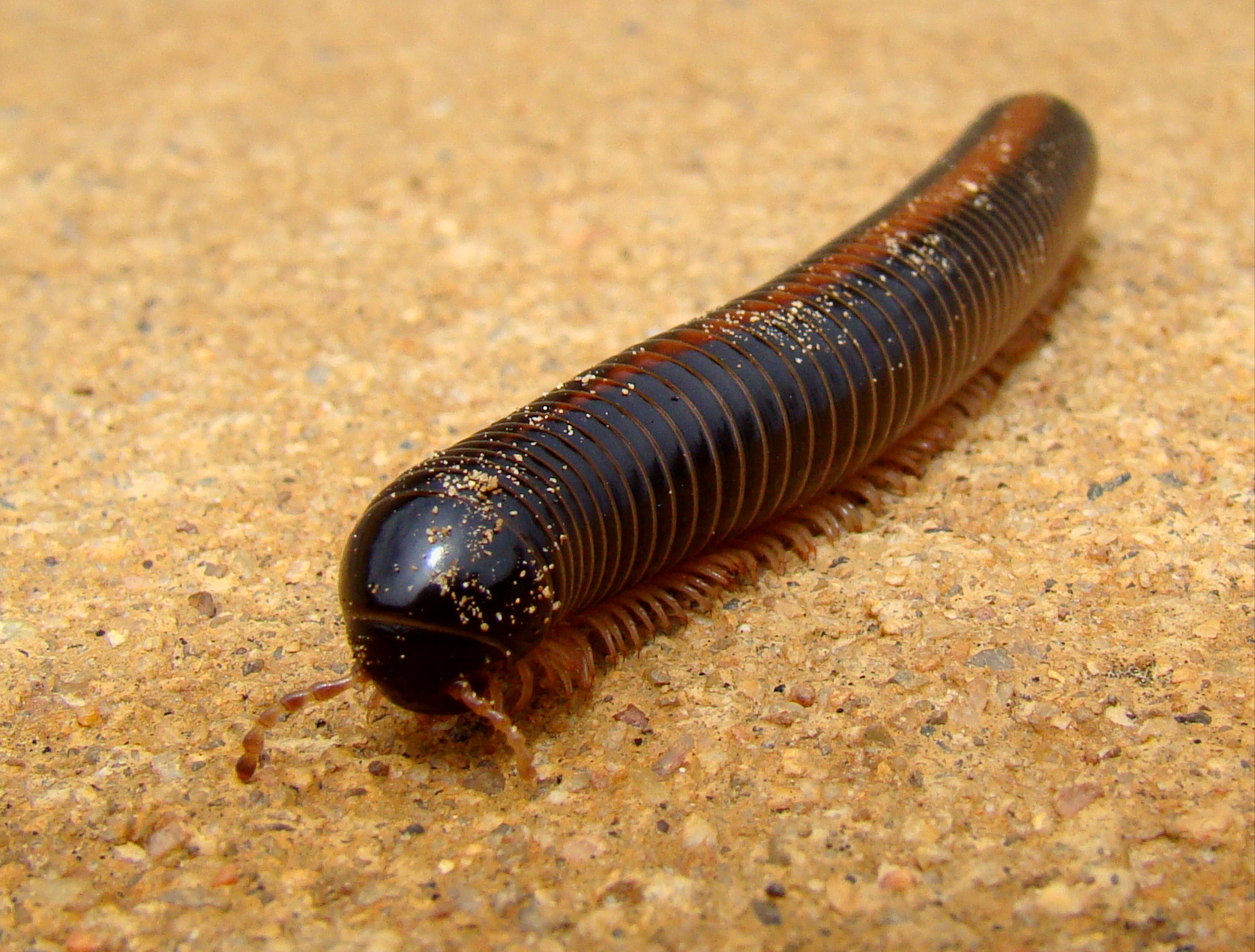
A massive, glossy black detritivore that is gentle, slow, and easy to keep, making it a superb beginner invertebrate. Note that it is barred from import into the United States as a plant-pest risk, so check legality locally.
ℹ️
Educational only. KinStation content is reviewed by licensed veterinarians but cannot replace an in-person exam. Always consult a licensed veterinarian or board-certified specialist for diagnosis, treatment, or any decision affecting your pet's health.
🩺 Need expert help with your giant african millipede?
Connect with a specialist near you or ask a licensed vet — never substitute online guidance for hands-on care in an emergency.
One of the world's largest millipedes; 25-30 cm (10-12 in) long, finger-thick.
Lifespan
5–10 years
Social needs
group
Native region
East Africa (coastal Tanzania, Kenya, Mozambique)
Origin
Old World
Climate
🌴 Tropical
Family
Spirostreptidae
Genus
Archispirostreptus
Part of the Millipedes
Gentle, detritivorous arthropods that recycle leaf litter and rotting wood. Hardy and low-maintenance, they make excellent display and beginner invertebrates.
Giant African Millipede (Archispirostreptus gigas) crossing the road ...
Bernard DUPONT · Wikimedia Commons · CC BY-SA 2.0
Habitat & space requirements
From the minimum an animal needs to be kept humanely, up to the ideal setup. Bigger is almost always better — minimums are floors, not targets.
Photo coming soon
Minimum
Juvenile GAM enclosure
10 gal with 4–6 in substrate
Giant African millipedes (Archispirostreptus gigas) are the world's largest millipedes (up to 12 in) — wide enclosure with deep coco-fibre + rotting wood substrate, calcium supplement, and shallow water dish.
Photo coming soon
Recommended
Adult GAM floor space
20 gal long with 6–8 in substrate
Adults need real floor space — a 30 × 12 in footprint at minimum, deep humid substrate of coco-fibre + decaying hardwood + rotten wood, multiple hides, and 70–80% humidity.
Photo coming soon
Ideal
Bioactive giant millipede vivarium
29 gal+ bioactive, 75–80% RH
Bioactive tropical setup with deep mixed substrate, isopods, springtails, leaf litter, and decaying wood as a food source. Long-lived (7+ years) and social — multiple animals per enclosure is encouraged.
Life & growth stages
How this animal changes through its life — each stage often has its own care, diet and space needs.
Photo coming soon
Egg
These invertebrates lay eggs — often in a guarded clutch, a silk sac (spiders), or a brood (carried by female isopods). The eggs are small and soft and develop without a true larval or pupal transformation.
Photo coming soon
Juvenile
Juveniles hatch as miniature versions of the adult and grow by molting their exoskeleton (or, in snails, by enlarging the shell). They gain size, segments, or leg pairs and gradually take on adult coloration with each molt.
Adult
Adults reach full size and reproductive maturity with the species' mature form and coloration. Many arachnids and myriapods continue to molt as adults, and sexes can differ in size or in specialized appendages.
Habitat & enclosure
Provide a horizontal terrarium with a large floor area; a 40-75 L tank suits one or several adults, since these are social burrowers that do well in groups. The key is a deep substrate layer, at least 10-15 cm (4-6 in) and deeper is better, made of chemical-free coco fiber, topsoil, and a generous amount of decaying hardwood leaf litter and rotting wood, which is both shelter and food. A secure lid is needed, as they can climb and push.
Keep temperatures around 24-27 C (75-80 F) and humidity high, about 75-85%, by misting and keeping the lower substrate damp but never waterlogged. Maintain good ventilation to avoid mold, and include a shallow water dish or moist sponge area. No UVB or special lighting is required; these animals are nocturnal and shun bright light. Critically, the substrate must be free of pesticides, fertilizers, and cedar/pine.
Substrate
Provide a deep substrate (at least 10-15 cm, deeper than the animal is long) of moisture-retentive coconut fiber mixed with organic topsoil, rotting hardwood (oak, beech) and decaying leaf litter, which doubles as a primary food source. Keep it consistently damp like a wrung-out sponge but never waterlogged, and never use cedar, pine, or chemically treated wood or soil.
Equipment & setup
Use a glass or plastic terrarium with a secure, well-ventilated lid and horizontal floor space, maintaining 24-27 C and high humidity (70-80%); a low-wattage heat mat on the side (not under the deep substrate) can warm the enclosure in cool rooms. No UVB or special lighting is required since these are nocturnal detritivores, but a shallow, sturdy water dish and a piece of cork bark hide are appreciated.
Diet
Giant African millipedes are detritivores that eat decaying plant matter. The foundation of the diet is rotting hardwood leaf litter (oak, beech) and decaying white-rotting wood mixed into the substrate, supplemented with fresh vegetables and fruit such as cucumber, zucchini, leafy greens, carrot, and small amounts of banana or melon.
Provide a calcium source for healthy exoskeletons, such as a cuttlebone, crushed eggshell, or calcium powder dusted on food. They eat slowly and continuously from the substrate, so much of their nutrition comes from the bedding itself; keep that decomposing leaf and wood layer topped up. Remove uneaten fresh produce before it molds.
Behavior & temperament
These millipedes are calm, harmless, and slow-moving, spending much of the day burrowed and emerging at night to graze. They are highly tolerant of being kept communally and can be gently held, though handling should be brief and over a soft surface. When disturbed they coil into a defensive spiral and may secrete a benign defensive fluid that can stain skin and irritate eyes, so wash hands after handling and never rub your eyes.
Enrichment is a deep, naturalistic, bioactive-style setup with abundant leaf litter and rotting wood to burrow through and browse. They are not aggressive and have no venom or bite of concern. Springtails and isopods make good cleanup co-inhabitants in a bioactive enclosure.
Health
The most frequent health problems are mite infestations (often grain or parasitic mites on the body), dehydration and failed molts from substrate that is too dry, and exposure to toxins from pesticide-treated wood, soil, or produce. Molting is done buried in the substrate, where the animal is soft and vulnerable, so it must not be dug up or disturbed.
Prevent issues with clean, untreated substrate, stable high humidity, a calcium source, and good ventilation to suppress harmful mites. Predatory soil mites can be controlled with a bioactive cleanup crew. Never use cedar or pine bedding, and always confirm any new wood, leaves, or food are free of chemicals.
Tips, DIY & hacks
Mist regularly or pour water into one corner to keep a humidity gradient, and bury chunks of rotting hardwood for continuous grazing. Supplement leaf litter with calcium (cuttlebone or a calcium-dusted vegetable) to support exoskeleton molts, and avoid handling during and right after a molt when the new cuticle is soft; always wash hands afterward, as they can secrete a benzoquinone defensive fluid that stains and irritates.