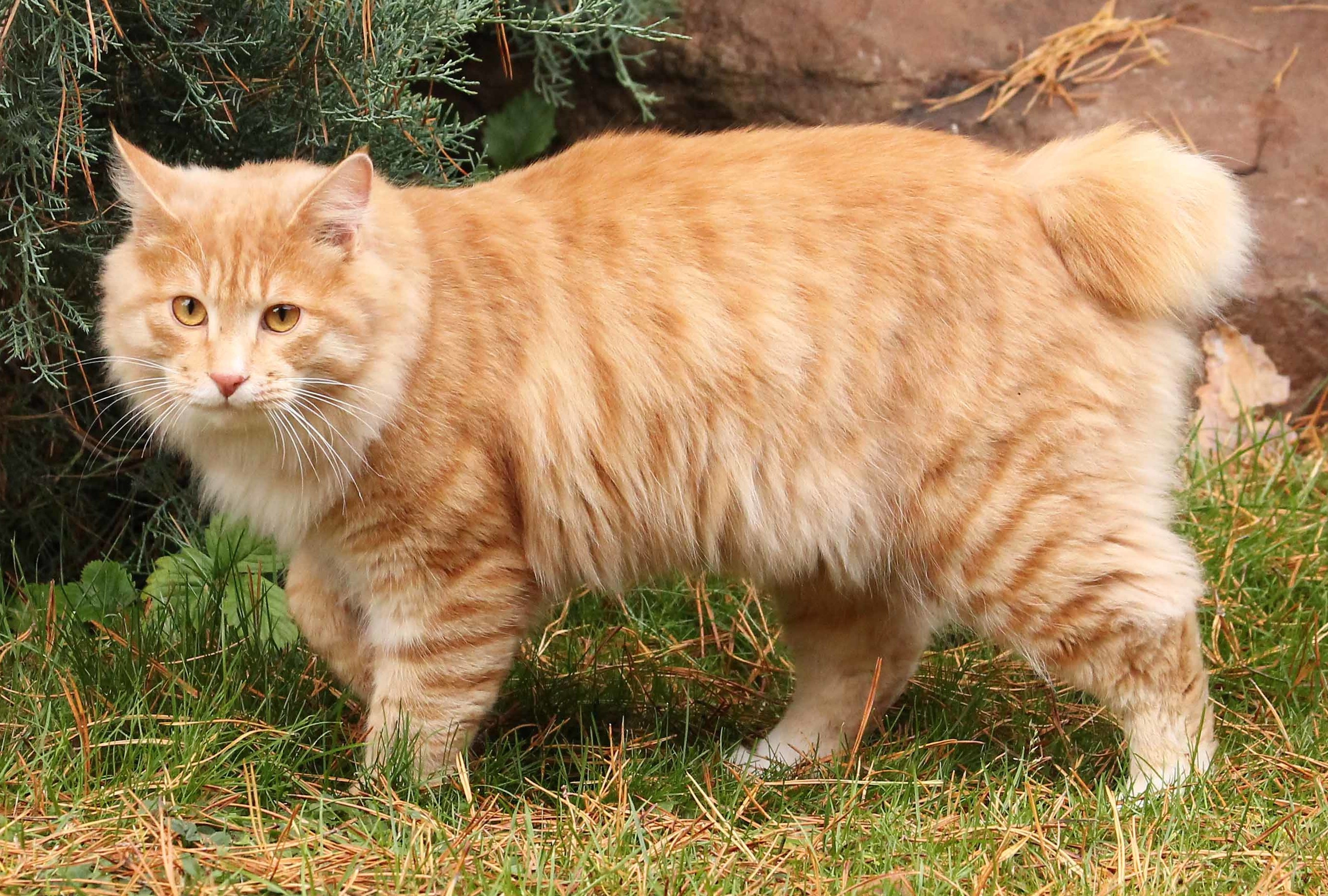
A naturally short-tailed, semi-wild landrace from the Kuril Islands, known for its sturdy build, distinctive unique pom-pom tail, and friendly, intelligent, almost dog-like nature.
ℹ️
Educational only. KinStation content is reviewed by licensed veterinarians but cannot replace an in-person exam. Always consult a licensed veterinarian or board-certified specialist for diagnosis, treatment, or any decision affecting your pet's health.
🩺 Need expert help with your kurilian bobtail?
Connect with a specialist near you or ask a licensed vet — never substitute online guidance for hands-on care in an emergency.
Welfare floor for a free-roam pet cat: a secure indoor home with one litter box per cat plus one extra (placed in different rooms), multiple scratching posts and a sturdy cat tree, food and water stations kept away from the litter, and 20–30 minutes of interactive wand/puzzle play every day. Outdoor access only via a fully-fenced catio or harness walks.
Photo coming soon
Recommended
Multi-room home with vertical territory
≥ 2 floors / wide rooms, cat trees, catio access
A multi-cat-friendly household with several tall cat trees and wall-mounted perches, window seats with a view, separate feeding stations per cat to reduce resource guarding, and access to a screened catio or balcony for sun and air. Vertical territory matters as much as floor space for cats.
Photo coming soon
Ideal
Indoor home + catio + enriched garden
House + outdoor catio + cat-proofed garden
Indoor home paired with a large outdoor catio (or a cat-proof-fenced garden), abundant environmental enrichment (climbing branches, foraging puzzles, water features), and group-compatible housing if multi-cat. This combines the safety of indoor-only living with the behavioural enrichment of supervised outdoor time.
Life & growth stages
How this animal changes through its life — each stage often has its own care, diet and space needs.
Photo coming soon
Newborn
Newborn mammals are nursed on their mother's milk. Many are born helpless — blind, deaf, and sparsely furred (altricial, as in dogs, cats, and rodents) — while others stand and follow within hours (precocial, as in hoofed livestock).
Photo coming soon
Juvenile
After weaning, juveniles grow quickly and become increasingly active, playful, and independent. Adult coat, proportions, and (in many species) the permanent teeth come in as they approach full size.
Photo coming soon
Adult
Adults reach full body size and sexual maturity, with the species' mature coat and build. Sexual dimorphism — differences in size, mane, horns, or markings — is pronounced in some mammals and subtle in others.
Senior
Senior animals show aging signs such as graying fur, reduced activity, and a greater need for veterinary monitoring of joints, teeth, and organ function. Lifespan and the onset of old age vary widely by species and size.
Color & pattern variants
Natural variants occur in the wild; selectively bred (man-made) variants were developed in captivity.
Adaptable to apartments or houses but is an athletic, active breed that loves to climb, jump, and explore — provide tall cat trees, perches, and plenty of play. Many Kurilians enjoy water and fetch. Daily activity and interaction keep this robust outdoor-bred cat satisfied; secure outdoor access or leash walks are appreciated.
Diet
A balanced complete cat food matched to life stage is sufficient; no breed-specific dietary needs. Given its muscular, working-cat heritage and good appetite, feed measured portions and monitor body condition to avoid excess weight. Provide fresh water at all times.
Behavior & temperament
Friendly, confident, intelligent, and highly trainable, with strong fetching and hunting instincts. Sociable and people-oriented without being clingy; gets along well with children, dogs, and other cats. Energetic and curious, it enjoys problem-solving toys and interactive games. Generally even-tempered and not excessively vocal.
Health
Each Kurilian's bob tail is unique and, importantly, the tail mutation is not linked to spinal or skeletal disease as in some other tailless breeds — it is considered a healthy natural breed. No major breed-specific genetic disorders are widely documented. Routine veterinary care, dental checks, and standard parasite/vaccination protocols are advised; the tail should never be handled roughly.
Tips, DIY & hacks
Comes in shorthair and semi-longhair; both have a water-resistant double coat that sheds seasonally. Brush weekly (more during spring/autumn molts) to manage shedding and prevent mats in longhairs. The breed thrives on enrichment — offer puzzle feeders, climbing, and fetch. Reward-based training is highly effective.