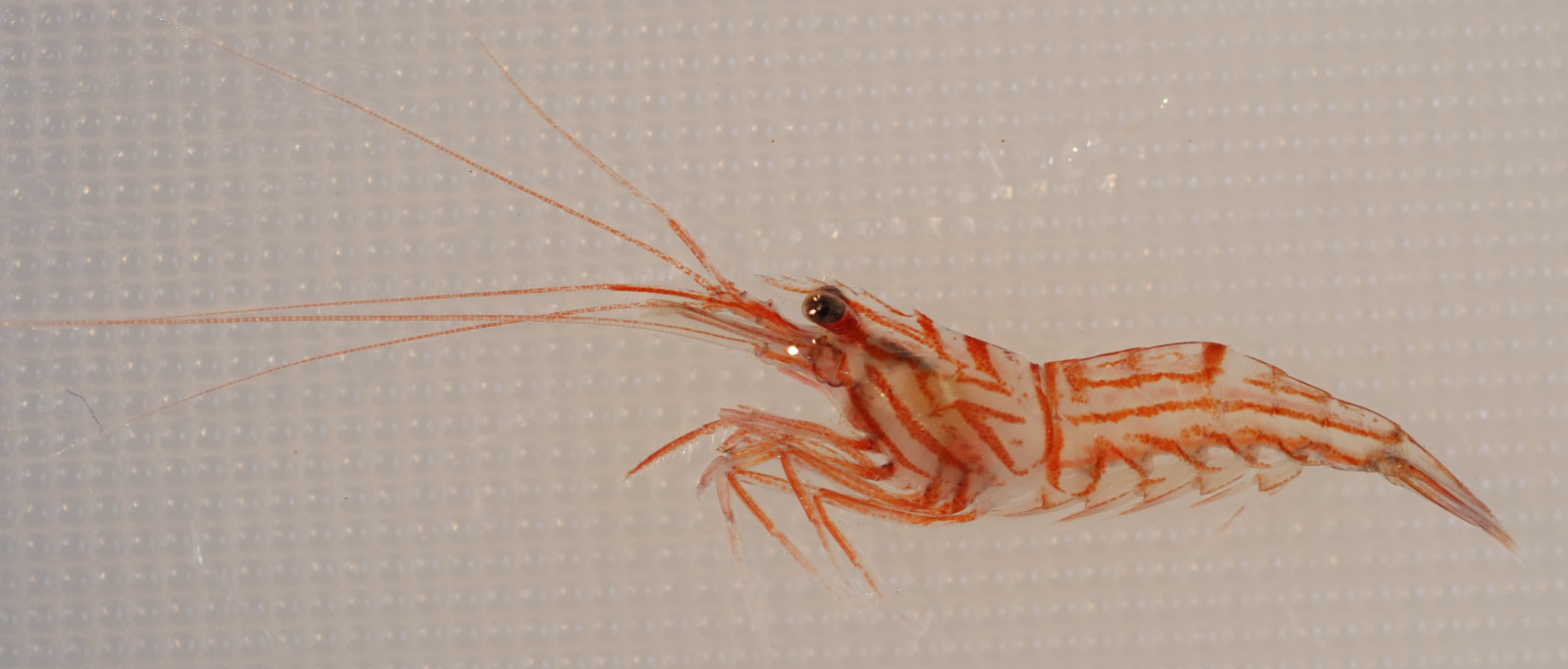
Photo: Smithsonian Environmental Research Center · CC BY 2.0
The peppermint shrimp is a small, translucent, red-striped Western Atlantic Lysmata famed in the hobby for eating nuisance Aiptasia (glass) anemones. Hardy, peaceful, and inexpensive, it makes an excellent reef cleanup crew member and is most effective when kept in a small group.
ℹ️
Educational only. KinStation content is reviewed by licensed veterinarians but cannot replace an in-person exam. Always consult a licensed veterinarian or board-certified specialist for diagnosis, treatment, or any decision affecting your pet's health.
🩺 Need expert help with your peppermint shrimp?
Connect with a specialist near you or ask a licensed vet — never substitute online guidance for hands-on care in an emergency.
About 3-4 cm (1.25-1.75 in) body length; translucent with fine red longitudinal stripes.
Lifespan
1–3 years
Social needs
group
Native region
Western Atlantic, Caribbean, and Gulf of Mexico reefs
Origin
New World
Climate
⛅ Subtropical
Water type
🌊 Marine
Family
Lysmatidae
Genus
Lysmata
Part of the Cleaner Shrimp
Brightly colored marine shrimp, mostly of the genus Lysmata, that set up cleaning stations and pick parasites and dead tissue from fish. Hardy, peaceful, and almost universally reef-safe, they are among the most popular and useful invertebrates in the saltwater hobby.
From the minimum an animal needs to be kept humanely, up to the ideal setup. Bigger is almost always better — minimums are floors, not targets.
Photo coming soon
Minimum
Reef nano tank
20 gal (≈ 76 L) reef
Lysmata wurdemanni eats Aiptasia anemones — buy true Atlantic L. wurdemanni for that purpose. Keep in groups of 3–5 in a 20+ gal reef with rockwork; ensure species ID is correct (similar shrimp don't eat Aiptasia).
Photo coming soon
Recommended
Established reef aquarium
30+ gal reef, rockwork caves
A 30+ gal established reef with rockwork caves, stable salinity (1.025), and peaceful tankmates. Peppermints will eat coral if underfed; supplement with frozen mysis once Aiptasia is gone.
Photo coming soon
Ideal
Mature reef display
40+ gal mature reef
A mature reef display with diverse rockwork, peaceful community, and an Aiptasia-control role. Reef-safe with most corals if well-fed.
Life & growth stages
How this animal changes through its life — each stage often has its own care, diet and space needs.
Photo coming soon
Larva
Most marine invertebrates hatch into microscopic planktonic larvae (such as the zoea of crustaceans or the bipinnaria/veliger of echinoderms and mollusks) that drift and feed in the water column. The larva looks nothing like the adult and undergoes major reorganization.
Photo coming soon
Juvenile
After settling out of the plankton, the juvenile takes on a recognizable miniature of the adult body plan — a tiny shell, a small star, or a translucent shrimp. Crustaceans grow by molting, shedding the exoskeleton to enlarge.
Adult
Adults reach full size and reproductive maturity with the species' mature shell, shape, or coloration. Many continue to molt or grow throughout life, and some show sex differences in size or claw/appendage shape.
Habitat & enclosure
Keep in an established reef or marine tank of at least 40 L (10 gal), though it shows best in larger reef systems with abundant live rock and crevices. Hold temperature 24-27°C (75-80°F), pH 8.1-8.4, salinity SG 1.024-1.026, dKH 8-12, with low nitrate and stable parameters. Moderate flow and any standard reef lighting work; it is nocturnal and forages most actively at night.
Provide plenty of rockwork hiding spots, as this shrimp spends daylight hours tucked into caves and ledges.
Substrate
Build an aquascape of live rock with abundant caves and crevices for daytime shelter. Fine sand or a shallow reef bed beneath is suitable; the rock itself is the most important feature.
Equipment & setup
Use mature biological filtration (live rock plus sump or canister), a protein skimmer, and a heater for steady tropical temperatures. Moderate-flow powerheads and standard reef lighting are adequate; keep the system copper-free.
Diet
Omnivorous scavenger that famously preys on small Aiptasia and Anemonia-type pest anemones, along with detritus, leftover food, and dead tissue. In the aquarium feed mysis, brine shrimp, sinking pellets, and chopped seafood; well-fed shrimp may eat Aiptasia less aggressively, so let them stay slightly hungry if controlling pests.
Behavior & temperament
Peaceful, social, and reef-safe — best kept in groups of three or more, which boosts confidence and Aiptasia predation. Generally safe with corals and fish, though it may occasionally pick at very small polyps or zoanthids and large predatory fish will eat it. Largely nocturnal, hiding by day.
Health
Hardy, with most losses tied to poor acclimation and copper exposure rather than disease. Molting problems from low iodine or unstable chemistry can occur. Note that true Lysmata wurdemanni is sometimes confused with similar look-alike species that do not eat Aiptasia, so source from reputable suppliers if pest control is the goal.
Tips, DIY & hacks
Drip-acclimate over an hour and add them with the lights off. For Aiptasia control, introduce a small group rather than a single shrimp and avoid overfeeding so they target the pests. Maintain trace iodine and stable calcium/alkalinity for healthy molts.