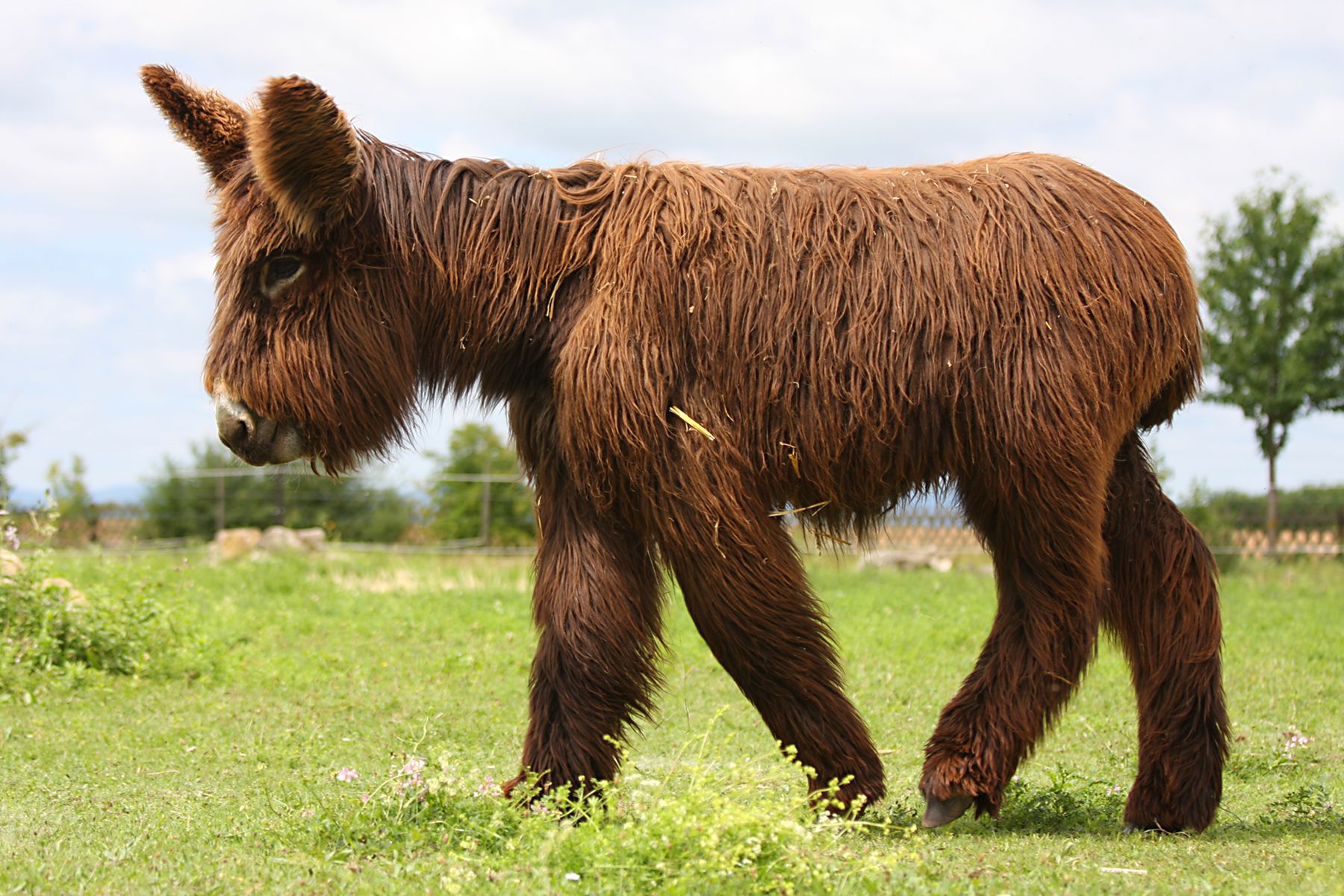
The Poitou is an ancient, critically rare French breed famous for its long, shaggy, matted coat (the cadenette) and its historic role in producing the renowned Poitevin mule. It is a large, gentle, slow-maturing donkey requiring dedicated coat and conservation-minded care.
ℹ️
Educational only. KinStation content is reviewed by licensed veterinarians but cannot replace an in-person exam. Always consult a licensed veterinarian or board-certified specialist for diagnosis, treatment, or any decision affecting your pet's health.
🩺 Need expert help with your poitou donkey?
Connect with a specialist near you or ask a licensed vet — never substitute online guidance for hands-on care in an emergency.
From the minimum an animal needs to be kept humanely, up to the ideal setup. Bigger is almost always better — minimums are floors, not targets.
Photo coming soon
Minimum
Large donkey stall + dry-lot + DRY shelter
12×14 ft stall + 1 ac dry-lot + dry run-in shelter
Large/mammoth donkeys are draft-sized animals — welfare floor: a 12×14 ft stall, at least 1 acre of dry-lot, and a fully enclosed DRY shelter (donkey coats are not waterproof). A bonded companion is essential. Heritage and rare breeds may need careful breeder records. Rare / heritage breed — responsible owners keep accurate breed-society records and ideally participate in a recognised conservation programme. Distinctive long matted "cadanette" coat — careful grooming and parasite control.
Photo coming soon
Recommended
Stall + rotated dry-lot + bonded pair
12×14 ft stall + 2–3 ac rotated dry-lot/rough pasture
Roomy stall, 2–3 acres of rotated dry-lot or rough pasture per donkey, a fully roofed shelter, and a bonded pair. Easy-keeper metabolism on a large frame — feed mostly straw, limit rich grass, and budget for a draft-rated farrier for big hooves.
Photo coming soon
Ideal
Large-donkey barn + browse + heritage herd
Donkey barn + 5+ ac browse/rough pasture + bonded herd
Purpose-built barn with 5+ acres of rough pasture or browse per donkey, a bonded herd, and a donkey-savvy vet and farrier. For rare/heritage breeds (Poitou, Andalusian, Mammoth, Zamorano-Leons), participation in a recognised conservation programme is part of responsible ownership.
Life & growth stages
How this animal changes through its life — each stage often has its own care, diet and space needs.
Photo coming soon
Newborn
Newborn mammals are nursed on their mother's milk. Many are born helpless — blind, deaf, and sparsely furred (altricial, as in dogs, cats, and rodents) — while others stand and follow within hours (precocial, as in hoofed livestock).
Photo coming soon
Juvenile
After weaning, juveniles grow quickly and become increasingly active, playful, and independent. Adult coat, proportions, and (in many species) the permanent teeth come in as they approach full size.
Photo coming soon
Adult
Adults reach full body size and sexual maturity, with the species' mature coat and build. Sexual dimorphism — differences in size, mane, horns, or markings — is pronounced in some mammals and subtle in others.
Senior
Senior animals show aging signs such as graying fur, reduced activity, and a greater need for veterinary monitoring of joints, teeth, and organ function. Lifespan and the onset of old age vary widely by species and size.
Color & pattern variants
Natural variants occur in the wild; selectively bred (man-made) variants were developed in captivity.
Requires pasture with a clean, dry shelter and bedded stall; the heavy coat means it must be kept dry and protected from mud, which mats and rots the cadenette. Provide stout fencing and a companion. Because the population is tiny and inbred, most are kept within managed conservation/breeding programs.
Diet
Forage-based — grass hay and limited grazing. Prone to obesity and laminitis on rich feed, so ration carefully and use grazing muzzles on good pasture. Salt/mineral access and free-choice water. Breeding stock may need modest supplementation, but avoid high-grain diets.
Behavior & temperament
Docile, calm, gentle and tractable — the Poitou was bred purely as a mule-foundation sire (crossed with the Poitevin draft mare to make working mules) and today functions as a heritage, conservation and pet/show animal. Temperament makes it easy to handle despite its size, though it is slow to mature.
Health
Critically endangered with a small gene pool, so inbreeding-related fertility and vigor concerns matter. The signature long coat is high-maintenance and prone to matting, skin infection, lice and fly-strike if neglected; some keepers clip it for welfare. Standard donkey risks apply: obesity, laminitis, hyperlipemia, lungworm, dental and hoof overgrowth, and disease masking due to stoicism.
Tips, DIY & hacks
Decide deliberately whether to maintain or clip the cadenette — an unmanaged coat is a genuine welfare problem; if kept long it needs regular checking for mats, parasites and skin disease. Keep bedding clean and dry. Engage with the studbook/conservation registry before breeding to manage genetic diversity. Routine farriery, dental checks and fecal-egg-count-guided deworming.