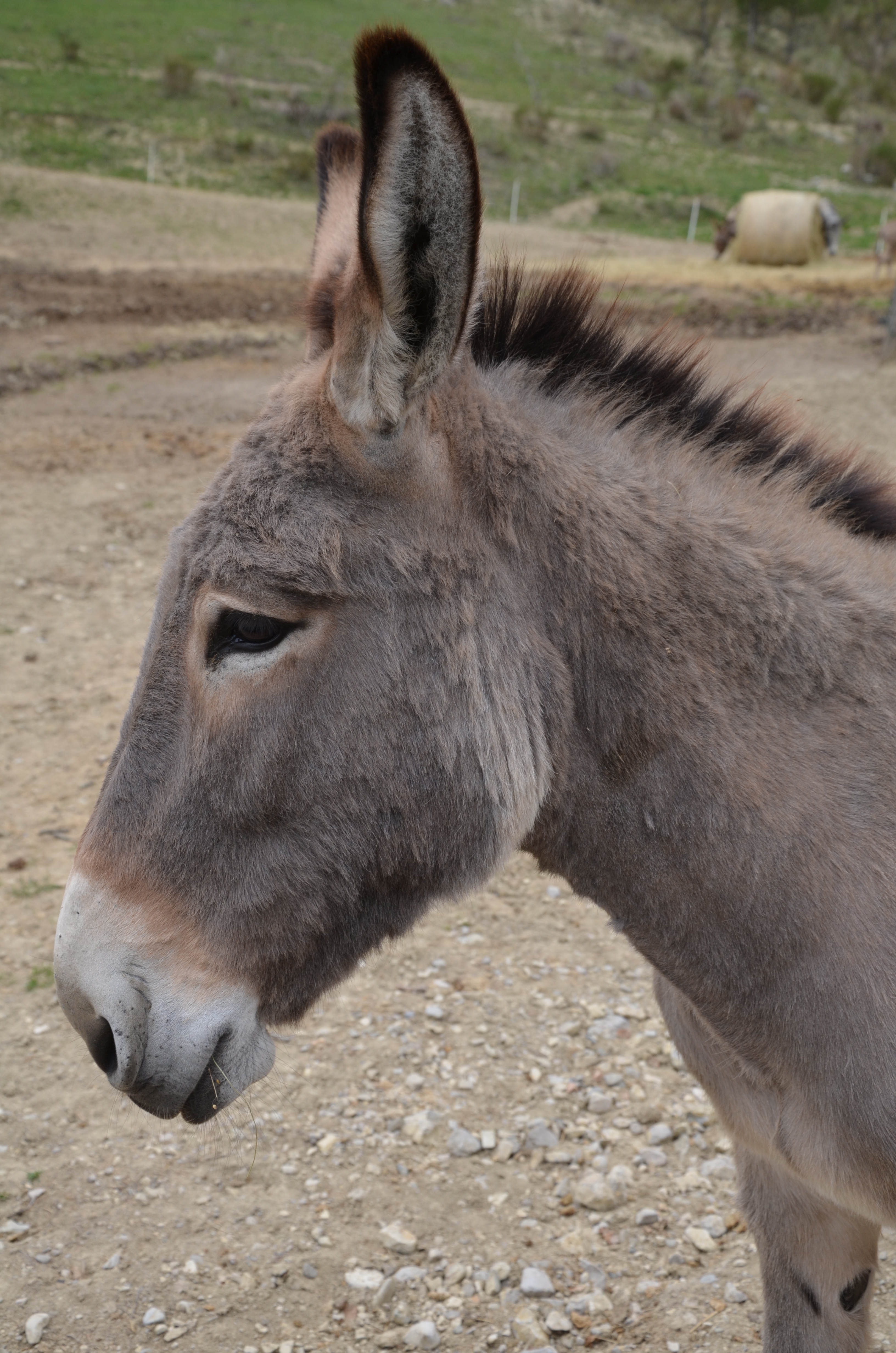
The Provence Donkey is a hardy grey French breed from the Provence region, traditionally used as a pack and herding companion for transhumant shepherds. It is a sturdy, even-tempered medium donkey well suited to dry Mediterranean terrain.
ℹ️
Educational only. KinStation content is reviewed by licensed veterinarians but cannot replace an in-person exam. Always consult a licensed veterinarian or board-certified specialist for diagnosis, treatment, or any decision affecting your pet's health.
🩺 Need expert help with your provence donkey?
Connect with a specialist near you or ask a licensed vet — never substitute online guidance for hands-on care in an emergency.
From the minimum an animal needs to be kept humanely, up to the ideal setup. Bigger is almost always better — minimums are floors, not targets.
Photo coming soon
Minimum
Stall + dry shelter + bonded companion
12×12 ft stall + 0.5 ac dry-lot + DRY 3-sided shed + bonded mate
Donkeys are NOT waterproof — they need DRY shelter (rain rot risk). Solo donkeys are deeply unhappy; bond them to another donkey or equid. Provence Donkey is a rare French heritage breed — long-haired; conservation priority.
Photo coming soon
Recommended
Pasture rotation + dry barn
12×12 stall + 1-2 ac pasture + dry barn + bonded pair
Donkeys are easy keepers — prone to obesity/laminitis on rich pasture; supplement hay rather than grass.
Photo coming soon
Ideal
Managed pasture + working role
Barn + 2+ ac per donkey + bonded herd + work/companion role
Acreage + herd + a job (LGD for stock, driving, riding for larger donkeys). Heritage donkeys preserve genetics. Provence Donkey is a rare French heritage breed — long-haired; conservation priority.
Life & growth stages
How this animal changes through its life — each stage often has its own care, diet and space needs.
Photo coming soon
Newborn
Newborn mammals are nursed on their mother's milk. Many are born helpless — blind, deaf, and sparsely furred (altricial, as in dogs, cats, and rodents) — while others stand and follow within hours (precocial, as in hoofed livestock).
Photo coming soon
Juvenile
After weaning, juveniles grow quickly and become increasingly active, playful, and independent. Adult coat, proportions, and (in many species) the permanent teeth come in as they approach full size.
Photo coming soon
Adult
Adults reach full body size and sexual maturity, with the species' mature coat and build. Sexual dimorphism — differences in size, mane, horns, or markings — is pronounced in some mammals and subtle in others.
Senior
Senior animals show aging signs such as graying fur, reduced activity, and a greater need for veterinary monitoring of joints, teeth, and organ function. Lifespan and the onset of old age vary widely by species and size.
Color & pattern variants
Natural variants occur in the wild; selectively bred (man-made) variants were developed in captivity.
Pasture or scrubby rangeland with a simple dry shelter and secure fencing; well adapted to dry, rocky, warm conditions but needs protection from prolonged cold rain. Keep footing dry for hoof health and always provide a companion.
Diet
Forage-based — grass hay, straw and modest grazing; thrives on coarse, low-energy browse. Very feed-efficient and obesity-prone, so restrict rich pasture and grain and use muzzles when needed. Salt/mineral access and free-choice clean water.
Behavior & temperament
Calm, robust, sure-footed and good-natured — historically a pack/transhumance donkey accompanying sheep flocks and now popular for trekking, driving, conservation grazing and as a family pet. Friendly and easy to handle, making it a good beginner's donkey.
Health
Generally hardy. Standard donkey concerns: obesity, laminitis and hyperlipemia from overfeeding; lungworm from horse co-grazing; dental and hoof overgrowth; and stoic masking of pain. Its grey coat is not very waterproof, so provide shelter in wet, cold weather.
Tips, DIY & hacks
Keep hooves trimmed and dry; schedule dental exams; deworm by fecal-egg-count testing. Watch body condition — easy keepers fatten fast. Great trekking partner: condition gradually and check pack-saddle fit. Maintain a companion and offer enrichment to prevent boredom.