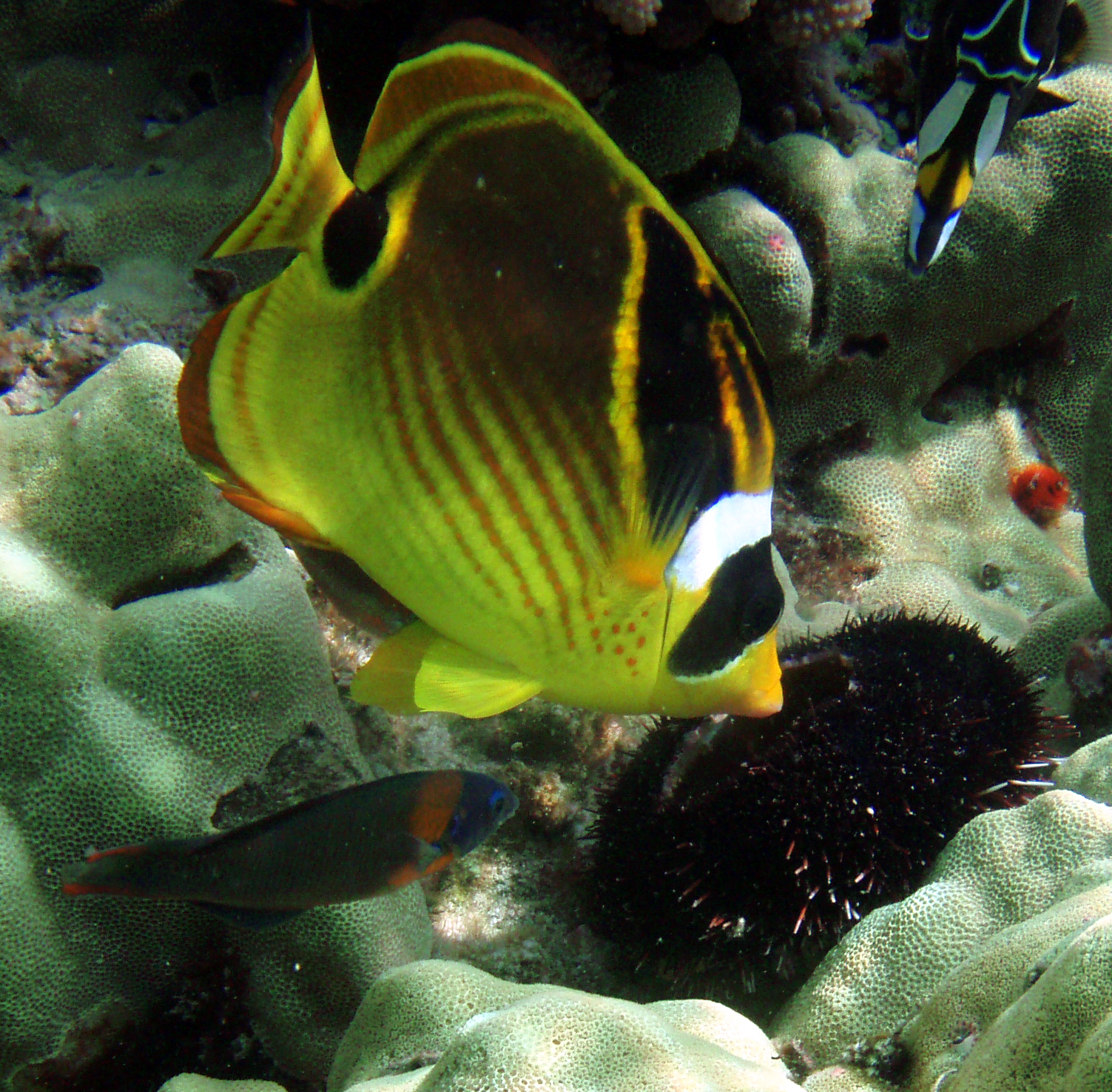
A hardy, golden-bodied butterflyfish with a black 'raccoon' mask across its eyes, one of the easier Chaetodon to keep. It adapts well to aquarium foods but is not reef-safe with most corals and invertebrates.
ℹ️
Educational only. KinStation content is reviewed by licensed veterinarians but cannot replace an in-person exam. Always consult a licensed veterinarian or board-certified specialist for diagnosis, treatment, or any decision affecting your pet's health.
🩺 Need expert help with your raccoon butterflyfish?
Connect with a specialist near you or ask a licensed vet — never substitute online guidance for hands-on care in an emergency.
Indo-Pacific, from the Red Sea and East Africa to Hawaii and the eastern Pacific
Climate
🌴 Tropical
Water type
🌊 Marine
Family
Chaetodontidae
Genus
Chaetodon
Part of the Butterflyfish
Disc-shaped, ornately patterned reef fish admired for their elegance; many are specialist feeders demanding mature systems and careful diets, and most are not fully reef-safe.
From the minimum an animal needs to be kept humanely, up to the ideal setup. Bigger is almost always better — minimums are floors, not targets.
Photo coming soon
Minimum
Long FOWLR
100 gal / 380 L FOWLR (≥5 ft)
Chaetodon lunula reaches 20 cm and is one of the more durable butterflies. FOWLR with peaceful tankmates, abundant rock, and stable params.
Photo coming soon
Recommended
Larger long FOWLR
125–150 gal / 470–570 L
6-ft+ tank lets the butterfly cruise. Varied frozen + sponge formula diet. Pair or single — avoid mixing with other butterflies under 240 gal.
Photo coming soon
Ideal
Large fish-only reef
180 gal+ / 680 L+ display
Spacious display with long swim lanes and mature ecosystem. Natural pair-bonding and cruising behaviour fully visible.
Life & growth stages
How this animal changes through its life — each stage often has its own care, diet and space needs.
Photo coming soon
Egg
Fish eggs are small, translucent spheres, often laid in clutches on plants, substrate, or in a nest — or carried/brooded by a parent in livebearing and mouth-brooding species. A dark eye spot and the curled embryo become visible inside as development progresses.
Photo coming soon
Fry
Newly hatched fry are tiny and semi-transparent, frequently still carrying a yolk sac that fuels them before they feed freely. They lack full fin structure and adult coloration, staying near cover until they can swim and forage on their own.
Photo coming soon
Juvenile
Juveniles look like miniature adults but with developing fins and muted or different markings; many species shift pattern and color as they mature. Growth is rapid at this stage given clean water and steady feeding.
Adult
Adults show the species' full size, finnage, and mature coloration, and are sexually mature. Many fish develop sex-specific differences in size, color, or fin shape, which can intensify during breeding.
Habitat & enclosure
Provide a fish-only or FOWLR tank of at least 285 L (75 gal), 450 L+ (120 gal) for an adult, with plenty of swimming room and rocky hideaways. Keep 24-27 C (75-81 F), pH 8.1-8.4, salinity 1.020-1.025 SG, dKH 8-12. Moderate flow and standard reef/marine lighting suit it; it appreciates dimmer caves to retire into at night.
Substrate
Fine sand or crushed coral with substantial live rock for grazing and shelter. A rockwork structure with caves supports its nocturnal resting behavior.
Equipment & setup
Run strong biological filtration and a protein skimmer to handle its messy, meaty feeding. A heater and moderate powerhead flow are sufficient; lighting can be standard marine LED.
Diet
Omnivore with a taste for coral polyps, anemones, algae and small invertebrates in the wild. In captivity it readily accepts frozen mysis, enriched brine, chopped seafood, marine pellets and seaweed (nori). Offer a varied diet with vegetable matter two to three times daily.
Behavior & temperament
Generally peaceful but bold and active; not reef-safe, as it nips LPS and soft corals, zoanthids, anemones and ornamental tubeworms. Keep one per tank (or a bonded pair in a large system) and house with robust tankmates such as tangs, wrasses and larger damsels. Can become semi-aggressive toward other butterflyfish.
Health
Hardier than most butterflyfish but still prone to marine ich and velvet, and to lateral-line erosion (HLLE) on poor diets or with stray voltage. Maintain pristine water and a vitamin-rich, varied diet. Quarantine new arrivals.
Tips, DIY & hacks
An excellent first butterflyfish because it usually eats quickly after acclimation. Drip-acclimate and quarantine for ich. Feed nori on a clip to satisfy its algae-grazing habit and reduce nipping at the aquascape.