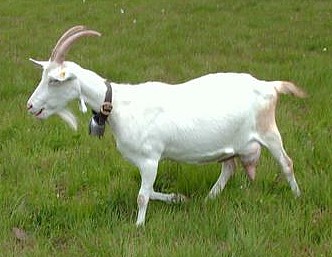
The Saanen is a large, all-white Swiss dairy breed and the world's premier milk-volume goat, often called the 'Holstein of goats.' Calm and easy to manage, it is the backbone of commercial dairy-goat production.
ℹ️
Educational only. KinStation content is reviewed by licensed veterinarians but cannot replace an in-person exam. Always consult a licensed veterinarian or board-certified specialist for diagnosis, treatment, or any decision affecting your pet's health.
🩺 Need expert help with your saanen goat?
Connect with a specialist near you or ask a licensed vet — never substitute online guidance for hands-on care in an emergency.
From the minimum an animal needs to be kept humanely, up to the ideal setup. Bigger is almost always better — minimums are floors, not targets.
Photo coming soon
Minimum
Pair + browse + climbing
2+ goats / 0.25 ac dry-lot + 3-sided shed + 5 ft fence
Goats are herd browsers — keep at least two, with climbing rocks/stumps, browse plants, mineral block (Cu/Se per region), and a clean dry shelter. Saanen is the highest-producing dairy goat — Swiss origin, mostly white, sensitive to direct sun.
Photo coming soon
Recommended
Rotational paddock + barn
0.5 ac per goat + barn + buck pen + rotation
Rotational paddocks reduce parasite load; barn for milking + kidding; bucks penned separately from does to control breeding.
Photo coming soon
Ideal
Pasture + browse + working dairy
1+ ac per goat + barn + milking parlor
Managed pasture + browse variety, twice-daily milking schedule, hoof + parasite + vet care. Saanen is the highest-producing dairy goat — Swiss origin, mostly white, sensitive to direct sun.
Life & growth stages
How this animal changes through its life — each stage often has its own care, diet and space needs.
Photo coming soon
Newborn
Newborn mammals are nursed on their mother's milk. Many are born helpless — blind, deaf, and sparsely furred (altricial, as in dogs, cats, and rodents) — while others stand and follow within hours (precocial, as in hoofed livestock).
Photo coming soon
Juvenile
After weaning, juveniles grow quickly and become increasingly active, playful, and independent. Adult coat, proportions, and (in many species) the permanent teeth come in as they approach full size.
Photo coming soon
Adult
Adults reach full body size and sexual maturity, with the species' mature coat and build. Sexual dimorphism — differences in size, mane, horns, or markings — is pronounced in some mammals and subtle in others.
Senior
Senior animals show aging signs such as graying fur, reduced activity, and a greater need for veterinary monitoring of joints, teeth, and organ function. Lifespan and the onset of old age vary widely by species and size.
Color & pattern variants
Natural variants occur in the wild; selectively bred (man-made) variants were developed in captivity.
Provide a dry, draft-free, well-ventilated shelter and secure pasture or browse yard. Their white coat and pink skin make them sun-sensitive, so ample shade is essential to prevent sunburn and reduce skin-cancer risk. Fence with 4-5 ft woven wire and offer platforms and browse for enrichment. House two or more — Saanens are placid but strongly herd-oriented.
Diet
Forage-based with grain support for heavy milkers: free-choice quality hay and browse plus measured concentrate on the milk stand for lactating does and growing kids. Provide loose goat minerals containing copper and selenium (never sheep minerals), salt, plentiful clean water, and free-choice baking soda. Introduce changes gradually and manage grain in males to prevent urinary calculi.
Behavior & temperament
Calm, gentle, docile, and easygoing — among the most placid dairy breeds, which makes them excellent for beginners and large commercial herds. Purpose is dairy: the highest-volume producer (commonly 2-3+ gallons/day in top does) with lower butterfat (~3%), ideal for fluid milk and large-scale production. Typically seasonal (fall) breeders. Their steady temperament suits machine milking and busy operations.
Health
Hardy and productive but with breed-specific notes: the white coat/pink skin predisposes them to sunburn and skin cancer on exposed areas (udder, ears, nose) — provide shade. High producers face milk fever (hypocalcemia), ketosis, and mastitis risk; support large udders and keep bedding clean. Standard goat concerns apply: copper/selenium deficiency, parasites (FAMACHA), coccidiosis in kids, hoof rot, and CAE/CL/Johne's (buy tested).
Tips, DIY & hacks
Provide reliable shade and consider sun protection for pale udders and noses in sunny climates. Trim hooves every 6-8 weeks; disbud kids early for hornless animals. Buy from CAE/CL/Johne's-tested herds. A consistent milking routine and good late-pregnancy nutrition prevent metabolic disease in these heavy milkers. Note: a Saanen carrying color genes that produces a tan/brown 'Saanen' is registered separately as a Sable. Year-round loose minerals with copper are a must.