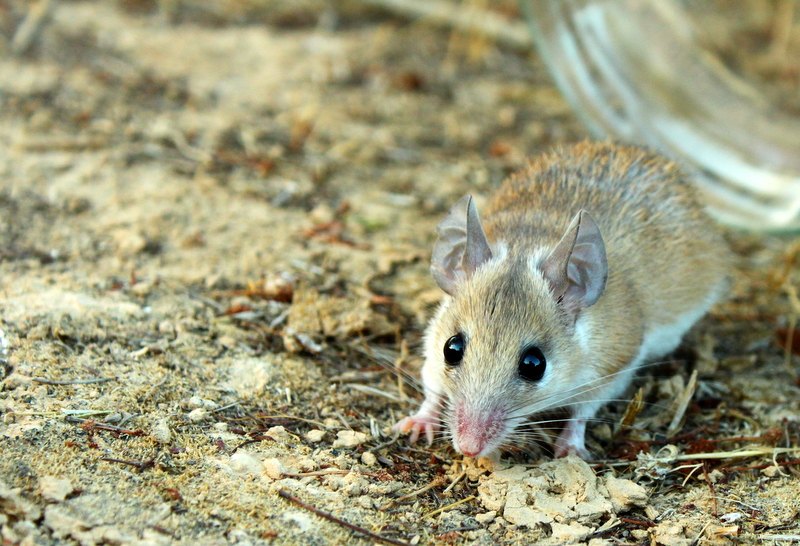
The Egyptian spiny mouse is a fast, highly social desert murid named for the stiff, spine-like guard hairs on its back. Famous for regenerating skin and being a precocial breeder, it makes a fascinating colony pet but is too quick and delicate for handling-focused homes.
ℹ️
Educational only. KinStation content is reviewed by licensed veterinarians but cannot replace an in-person exam. Always consult a licensed veterinarian or board-certified specialist for diagnosis, treatment, or any decision affecting your pet's health.
🩺 Need expert help with your egyptian spiny mouse?
Connect with a specialist near you or ask a licensed vet — never substitute online guidance for hands-on care in an emergency.
Body 9-13 cm plus a similar-length tail; weight roughly 30-90 g, with males usually larger.
Lifespan
3–5 years
Social needs
group
Native region
North Africa and the Middle East, especially arid and rocky regions of Egypt and the surrounding region.
Origin
Old World
Climate
🏜️ Arid
Family
Muridae
Genus
Acomys
Part of the Fancy Mice
Small, fast-breeding murid rodents kept as colony pets and display animals, including domesticated house mice and specialty species like the spiny and grass mice. Most are highly social, best in single-sex groups, and prized more for watching than handling.
From the minimum an animal needs to be kept humanely, up to the ideal setup. Bigger is almost always better — minimums are floors, not targets.
Photo coming soon
Minimum
Glass tank for a small group
60 × 30 × 30 cm for 3–4 spiny mice
Egyptian spiny mice are social colony rodents — keep at least 3–4 of the same sex. Glass tank with deep dry substrate, sand bath, multiple hides, and climbing branches. They are agile and escape through standard mouse bar-spacing.
Photo coming soon
Recommended
Larger tank with climbing structure
80 × 40 × 50 cm tall, planted
Taller tank with branches, rope, multi-level hides, sand bath, and varied substrate. Foraging clutter and seed-mix scatter-feeds bring out their natural behaviour.
Photo coming soon
Ideal
Bioactive arid vivarium
100 × 50 × 60 cm bioactive desert setup
Bioactive arid vivarium with deep dry substrate, live arid plants, branches, and varied microclimates. Closest to wild rock-crevice behaviour and supports natural group dynamics.
Life & growth stages
How this animal changes through its life — each stage often has its own care, diet and space needs.
Photo coming soon
Newborn
Newborn mammals are nursed on their mother's milk. Many are born helpless — blind, deaf, and sparsely furred (altricial, as in dogs, cats, and rodents) — while others stand and follow within hours (precocial, as in hoofed livestock).
Photo coming soon
Juvenile
After weaning, juveniles grow quickly and become increasingly active, playful, and independent. Adult coat, proportions, and (in many species) the permanent teeth come in as they approach full size.
Photo coming soon
Adult
Adults reach full body size and sexual maturity, with the species' mature coat and build. Sexual dimorphism — differences in size, mane, horns, or markings — is pronounced in some mammals and subtle in others.
Senior
Senior animals show aging signs such as graying fur, reduced activity, and a greater need for veterinary monitoring of joints, teeth, and organ function. Lifespan and the onset of old age vary widely by species and size.
Color & pattern variants
Natural variants occur in the wild; selectively bred (man-made) variants were developed in captivity.
Natural
representative
Wild-type agouti
The standard sandy-brown to greyish agouti coat with a pale belly and the characteristic stiff spiny guard hairs; the form seen in nearly all pet and lab stock.
Selectively bred (man-made)
representative
White / cream
Occasional paler cream or white-marked individuals selected in captivity; uncommon and not standardized, with most of the trade remaining wild-type.
Habitat & enclosure
Keep a small colony in a large, escape-proof glass tank or fine-mesh cage with a secure top; a single trio needs at least a 60 x 40 cm footprint, and bigger is always better for these athletic climbers and jumpers. Provide a deep substrate for digging, plus rocks, cork, branches, ropes, and multiple hides so subordinate animals can retreat. As an arid-zone species they need a warm, dry environment around 22-28 C (72-82 F) with a slightly warmer basking spot; ambient room temperature is usually fine, with a low-wattage thermostatically controlled heat source only in cool homes. Avoid high humidity, which predisposes them to respiratory and skin problems. A solid running wheel (no rungs or spokes that can trap their tails) and plenty of vertical clutter keep them active.
Substrate
Use a deep, dry, dust-free substrate such as aspen shavings, paper-based bedding, or a sand/soil mix that allows burrowing; add a sand bath area for grooming. Avoid cedar and pine shavings (aromatic oils) and avoid damp or moldy bedding. Provide plenty of nesting material like plain tissue, hay, or shredded paper.
Equipment & setup
Glass tank or fine-mesh cage with a secure lid, water bottle, solid (closed) exercise wheel, ceramic or low-wattage heat source with thermostat for cool rooms, thermometer/hygrometer, multiple hides, climbing furniture, sand bath, and a cuttlebone or mineral block. No UVB required.
Diet
Feed a quality rodent or low-fat mouse/gerbil seed-and-pellet mix as the base, kept lower in fat than a standard mouse diet to prevent obesity and fatty liver. Supplement with small amounts of vegetables, occasional fruit, and the odd insect (mealworms, crickets) or boiled egg for protein, plus a cuttlebone or mineral block. Avoid sugary and very fatty treats. Provide clean water via bottle and sipper at all times; despite being desert-adapted they should never be water-restricted in captivity.
Behavior & temperament
Spiny mice are mainly crepuscular-to-nocturnal but often active in short bursts through the day, intensely social, and should always be kept in same-sex groups or breeding colonies rather than alone. They are extremely fast, nervous, and prone to bolting and leaping, so they are best appreciated as a display/observation animal rather than a cuddle pet. Critically, they can shed patches of skin and their tail skin when grabbed by the tail (a predator-escape adaptation), so they must never be picked up by the tail; tame them gradually with hand-feeding and cupped scooping. Bites are possible when startled but they are not aggressive by nature.
Health
Generally hardy if kept warm and dry. Common issues include obesity and fatty liver from rich diets, respiratory infections in damp conditions, tail-skin and tail-tip loss from improper handling, and bumblefoot on wire flooring. They are remarkable for regenerating skin wounds and ear-hole tissue, but degloving injuries from rough handling are serious. Females are continuously polyestrous and breed readily year-round, so unplanned litters are common in mixed-sex groups; separate sexes to prevent overpopulation.
Tips, DIY & hacks
Never lift a spiny mouse by the tail — scoop with two hands or coax into a tube or cup. House them in single-sex groups unless you intend to breed, as they reproduce rapidly. Keep the enclosure dry and well ventilated, secure every gap (they squeeze through tiny openings), and use a solid covered wheel to prevent tail injuries. Hand-feed favorite treats daily to build trust with these flighty but rewarding little rodents.