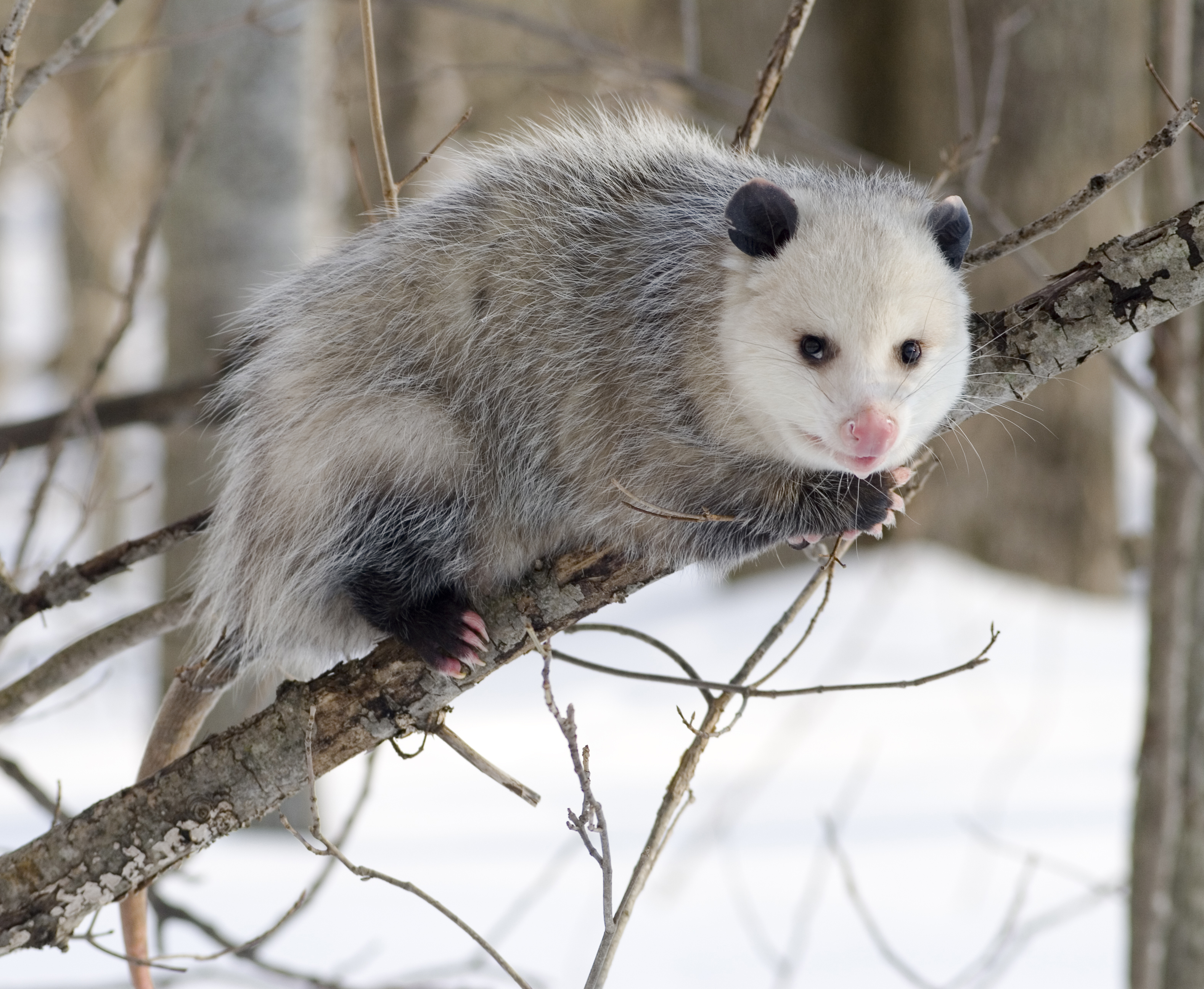
The Virginia opossum is North America's only marsupial — a nocturnal, solitary scavenger that is occasionally kept by licensed rehabbers and educators. Its very short lifespan, specialized diet, and the fact that it is illegal to keep without a permit in most states make it a poor general pet.
ℹ️
Educational only. KinStation content is reviewed by licensed veterinarians but cannot replace an in-person exam. Always consult a licensed veterinarian or board-certified specialist for diagnosis, treatment, or any decision affecting your pet's health.
🩺 Need expert help with your virginia opossum?
Connect with a specialist near you or ask a licensed vet — never substitute online guidance for hands-on care in an emergency.
Cat-sized: body 33-55 cm plus a 25-50 cm prehensile tail; 2-6 kg
Lifespan
2–4 years
Social needs
solo
Native region
North and Central America
Origin
New World
Climate
🍂 Temperate
Family
Didelphidae
Genus
Didelphis
Part of the Opossums
New World marsupials — nocturnal, solitary scavengers ranging from cat-sized Virginia opossums to tiny pocket-pet short-tailed species, with care needs and legality that vary sharply by species.
From the minimum an animal needs to be kept humanely, up to the ideal setup. Bigger is almost always better — minimums are floors, not targets.
Photo coming soon
Minimum
Large outdoor mesh enclosure (rehab/legal only)
8 × 6 × 6 ft, denning box, climbing
Virginia opossums are native US wildlife — keeping them as pets is illegal in most states (rehab-only). In legal jurisdictions, a large outdoor mesh enclosure 8 × 6 × 6 ft with a denning box, climbing branches, and a varied omnivore diet is the welfare floor.
Photo coming soon
Recommended
Indoor habitat + outdoor aviary
Dedicated room indoors + outdoor mesh aviary
A dedicated indoor habitat for night activity plus an attached outdoor aviary for sun, browse, and climbing. Diet management is critical — obesity and metabolic bone disease are the leading captive killers.
Photo coming soon
Ideal
Rehab + release where possible
Pre-release flight pen → wild release
For non-releasable individuals, the largest practical naturalistic enclosure with climbing structure, hides, and enrichment. For healthy animals, rehab and release into safe habitat is always the best welfare outcome.
Life & growth stages
How this animal changes through its life — each stage often has its own care, diet and space needs.
Photo coming soon
Newborn
Newborn mammals are nursed on their mother's milk. Many are born helpless — blind, deaf, and sparsely furred (altricial, as in dogs, cats, and rodents) — while others stand and follow within hours (precocial, as in hoofed livestock).
Photo coming soon
Juvenile
After weaning, juveniles grow quickly and become increasingly active, playful, and independent. Adult coat, proportions, and (in many species) the permanent teeth come in as they approach full size.
Photo coming soon
Adult
Adults reach full body size and sexual maturity, with the species' mature coat and build. Sexual dimorphism — differences in size, mane, horns, or markings — is pronounced in some mammals and subtle in others.
Senior
Senior animals show aging signs such as graying fur, reduced activity, and a greater need for veterinary monitoring of joints, teeth, and organ function. Lifespan and the onset of old age vary widely by species and size.
Habitat & enclosure
House a single opossum in a large multi-level enclosure (think tall ferret/chinchilla cage scaled up, or a converted closet/room) with climbing branches, ramps, and at least one dark nest box, since they are arboreal-leaning, nocturnal den animals. They are solitary and should not be housed together. A secure, escape-proof setup is needed because they climb and use the prehensile tail and opposable hind 'thumbs' to navigate.
Substrate
Use paper-based or aspen bedding, with fleece liners in the nest box for warmth. Avoid cedar/pine shavings (respiratory irritants) and provide deep cozy nesting material since they sleep balled up in a den by day.
Equipment & setup
Tall multi-level cage with secure latches, nest box(es), climbing branches and ropes, heavy ceramic food/water dishes, a heat source for cool rooms (ceramic emitter to prevent frostbite), and a scale for weekly weigh-ins to catch obesity early. Enrichment via foraging toys and scatter feeding.
Diet
Diet is the hardest part: opossums are prone to obesity and metabolic bone disease from poor calcium balance. Feed a varied, calcium-correct omnivore diet — formulated insectivore/omnivore feeds or a balanced mix of lean meats, eggs, insects, leafy greens and vegetables, with limited fruit, plus calcium supplementation. Avoid all-meat or all-fruit diets, which cause MBD. They famously eat ticks and carrion in the wild; in captivity portion control matters.
Behavior & temperament
Opossums are non-aggressive, slow-moving, and solitary; 'playing possum' (involuntary catatonia) is a stress fear response, not a trick. Hand-raised individuals can be docile and tolerate handling, but they bond loosely and remain essentially wild. They are strictly nocturnal, so they sleep most of the day and forage at night. They have a remarkable resistance to snake venom and rarely carry rabies (low body temperature).
Health
Lifespan is genuinely short — often only 2-4 years even with excellent care, due to rapid senescence. Common problems are obesity, metabolic bone disease, dental disease, and frostbite to ears/tail in cold housing. They are highly resistant to rabies but can carry other parasites. An exotics vet experienced with marsupials is essential, and most casual owners underestimate the dietary precision required.
Tips, DIY & hacks
Check your state law first — keeping the Virginia opossum is permit-restricted or prohibited in most US states, and found 'orphans' belong with licensed wildlife rehabbers. Weigh weekly and keep them lean. Supplement calcium and never free-feed fruit. Provide a warm, draft-free den to protect the hairless ears and tail.