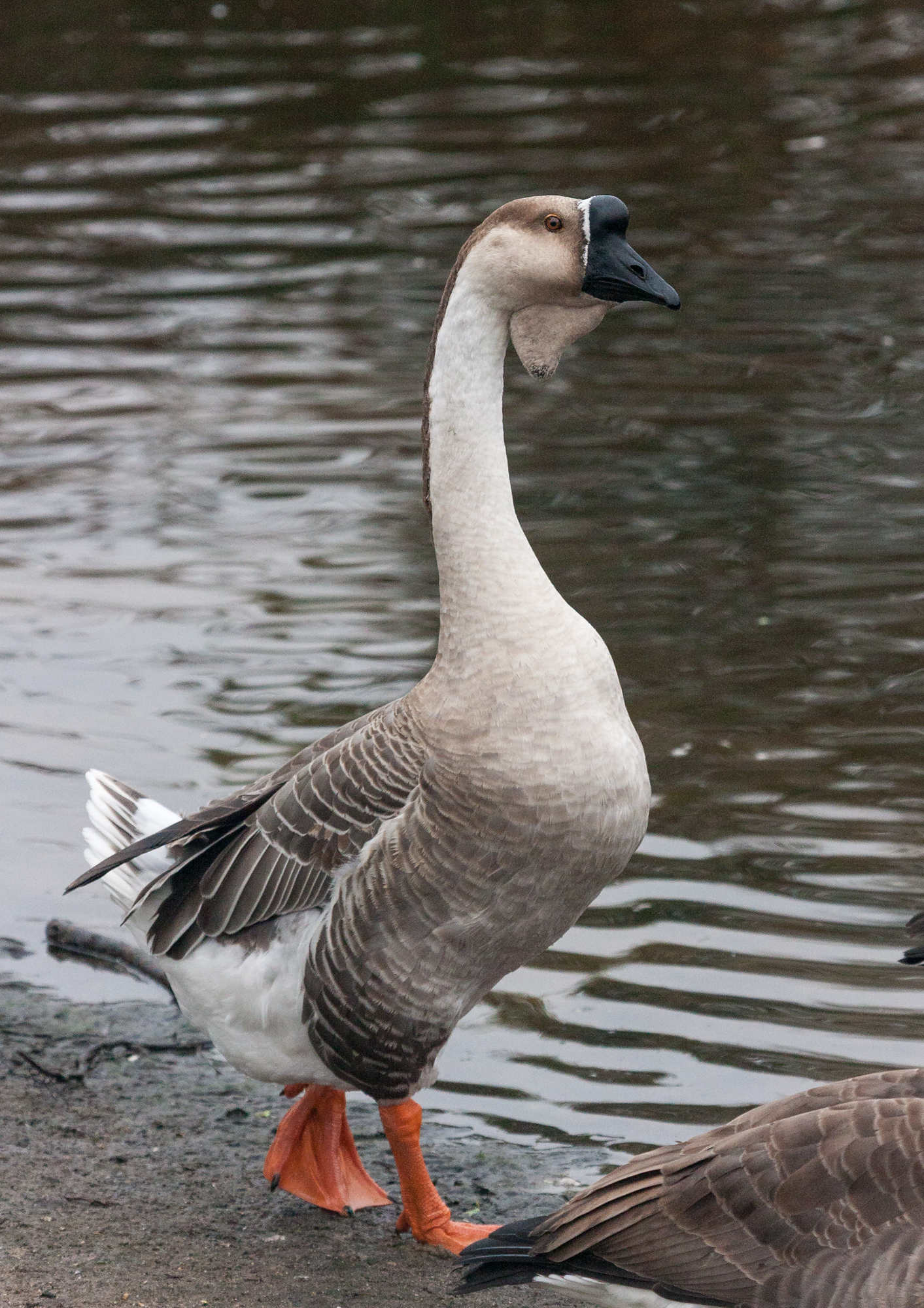
A large, stately goose descended from the wild swan goose, distinguished by a prominent forehead knob and throat dewlap. A heavy dual-purpose bird that is also a popular ornamental and effective watch goose.
ℹ️
Educational only. KinStation content is reviewed by licensed veterinarians but cannot replace an in-person exam. Always consult a licensed veterinarian or board-certified specialist for diagnosis, treatment, or any decision affecting your pet's health.
🩺 Need expert help with your african goose?
Connect with a specialist near you or ask a licensed vet — never substitute online guidance for hands-on care in an emergency.
From the minimum an animal needs to be kept humanely, up to the ideal setup. Bigger is almost always better — minimums are floors, not targets.
Photo coming soon
Minimum
Predator-proof shelter + small run
10 sq ft shelter + 25 sq ft run per bird, kiddie-pool water
African geese are large (18–22 lb) grazers needing at least 10 sq ft of dry, deep-bedded predator-proof shelter per bird and a fenced day-run of 25+ sq ft per goose. Provide a 50-gal water tub or kiddie pool deep enough to dunk their heads, refreshed daily — without bathing water they can't clean nostrils and eyes and develop sinus infections.
Photo coming soon
Recommended
Shelter + 100 sq ft grass run + pool
15 sq ft shelter + 100 sq ft pasture run + 100 gal pool, per bird
An airy walk-in shelter (windowed, with deep-litter straw) opening onto 100 sq ft of grass per goose plus a wading pool large enough to swim a few strokes. Geese pair-bond and should always be kept in pairs/trios — single geese pine. Rotate paddocks to let grazing recover.
Photo coming soon
Ideal
Pasture flock with pond
¼ acre+ pasture + natural pond, flock of 3–6
A quarter-acre or more of rotated pasture, mixed grasses and clover, a natural pond or large stock-tank pool, hedge windbreaks, and a roomy night shelter. African geese are vigilant flock guardians — a small flock with full grazing and bathing space lives near-naturally and rarely needs vet intervention.
Life & growth stages
How this animal changes through its life — each stage often has its own care, diet and space needs.
Photo coming soon
Egg
Birds develop inside a hard-shelled egg incubated by the parent(s). Egg size, shell color, and clutch size vary by species; the embryo develops over days to weeks before hatching.
Photo coming soon
Hatchling / Chick
Hatchlings are either altricial — naked, blind, and dependent on parents (typical of parrots and songbirds) — or precocial — downy, mobile, and self-feeding soon after hatching (typical of poultry and waterfowl). Down gives way to the first feathers.
Photo coming soon
Juvenile / Fledgling
Fledglings grow in their juvenile plumage and begin to fly and feed themselves, though they may still beg from parents at first. Juvenile feathering is often duller than the adult and is replaced as the bird matures.
Adult
Adults attain full body size and mature plumage, and are capable of breeding. Many species show distinct adult coloration, and in sexually dimorphic birds males and females differ in plumage, size, or markings.
(c) rokcestnik, some rights reserved (CC BY-NC) via iNaturalist — https://www.inaturalist.org/observations/39091643
Color & pattern variants
Natural variants occur in the wild; selectively bred (man-made) variants were developed in captivity.
Provide grazing pasture and a draft-free, predator-proof shelter with dry bedding. Access to bathing water (pond or tub) keeps the knob and plumage in good condition and aids mating. They tolerate cold but the bare facial knob is frostbite-prone, so provide a warm, dry, draft-free shelter in hard winters. Low fencing contains them; they are heavy and ground-bound.
Diet
Grazes well and should have good pasture; supplement with poultry/waterfowl pellets and grain, especially layers and growing goslings. Provide oyster shell for laying females and insoluble grit. Always supply fresh water deep enough to submerge the bill and rinse the nostrils. Maintain condition without excess fat that worsens leg and heat stress.
Behavior & temperament
Confident, alert, and notably vocal, making excellent guardian/'alarm' geese; a dual-purpose meat-and-show breed. Ganders can be assertive in breeding season. Hens lay roughly 25-40 eggs per season with variable broodiness. Often forms strong pair bonds. Intelligent and responsive, they tame well if handled young, but loud calls suit rural settings.
Health
The bare forehead knob and dewlap are vulnerable to frostbite in cold climates and can be injured; frostbite can permanently dull the knob. Heavy body weight predisposes to bumblefoot and leg strain. Otherwise robust and long-lived. Often confused with the Chinese goose, which is a smaller, more upright relative of the same swan-goose ancestry without the heavy dewlap.
Tips, DIY & hacks
Provide winter shelter and avoid drafts to protect the knob from frostbite; the knob develops fully only as the bird matures (1-3 years). Offer deep bathing water for successful mating in large ganders. Distinguish from the Chinese goose: Africans are far heavier with a pronounced dewlap. Handle goslings often for tameness; expect loud vocalizations.