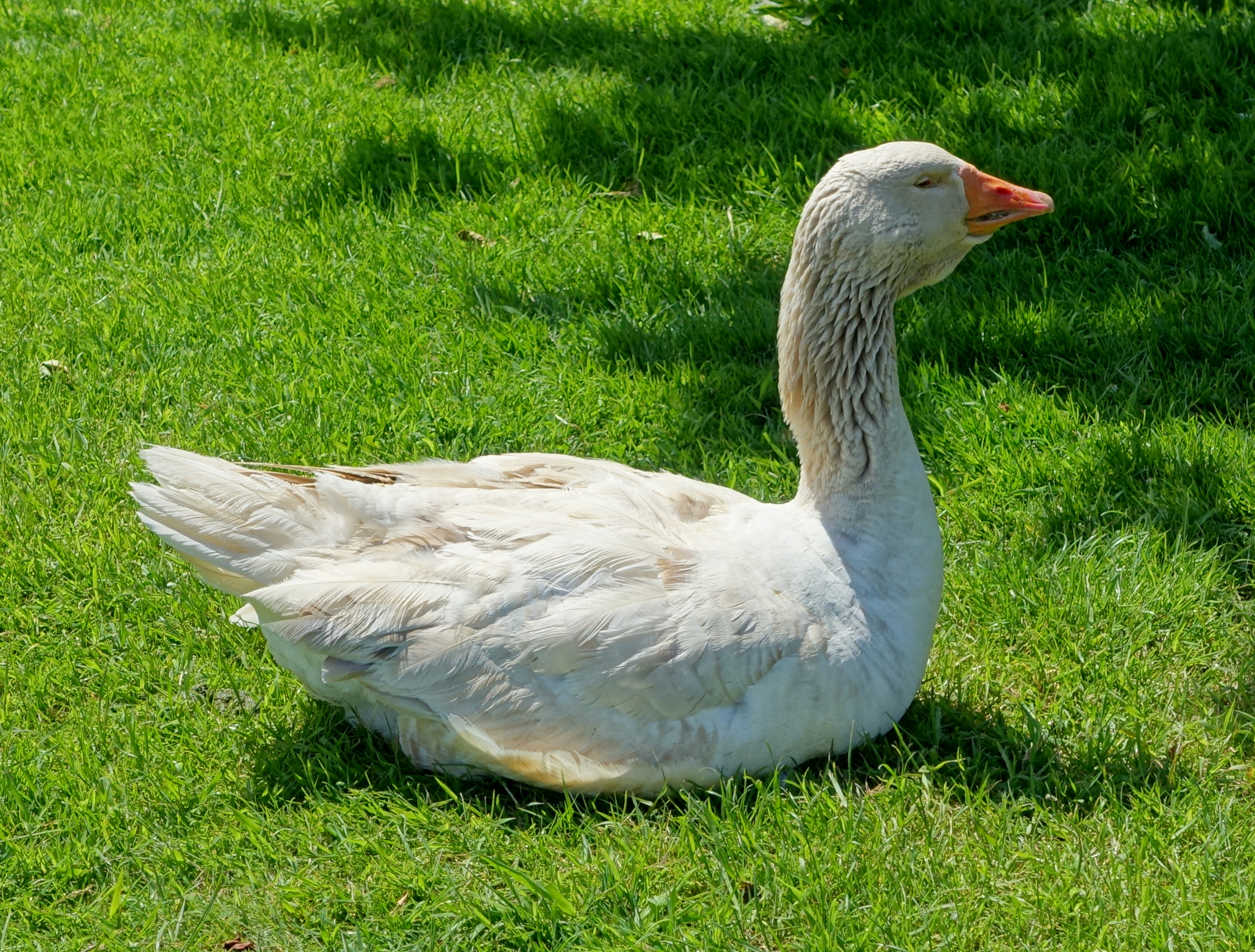
A calm, apricot-buff American utility goose developed for dual-purpose meat production with the bonus of easy-to-pluck pinfeathers that leave a clean carcass. It is one of the most docile and beginner-friendly heavy goose breeds.
ℹ️
Educational only. KinStation content is reviewed by licensed veterinarians but cannot replace an in-person exam. Always consult a licensed veterinarian or board-certified specialist for diagnosis, treatment, or any decision affecting your pet's health.
🩺 Need expert help with your american buff goose?
Connect with a specialist near you or ask a licensed vet — never substitute online guidance for hands-on care in an emergency.
From the minimum an animal needs to be kept humanely, up to the ideal setup. Bigger is almost always better — minimums are floors, not targets.
Photo coming soon
Minimum
Shelter + run + pool
10 sq ft shelter + 25 sq ft run per bird, kiddie-pool water
American Buffs are a medium-large heritage breed (16–18 lb). Provide 10 sq ft of dry shelter per goose and a 25 sq ft grass run with at least a kiddie pool deep enough to dunk heads. Their light buff plumage stains in mud — keep bedding dry to maintain show condition.
Photo coming soon
Recommended
Pasture run + bathing pool
15 sq ft shelter + 100 sq ft pasture + 100 gal pool, per bird
A walk-in shelter opening onto 100 sq ft of grass per bird, plus a wading pool large enough for a few strokes. American Buffs are calm and friendly compared to other geese; pairs and trios bond strongly and should never be kept solo.
Photo coming soon
Ideal
Pasture flock with pond
¼ acre+ rotated pasture + pond, flock of 3–6
Quarter-acre rotated pasture, mixed grasses, a natural pond or large stock-tank pool, hedge shade/windbreak, and a deep-bedded night shelter. American Buffs forage almost entirely on pasture in season and reach their best size and feather quality on grass.
Life & growth stages
How this animal changes through its life — each stage often has its own care, diet and space needs.
Photo coming soon
Egg
Birds develop inside a hard-shelled egg incubated by the parent(s). Egg size, shell color, and clutch size vary by species; the embryo develops over days to weeks before hatching.
Photo coming soon
Hatchling / Chick
Hatchlings are either altricial — naked, blind, and dependent on parents (typical of parrots and songbirds) — or precocial — downy, mobile, and self-feeding soon after hatching (typical of poultry and waterfowl). Down gives way to the first feathers.
Photo coming soon
Juvenile / Fledgling
Fledglings grow in their juvenile plumage and begin to fly and feed themselves, though they may still beg from parents at first. Juvenile feathering is often duller than the adult and is replaced as the bird matures.
Adult
Adults attain full body size and mature plumage, and are capable of breeding. Many species show distinct adult coloration, and in sexually dimorphic birds males and females differ in plumage, size, or markings.
(c) rokcestnik, some rights reserved (CC BY-NC) via iNaturalist — https://www.inaturalist.org/observations/39091643
Habitat & enclosure
Provide pasture with a predator-proof night shelter (3-4 sq ft of floor space per bird inside; far more outside). As a grazing waterfowl it does best on open grass with access to clean swimming or dunking water deep enough to submerge the head and clean the nares. A simple three-sided shed with deep, dry bedding (straw/wood shavings) suffices in most climates; the breed tolerates cold well but needs shade and ample water in heat.
Diet
Primarily a grazer — quality pasture grass forms the bulk of the diet. Supplement with a waterfowl- or poultry-maintenance pellet (avoid high-niacin-deficient chick crumbs; goslings need ~1% niacin, often via brewer's yeast). Offer insoluble grit for gizzard function and oyster shell for laying females. Constant access to fresh water is essential, especially while eating.
Behavior & temperament
Bred as a dual-purpose (meat-and-eggs) homestead goose. Exceptionally docile, quiet and friendly compared with most heavy breeds, making it a good choice for families and beginners. Females lay roughly 10-25 large eggs per season and can go broody and brood well. Buff plumage gives clean-looking carcasses because light pinfeathers do not stain the skin.
Health
Generally hardy and long-lived with few breed-specific defects. As a heavy breed, watch for bumblefoot (pododermatitis) and arthritis in aging birds, and keep them lean to avoid obesity and reduced fertility. Goslings are prone to niacin deficiency (bowed legs) if fed plain chick starter. Angel wing can develop in fast-grown goslings overfed on high-protein rations.
Tips, DIY & hacks
Keep a balanced sex ratio (one gander to 2-4 geese) for good fertility. Provide nest boxes or quiet corners with straw for broody hens. Because the breed is calm it tames readily with regular gentle handling. The Livestock Conservancy lists it as a heritage breed of conservation concern — buying breeding stock helps preserve it. Trim and inspect feet routinely on heavy adults.