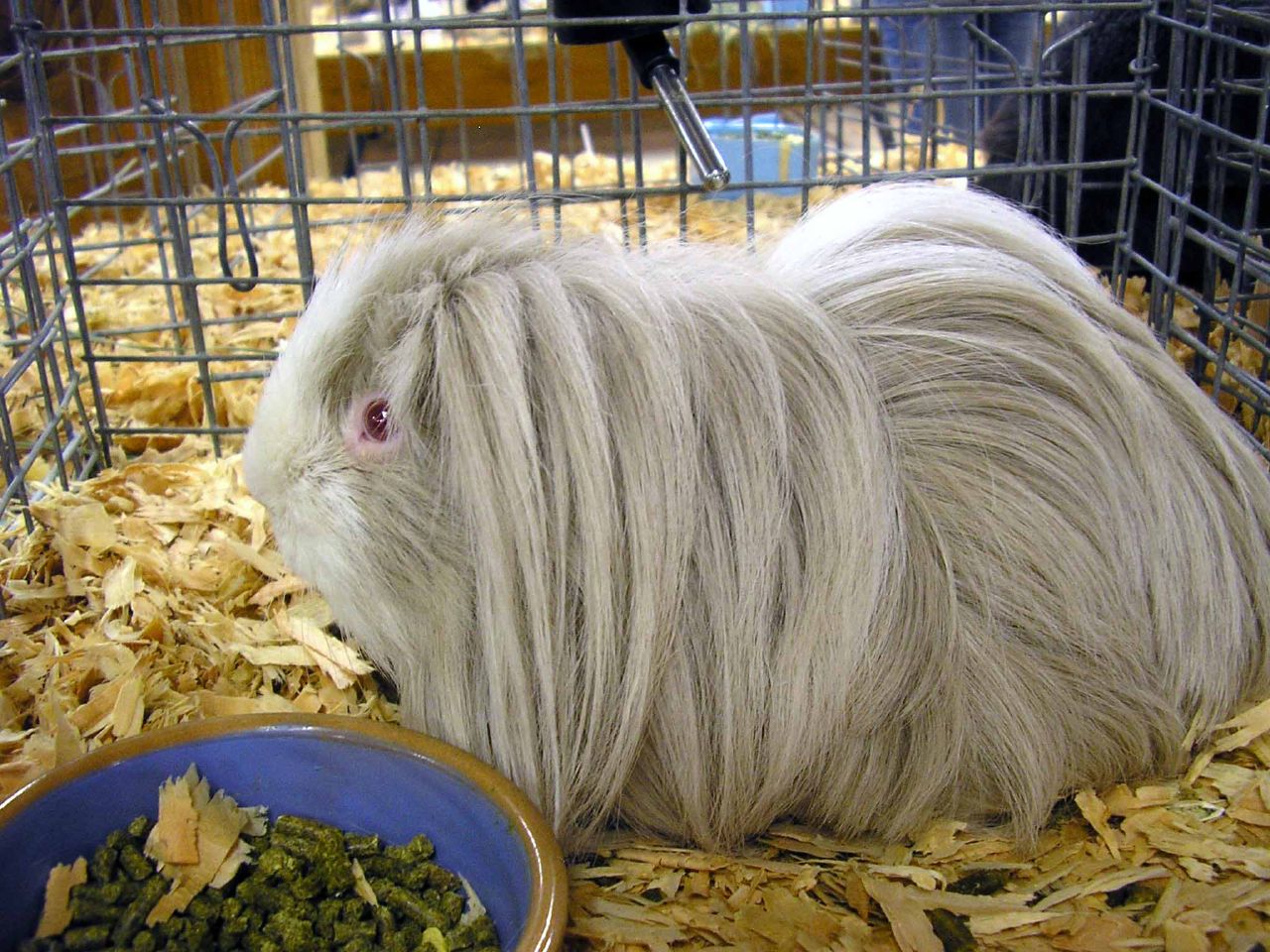
Photo: Christine from Washington State, USA · CC BY 2.0
The American is the classic short, smooth-coated guinea pig and the most widely kept cavy breed worldwide. Hardy, friendly and very low-maintenance to groom, it is the benchmark companion guinea pig.
ℹ️
Educational only. KinStation content is reviewed by licensed veterinarians but cannot replace an in-person exam. Always consult a licensed veterinarian or board-certified specialist for diagnosis, treatment, or any decision affecting your pet's health.
🩺 Need expert help with your american guinea pig?
Connect with a specialist near you or ask a licensed vet — never substitute online guidance for hands-on care in an emergency.
From the minimum an animal needs to be kept humanely, up to the ideal setup. Bigger is almost always better — minimums are floors, not targets.
Photo coming soon
Minimum
Pair on continuous floor space
≈ 10.5 sq ft (1500 sq in) for two
Guinea pigs are herd animals — keeping just one is discouraged in many regions. The two-pig welfare floor is ~10.5 sq ft of continuous ground-level floor space; they do not use vertical levels and should not be kept in tall narrow cages. The short-coated 'standard' guinea pig — easy to groom but the same continuous floor-space welfare standard applies.
Photo coming soon
Recommended
Roomy C&C cage for a pair or trio
13+ sq ft, C&C grids
C&C (cubes-and-coroplast) grids make it easy to exceed the welfare floor. Hides at each end, a hay rack, sleeping pads, and separate eating/toilet zones cut squabbling. Add ~2 sq ft per extra pig.
Photo coming soon
Ideal
Herd pen + daily floor time
15+ sq ft pen plus supervised floor time
Generous pen for a small herd supplemented with daily supervised floor time on washable flooring. More space dramatically reduces stress and boredom-driven behaviours (bar-chewing, dominance squabbles).
Life & growth stages
How this animal changes through its life — each stage often has its own care, diet and space needs.
Photo coming soon
Newborn
Newborn mammals are nursed on their mother's milk. Many are born helpless — blind, deaf, and sparsely furred (altricial, as in dogs, cats, and rodents) — while others stand and follow within hours (precocial, as in hoofed livestock).
Photo coming soon
Juvenile
After weaning, juveniles grow quickly and become increasingly active, playful, and independent. Adult coat, proportions, and (in many species) the permanent teeth come in as they approach full size.
Photo coming soon
Adult
Adults reach full body size and sexual maturity, with the species' mature coat and build. Sexual dimorphism — differences in size, mane, horns, or markings — is pronounced in some mammals and subtle in others.
Senior
Senior animals show aging signs such as graying fur, reduced activity, and a greater need for veterinary monitoring of joints, teeth, and organ function. Lifespan and the onset of old age vary widely by species and size.
Color & pattern variants
Natural variants occur in the wild; selectively bred (man-made) variants were developed in captivity.
Guinea pigs are highly social herd animals and should be kept in same-sex pairs or small groups (single keeping is discouraged and illegal in some countries). Provide a large solid-floored cage or C&C habitat — minimum ~0.7 sq m (7.5 sq ft) for a pair, more is better — with paper or fleece bedding, multiple hides, a hay rack and daily floor-time. Keep indoors or in a sheltered, draught-free, predator-proof space at 17-24°C; they are sensitive to heat and damp.
Diet
Unlimited grass hay (timothy/meadow) is essential for dental wear and gut motility and forms the bulk of the diet. Add a daily portion of vitamin-C-fortified guinea pig pellets and roughly a cup of fresh vegetables high in vitamin C (bell pepper, leafy greens). Guinea pigs cannot synthesize vitamin C and require a dietary source. Provide constant fresh water; avoid sudden diet changes.
Behavior & temperament
Kept purely as companion/show pets, Americans are gentle, vocal (wheeking, purring) and curious, generally tolerating gentle handling and bonding strongly with cage-mates. They are prey animals that can startle, but the breed's calm disposition makes it ideal for families and first-time keepers.
Health
Prone to vitamin-C deficiency (scurvy) if diet is inadequate; dental malocclusion; respiratory infections (very draught- and damp-sensitive); bumblefoot/pododermatitis on wire or dirty flooring; ovarian cysts in sows; and obesity. Heatstroke is a real risk above ~26-28°C. Quarantine and vet-check new animals.
Tips, DIY & hacks
The short coat needs only occasional brushing and the odd nail trim — minimal grooming makes this breed beginner-friendly. Weigh weekly with a kitchen scale to catch illness early, as guinea pigs hide sickness. Always adopt or buy at least two, and introduce newcomers on neutral ground with plenty of hides to reduce squabbling.