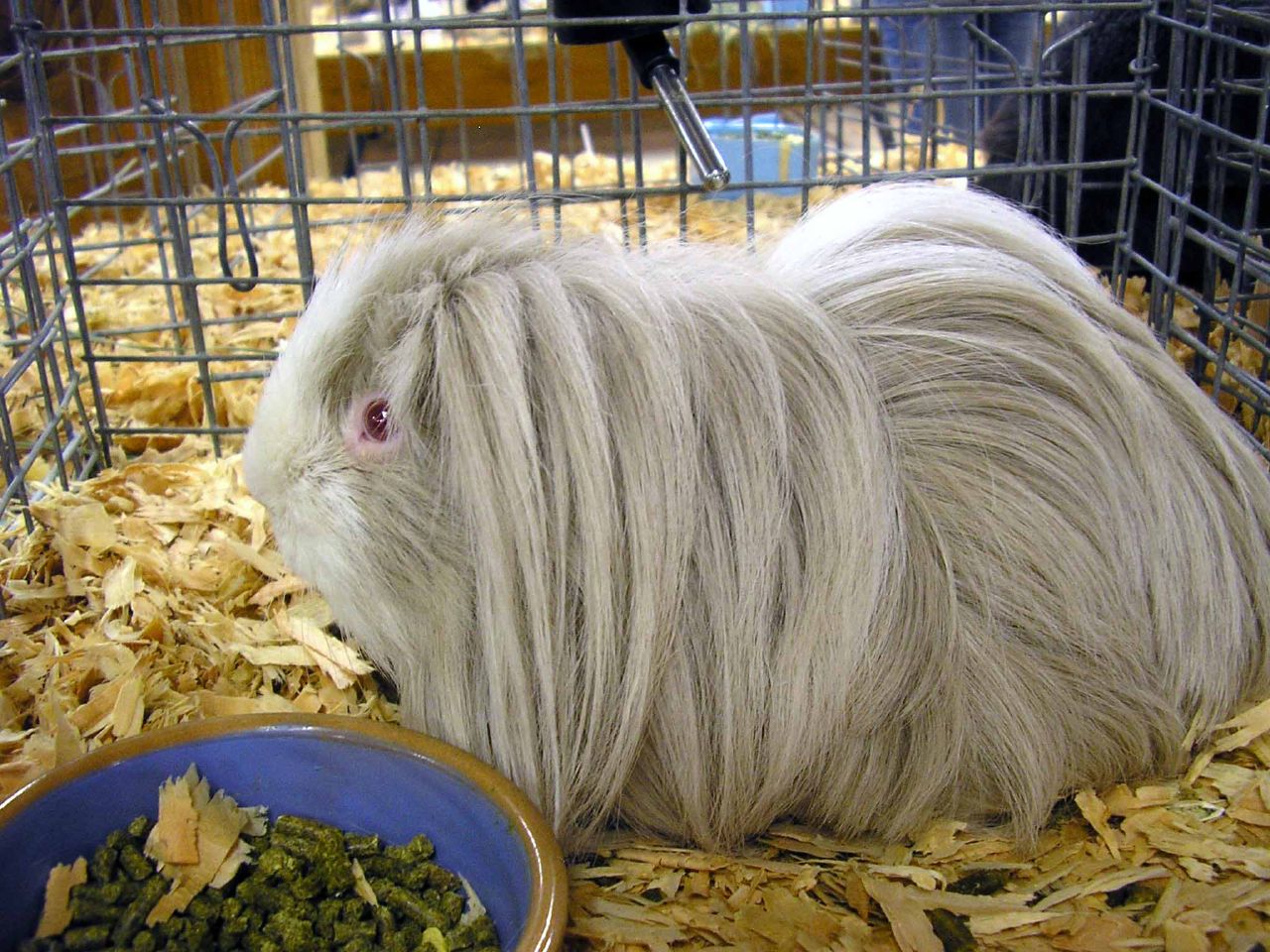
The Texel is a long-haired breed whose entire coat grows in soft, dense ringlet curls, produced by crossing the curly Rex coat with the long-haired Silkie. Its spectacular coat is high-maintenance and makes the Texel one of the most demanding cavy breeds to keep in good condition.
ℹ️
Educational only. KinStation content is reviewed by licensed veterinarians but cannot replace an in-person exam. Always consult a licensed veterinarian or board-certified specialist for diagnosis, treatment, or any decision affecting your pet's health.
🩺 Need expert help with your texel guinea pig?
Connect with a specialist near you or ask a licensed vet — never substitute online guidance for hands-on care in an emergency.
From the minimum an animal needs to be kept humanely, up to the ideal setup. Bigger is almost always better — minimums are floors, not targets.
Photo coming soon
Minimum
Single guinea pig floor space
≈ 7.5 sq ft (1080 sq in)
Continuous ground-level floor — guinea pigs do not use vertical levels and should not be kept in tall narrow cages. They are herd animals: keeping just one is discouraged in many regions. Texel has long curly ringlets — same welfare floor, plus very frequent grooming to prevent matting.
Photo coming soon
Recommended
Pair of guinea pigs
≈ 10.5 sq ft (1500 sq in)
C&C (cubes-and-coroplast) grids make it easy to reach this. Add hides at each end, a hay rack, and separate eating/toilet zones to reduce squabbling.
Photo coming soon
Ideal
Herd with extra roaming
13+ sq ft plus daily floor time
Generous pen for a small herd, supplemented with supervised floor time on a washable surface. More space dramatically reduces stress and boredom-related behaviours.
Life & growth stages
How this animal changes through its life — each stage often has its own care, diet and space needs.
Photo coming soon
Newborn
Newborn mammals are nursed on their mother's milk. Many are born helpless — blind, deaf, and sparsely furred (altricial, as in dogs, cats, and rodents) — while others stand and follow within hours (precocial, as in hoofed livestock).
Photo coming soon
Juvenile
After weaning, juveniles grow quickly and become increasingly active, playful, and independent. Adult coat, proportions, and (in many species) the permanent teeth come in as they approach full size.
Photo coming soon
Adult
Adults reach full body size and sexual maturity, with the species' mature coat and build. Sexual dimorphism — differences in size, mane, horns, or markings — is pronounced in some mammals and subtle in others.
Senior
Senior animals show aging signs such as graying fur, reduced activity, and a greater need for veterinary monitoring of joints, teeth, and organ function. Lifespan and the onset of old age vary widely by species and size.
Color & pattern variants
Natural variants occur in the wild; selectively bred (man-made) variants were developed in captivity.
House in pairs or compatible same-sex groups indoors at 18-24°C; the long coat makes Texels especially sensitive to damp, drafts, and heat. Provide at least 0.7 m² for a pair on a solid floor with soft, dust-low bedding — fleece is popular because it keeps the curls cleaner than loose shavings, which tangle and cling. Keep bedding scrupulously clean and dry, since soiled curls quickly mat and harbor bacteria. A low, single-level enclosure with easy-clean hides and a covered hay area helps keep hay out of the coat.
Diet
Unlimited grass hay as the dietary staple, a measured daily ration of Vitamin-C-fortified guinea-pig pellets, and a daily portion of fresh leafy greens for Vitamin C (which cavies cannot make). Avoid muesli-style mixes. Offer hay in a rack rather than loose to reduce the amount that becomes embedded in the long coat. Fresh water always available.
Behavior & temperament
Kept primarily as a show breed and devoted-owner pet rather than a casual starter animal. Texels are gentle, calm, and tolerant of handling — a temperament that helps during their frequent grooming. They are social herd animals that need cavy companionship and exhibit the usual popcorning and wheeking. Their purpose is ornamental/show; the coat is the defining feature.
Health
The long, dense curls readily mat and trap urine, feces, hay, and moisture, raising the risk of skin infection, fly-strike (especially in warm weather), and overheating — these are genuine welfare concerns that make the breed unsuitable for inexperienced or time-poor keepers. Otherwise prone to the usual cavy issues: dental malocclusion, respiratory infection, bumblefoot, bladder stones, ovarian cysts, and scurvy.
Tips, DIY & hacks
Plan on near-daily grooming: gently detangle curls with a wide-tooth comb, keep the rear and belly trimmed short for hygiene, and spot-clean soiled areas. Many keepers trim the coat down for pet (non-show) Texels to greatly improve welfare and reduce matting. Check the back end daily in warm months for soiling and fly eggs to prevent fly-strike. Weigh weekly, as the coat hides body condition, and inspect feet and skin regularly for mats pulling at the skin.