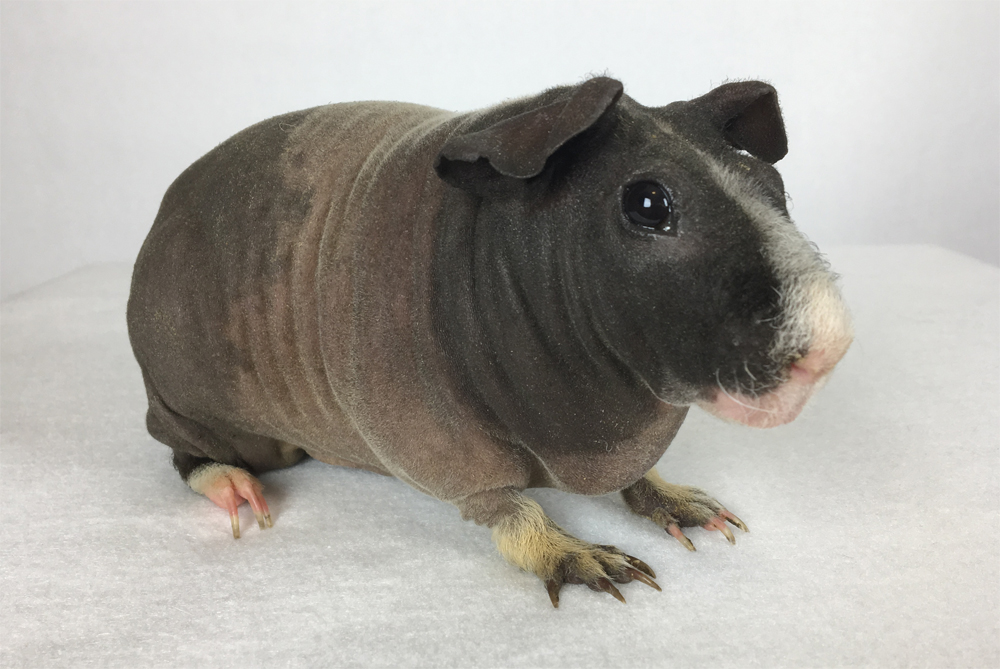
The Skinny Pig is a near-hairless breed with smooth, soft skin and small tufts of hair usually limited to the muzzle, feet, and legs, produced by crossing hairless laboratory cavies with haired breeds. Its lack of coat creates higher warmth, calorie, and skin-care needs than ordinary guinea pigs.
ℹ️
Educational only. KinStation content is reviewed by licensed veterinarians but cannot replace an in-person exam. Always consult a licensed veterinarian or board-certified specialist for diagnosis, treatment, or any decision affecting your pet's health.
🩺 Need expert help with your skinny pig?
Connect with a specialist near you or ask a licensed vet — never substitute online guidance for hands-on care in an emergency.
From the minimum an animal needs to be kept humanely, up to the ideal setup. Bigger is almost always better — minimums are floors, not targets.
Photo coming soon
Minimum
Single skinny pig floor space
≈ 7.5 sq ft (1080 sq in), warm room
Same continuous floor area as a haired guinea pig but with strict warmth control — skinny pigs are hairless, so ambient room temp 20–24 °C, no drafts, fleece bedding, and clothing in cold weather. Herd animals, never solo.
Photo coming soon
Recommended
Pair of skinny pigs
≈ 10.5 sq ft (1500 sq in), warm room
C&C-style pen with hides at each end, deep fleece bedding, and a hay station. Higher caloric intake than haired pigs because of heat loss — plan diet accordingly.
Photo coming soon
Ideal
Herd with extra roaming
13+ sq ft plus daily floor time
Generous pen for a small herd in a temperature-controlled room with supervised floor time. Sunscreen on bare skin for any outdoor time; never expose to direct cold or hot sun.
Life & growth stages
How this animal changes through its life — each stage often has its own care, diet and space needs.
Photo coming soon
Newborn
Newborn mammals are nursed on their mother's milk. Many are born helpless — blind, deaf, and sparsely furred (altricial, as in dogs, cats, and rodents) — while others stand and follow within hours (precocial, as in hoofed livestock).
Photo coming soon
Juvenile
After weaning, juveniles grow quickly and become increasingly active, playful, and independent. Adult coat, proportions, and (in many species) the permanent teeth come in as they approach full size.
Photo coming soon
Adult
Adults reach full body size and sexual maturity, with the species' mature coat and build. Sexual dimorphism — differences in size, mane, horns, or markings — is pronounced in some mammals and subtle in others.
Senior
Senior animals show aging signs such as graying fur, reduced activity, and a greater need for veterinary monitoring of joints, teeth, and organ function. Lifespan and the onset of old age vary widely by species and size.
Color & pattern variants
Natural variants occur in the wild; selectively bred (man-made) variants were developed in captivity.
House in pairs or compatible same-sex groups indoors at a warm, stable 22-26°C — Skinny Pigs lose body heat rapidly and must be kept warmer than haired cavies, never in drafts, cold rooms, or outdoors. Provide at least 0.7 m² for a pair on a solid floor with soft, low-dust bedding (fleece is popular and gentle on bare skin); avoid coarse or dusty substrates that abrade or irritate the skin. Offer cozy fleece hides for warmth and keep the enclosure scrupulously clean to protect the exposed skin.
Diet
Unlimited grass hay plus a measured daily ration of Vitamin-C-fortified guinea-pig pellets and daily fresh leafy greens for Vitamin C. Because hairless cavies burn extra energy staying warm, they generally eat more than haired guinea pigs — provide ample food and monitor body condition so they neither lose weight in cool conditions nor become overweight. Keep fresh water always available.
Behavior & temperament
Kept as a novelty pet and exotic show animal. Skinny Pigs have the same sociable, curious, affectionate cavy temperament, popcorn and wheek, and absolutely require cavy companionship — solitude is a welfare problem. Some owners find them especially interactive and warm to the touch. Their purpose is companionship; they are not a productive/working breed.
Health
Honest welfare note: hairlessness brings real care burdens — vulnerability to cold, sunburn, scratches, and skin infections, plus higher food and heating needs. Skin can develop dryness, fungal infection (ringworm), and injury, and the breed is more prone to chilling and may be slightly more susceptible to respiratory illness. Avoid breeding hairless x hairless lines that compromise vigor. Standard cavy issues also apply: dental malocclusion, bumblefoot, bladder stones, ovarian cysts, and scurvy.
Tips, DIY & hacks
Keep them warm year-round with ambient heat and fleece snuggle sacks, and never expose bare skin to direct sun or cold drafts. Wipe the skin gently with a damp cloth and apply a tiny amount of fragrance-free, pet-safe moisturizer (e.g., coconut oil) sparingly if skin looks dry; bathe rarely and only with cavy-safe products. Check skin daily for scratches, dryness, redness, or fungal patches, and keep nails of cage-mates trimmed to limit scratches. Weigh weekly and feed generously, since these little pigs run a higher metabolism than their furry cousins.