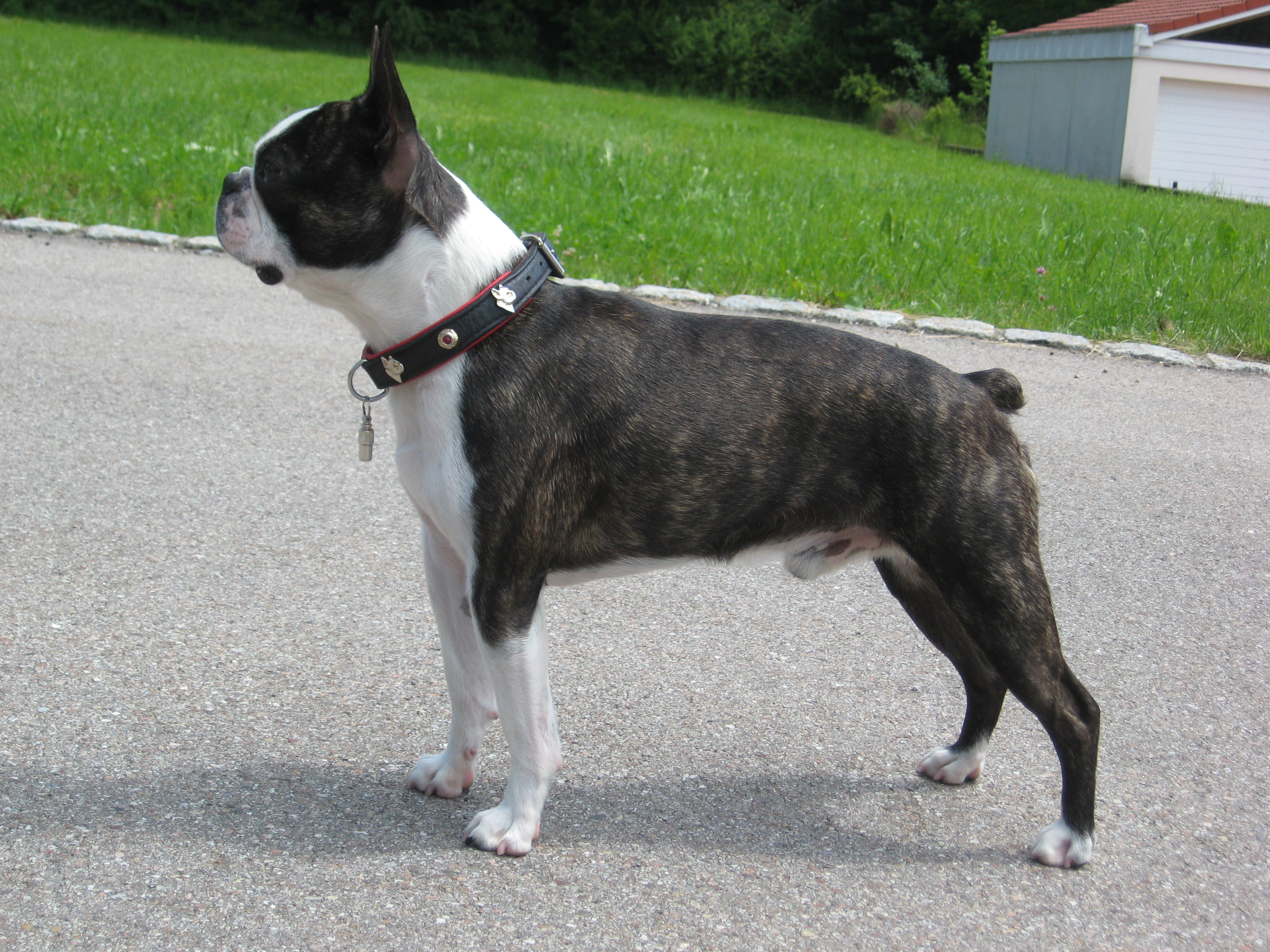
A compact, tuxedo-marked companion bred in Boston from bulldog and terrier stock. Friendly, adaptable and apartment-suited, but a brachycephalic breed that needs heat- and breathing-aware care.
ℹ️
Educational only. KinStation content is reviewed by licensed veterinarians but cannot replace an in-person exam. Always consult a licensed veterinarian or board-certified specialist for diagnosis, treatment, or any decision affecting your pet's health.
🩺 Need expert help with your boston terrier?
Connect with a specialist near you or ask a licensed vet — never substitute online guidance for hands-on care in an emergency.
From the minimum an animal needs to be kept humanely, up to the ideal setup. Bigger is almost always better — minimums are floors, not targets.
Photo coming soon
Minimum
Apartment or small home with daily walks
Apartment + 2× daily 30-min walks
A small dog adapts well to apartment living with two structured walks a day plus indoor enrichment. Crate-train for alone-time and give supervised free-roam of the household when settled. Brachycephalic — avoid heat and high-intensity exercise; air-conditioning is non-negotiable in warm weather, and short flat-faced breeds can collapse from heatstroke quickly.
Photo coming soon
Recommended
Home with secure yard + daily routine
House + fenced yard + 45 min daily exercise
A house with a securely fenced yard, two structured walks per day, and indoor enrichment (chews, training, puzzle feeders). Most small breeds settle well as household pets when this baseline is met.
Photo coming soon
Ideal
Household companion with varied enrichment
House + fenced yard + sport or hobby
A household companion that joins family activities, has a secure yard, and engages in a hobby suited to the breed — earthdog, scent games, trick training, mini-agility. Mental work matters as much as the walks.
Life & growth stages
How this animal changes through its life — each stage often has its own care, diet and space needs.
Photo coming soon
Newborn
Newborn mammals are nursed on their mother's milk. Many are born helpless — blind, deaf, and sparsely furred (altricial, as in dogs, cats, and rodents) — while others stand and follow within hours (precocial, as in hoofed livestock).
Photo coming soon
Juvenile
After weaning, juveniles grow quickly and become increasingly active, playful, and independent. Adult coat, proportions, and (in many species) the permanent teeth come in as they approach full size.
Photo coming soon
Adult
Adults reach full body size and sexual maturity, with the species' mature coat and build. Sexual dimorphism — differences in size, mane, horns, or markings — is pronounced in some mammals and subtle in others.
Senior
Senior animals show aging signs such as graying fur, reduced activity, and a greater need for veterinary monitoring of joints, teeth, and organ function. Lifespan and the onset of old age vary widely by species and size.
Color & pattern variants
Natural variants occur in the wild; selectively bred (man-made) variants were developed in captivity.
Excellent apartment and city dog: small, quiet enough for close quarters, and content with moderate exercise. Needs two short-to-moderate daily walks plus indoor play; a yard is a bonus, not a requirement. **Heat- and cold-sensitive** — the short muzzle makes panting an inefficient cooler, so avoid midday heat and humidity, and use a coat in cold weather. Keep exercise low-intensity in warm conditions.
Diet
Standard balanced small-breed diet, portion-controlled. Boston Terriers gain weight easily, and **excess weight worsens brachycephalic breathing**, so keep them lean and limit calorie-dense treats. Slow-feeder bowls help fast eaters who gulp air. No deep-chest bloat risk, but flatulence is common — a quality, digestible diet helps.
Behavior & temperament
Affectionate, lively and people-oriented with a clownish streak; coined the 'American Gentleman' for an even temperament. Generally **good with children and other pets** when socialized. Intelligent and eager to please, so trainable for first-time owners, though some have a stubborn terrier edge. Moderate energy — playful in bursts, then happy to nap. Thrives on company and dislikes long isolation.
Health
Brachycephalic, so prone to **Brachycephalic Obstructive Airway Syndrome (BOAS)** — the breed is comparatively moderate vs. flatter-faced breeds, but breathing, snoring and heat intolerance occur. Other predispositions: **patellar luxation, brachycephalic ocular issues (corneal ulcers, cherry eye, juvenile cataracts), deafness (especially in heavily white dogs), hemivertebrae linked to the screw tail, and dystocia** (large-headed pups often need C-sections). Recommended screening: ophthalmologist eye exam, patella evaluation, BAER hearing test, and cardiac check; choose breeders selecting for open nostrils and longer muzzles.
Tips, DIY & hacks
Short, smooth coat needs only weekly brushing; sheds lightly. Clean facial/nose folds and trim nails routinely; protect the prominent eyes from injury and check for tear staining. **Use a harness, not a neck collar**, to spare the airway. Avoid exercising in heat and never leave in a warm car. Easy to train with short, reward-based sessions. Pick puppies from health-tested parents bred for better breathing.