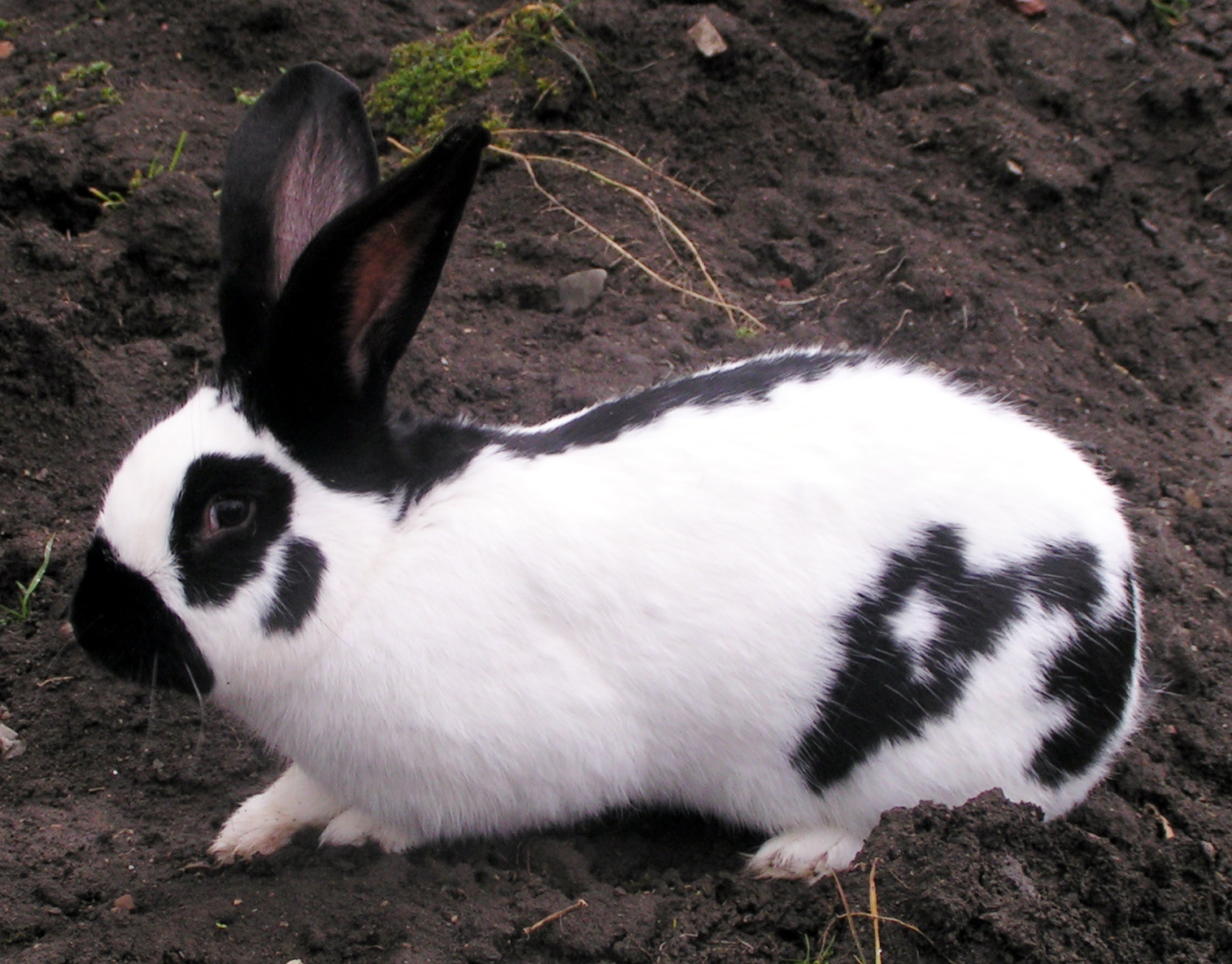
A large, athletic, full-arch breed with bold black or blue spotting on white: butterfly nose, eye-circles, cheek spots, a spine stripe and a chain of side markings. Energetic and rangy, it is bred chiefly for show.
ℹ️
Educational only. KinStation content is reviewed by licensed veterinarians but cannot replace an in-person exam. Always consult a licensed veterinarian or board-certified specialist for diagnosis, treatment, or any decision affecting your pet's health.
🩺 Need expert help with your checkered giant?
Connect with a specialist near you or ask a licensed vet — never substitute online guidance for hands-on care in an emergency.
From the minimum an animal needs to be kept humanely, up to the ideal setup. Bigger is almost always better — minimums are floors, not targets.
Photo coming soon
Minimum
Oversized hutch + large run
Hutch ≥ 24 sq ft + 50 sq ft exercise run
Giant rabbits need a hutch they can fully stretch out in (≥ 6 ft long) and a daily run sized for several consecutive 1 m+ hops. The standard 12 sq ft welfare floor is too small for a 6–10 kg adult. Checkered Giant is a large 5+ kg breed bred for movement — they need more run time than most rabbits.
Photo coming soon
Recommended
Walk-in pen + free-roam access
Pen ~32 sq ft, free-roam most of the day
A walk-in x-pen or shed-conversion plus rabbit-proofed room access most of the day. Reinforced flooring (sore-hock risk), oversized litter tray, and heavy ceramic feed/water bowls a giant can't flip.
Photo coming soon
Ideal
Free-roam giant in a rabbit-proofed home
Full room or shed/aviary, 24/7 access
Free-roam in a giant-proofed room or a heated shed/aviary combo. Soft non-slip flooring, multiple resting platforms (cushioned to protect hocks), and constant access to hay, water, and a large litter area. Giants are sedentary if confined — space is the main welfare lever.
Life & growth stages
How this animal changes through its life — each stage often has its own care, diet and space needs.
Photo coming soon
Newborn
Newborn mammals are nursed on their mother's milk. Many are born helpless — blind, deaf, and sparsely furred (altricial, as in dogs, cats, and rodents) — while others stand and follow within hours (precocial, as in hoofed livestock).
Photo coming soon
Juvenile
After weaning, juveniles grow quickly and become increasingly active, playful, and independent. Adult coat, proportions, and (in many species) the permanent teeth come in as they approach full size.
Photo coming soon
Adult
Adults reach full body size and sexual maturity, with the species' mature coat and build. Sexual dimorphism — differences in size, mane, horns, or markings — is pronounced in some mammals and subtle in others.
Senior
Senior animals show aging signs such as graying fur, reduced activity, and a greater need for veterinary monitoring of joints, teeth, and organ function. Lifespan and the onset of old age vary widely by species and size.
Color & pattern variants
Natural variants occur in the wild; selectively bred (man-made) variants were developed in captivity.
This big, very active 'running' breed needs substantial space: a large hutch or shed plus a long, secure run and daily free exercise. Cramped housing causes stress and sore hocks. Provide solid, well-bedded flooring (large breeds are prone to hock issues), shade and excellent ventilation. A bonded companion suits its energy.
Diet
Feed unlimited grass hay with a measured pellet ration scaled to its large frame and daily fresh greens; provide constant fresh water. Despite its size this is a lean, racy breed that should not be allowed to become heavy. Adequate fibre is essential for dental and gut health.
Behavior & temperament
A show breed (the standard explicitly does not favour it as a meat rabbit, prizing the racy arch instead). Very active, alert and athletic, with an independent streak; some individuals can be skittish or assertive if under-handled. Regular gentle handling produces sociable, manageable animals. Needs far more exercise than typical rabbits.
Health
Carries the same spotted-gene welfare caveat as other broken breeds: spotted-to-spotted matings produce lethal/megacolon 'charlie' (double-spot) offspring, so breeders pair spotted x solid. As a large breed it is also prone to sore hocks (ulcerative pododermatitis) on hard or wire flooring and to dental, GI stasis, flystrike and heat-stress problems.
Tips, DIY & hacks
Prioritise space and soft, solid flooring to prevent sore hocks. The short flyback coat needs little grooming outside moult. Handle large rabbits carefully, always supporting the hindquarters to prevent spinal injury from kicking. Source from breeders who avoid spotted-to-spotted matings. Provide a long run so this athletic breed can sprint.