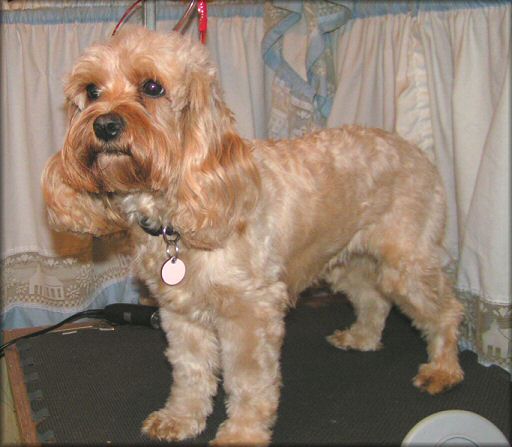
A Cocker Spaniel x Poodle crossbreed prized as a friendly, low-shedding family companion. Affectionate and people-oriented, but its coat needs regular professional grooming.
ℹ️
Educational only. KinStation content is reviewed by licensed veterinarians but cannot replace an in-person exam. Always consult a licensed veterinarian or board-certified specialist for diagnosis, treatment, or any decision affecting your pet's health.
🩺 Need expert help with your cockapoo?
Connect with a specialist near you or ask a licensed vet — never substitute online guidance for hands-on care in an emergency.
From the minimum an animal needs to be kept humanely, up to the ideal setup. Bigger is almost always better — minimums are floors, not targets.
Photo coming soon
Minimum
Free-roam home (small)
Apartment + 2× daily 30-min walks
Crate-trained + supervised free-roam in the home. Cockapoo (Cocker × Poodle) — friendly, energetic, low-shedding curly coat, ear-cleaning routine essential.
Photo coming soon
Recommended
Yarded family home
Home + fenced yard + daily structured exercise
Home with secure yard, daily structured exercise, household-pet status.
Photo coming soon
Ideal
Active home with a purpose
Active home with yard + dog-park access + obedience class
Maximum welfare: space + exercise + the breed's purpose satisfied (herding, scent work, lure coursing, dock diving, agility, etc.). Cockapoo (Cocker × Poodle) — friendly, energetic, low-shedding curly coat, ear-cleaning routine essential.
Life & growth stages
How this animal changes through its life — each stage often has its own care, diet and space needs.
Photo coming soon
Newborn
Newborn mammals are nursed on their mother's milk. Many are born helpless — blind, deaf, and sparsely furred (altricial, as in dogs, cats, and rodents) — while others stand and follow within hours (precocial, as in hoofed livestock).
Photo coming soon
Juvenile
After weaning, juveniles grow quickly and become increasingly active, playful, and independent. Adult coat, proportions, and (in many species) the permanent teeth come in as they approach full size.
Photo coming soon
Adult
Adults reach full body size and sexual maturity, with the species' mature coat and build. Sexual dimorphism — differences in size, mane, horns, or markings — is pronounced in some mammals and subtle in others.
Senior
Senior animals show aging signs such as graying fur, reduced activity, and a greater need for veterinary monitoring of joints, teeth, and organ function. Lifespan and the onset of old age vary widely by species and size.
Color & pattern variants
Natural variants occur in the wild; selectively bred (man-made) variants were developed in captivity.
Adaptable and apartment-friendly if exercised. Needs 45-60 minutes of daily walks plus play and sniffing/enrichment. Thrives on close human contact and dislikes long periods alone, so a home where someone is often present suits it best.
Diet
Feed a complete, size-appropriate dog food in measured portions across two meals. Cockapoos enjoy food and are prone to weight gain, so monitor body condition and limit treats. The Cocker line carries some predisposition to ear and skin issues, so diets supporting skin/coat health can help.
Behavior & temperament
Outgoing, affectionate, and eager to please, generally making them highly trainable for first-time owners. Energetic but not hyperactive. Typically very good with children and other pets when socialized early. Can be prone to separation anxiety and nuisance barking if under-stimulated.
Health
As a cross, can inherit issues from either parent: progressive retinal atrophy (PRA), hip dysplasia, patellar luxation, and the Cocker Spaniel's tendency toward chronic ear infections (floppy ears) and glaucoma. Recommend hip scoring, eye testing (PRA DNA test), and patella checks of breeding stock. Routine ear cleaning is essential. Hybrid vigor is not guaranteed; insist on health-tested parents.
Tips, DIY & hacks
The wavy/curly coat does not shed much but mats easily; brush several times weekly and schedule professional grooming every 6-8 weeks. Keep ear canals clean and dry to prevent infections, and trim hair around eyes. Reward-based training plus early independence training reduce separation anxiety. Coat type and shedding vary widely between individuals.