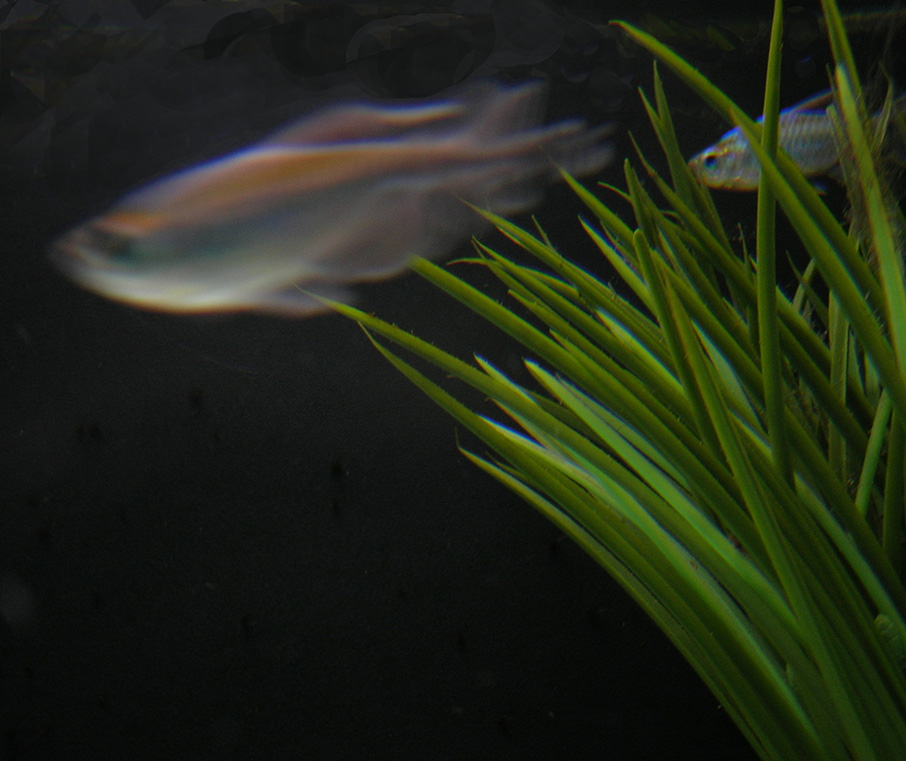
The Congo tetra is a larger African characin famous for its iridescent rainbow sheen of blue, gold and orange and the flowing, feathery extensions on the males' fins. As one of the few commonly kept alestids rather than New World characids, it brings size and shimmer to spacious community tanks. It is peaceful but a little shy, and needs room and a group to look its best.
ℹ️
Educational only. KinStation content is reviewed by licensed veterinarians but cannot replace an in-person exam. Always consult a licensed veterinarian or board-certified specialist for diagnosis, treatment, or any decision affecting your pet's health.
🩺 Need expert help with your congo tetra?
Connect with a specialist near you or ask a licensed vet — never substitute online guidance for hands-on care in an emergency.
Males to about 8.5 cm (3.3 in); females smaller, around 6 cm
Lifespan
3–6 years
Social needs
group
Native region
Congo River basin, central Africa (Democratic Republic of the Congo)
Origin
Old World
Climate
🌴 Tropical
Water type
💧 Freshwater
Family
Alestidae
Genus
Phenacogrammus
Part of the Tetras
Small, often brightly colored characin fishes popular as peaceful shoaling community aquarium fish. Tetras are kept in groups, appreciate soft, slightly acidic water and planted tanks, and range from tiny nano species to larger schooling fish.
From the minimum an animal needs to be kept humanely, up to the ideal setup. Bigger is almost always better — minimums are floors, not targets.
Photo coming soon
Minimum
Shoal long tank
40 gal / 151 L long
Phenacogrammus interruptus reaches 3.5 in and needs swim length. 40-gal long is the practical minimum for a shoal of 6+, with soft slightly acidic water and gentle flow. Skittish — peaceful tankmates only.
Recommended
Planted display shoal
55 gal / 208 L long planted
55-gal long planted with a shoal of 8+, driftwood, dim back lighting (brings out the iridescence), and peaceful tankmates. Males develop long flowing fins.
Vassil / Public domain (Wikimedia Commons)
Ideal
Congo river biotope
75 gal+ / 284 L+ biotope
Congo river biotope with leaf litter, driftwood, dim light, and a shoal of 10+. Full iridescent display only emerges in mature dim tanks with good water.
KoS / CC BY-SA 3.0 (Wikimedia Commons)
Life & growth stages
How this animal changes through its life — each stage often has its own care, diet and space needs.
Photo coming soon
Egg
Fish eggs are small, translucent spheres, often laid in clutches on plants, substrate, or in a nest — or carried/brooded by a parent in livebearing and mouth-brooding species. A dark eye spot and the curled embryo become visible inside as development progresses.
Photo coming soon
Fry
Newly hatched fry are tiny and semi-transparent, frequently still carrying a yolk sac that fuels them before they feed freely. They lack full fin structure and adult coloration, staying near cover until they can swim and forage on their own.
Photo coming soon
Juvenile
Juveniles look like miniature adults but with developing fins and muted or different markings; many species shift pattern and color as they mature. Growth is rapid at this stage given clean water and steady feeding.
Adult
Adults show the species' full size, finnage, and mature coloration, and are sexually mature. Many fish develop sex-specific differences in size, color, or fin shape, which can intensify during breeding.
Habitat & enclosure
Keep a shoal of at least 6 in a tank of 150 litres (40 gal) or larger with plenty of length for swimming. Provide soft, slightly acidic to neutral water: temperature 23-28 °C (73-82 °F), pH 6.0-7.5, soft to moderately soft (GH 3-12). Moderate flow and subdued, dappled lighting with floating plants suit it.
A tall, long tank with open swimming space and planted margins lets males display their full finnage. Stable, clean water is important, as this species reacts poorly to high nitrate and abrupt changes.
Substrate
Dark sand or fine gravel enhances the iridescent body colours. Driftwood, leaf litter and robust or floating plants give cover and the slightly tannic, shaded conditions it prefers.
Equipment & setup
A canister or robust filter handles the bioload of this larger schooler, paired with a reliable heater. Subdued lighting with floating-plant cover encourages display and reduces skittishness; CO2 is optional for planted layouts only.
Diet
Omnivore with a hearty appetite. Feed quality flake and pellets plus regular frozen and live foods such as bloodworm, brine shrimp and daphnia; include some vegetable matter or plant-based foods. Varied feeding maintains the bright iridescence and fin condition.
Behavior & temperament
Peaceful but somewhat timid shoaler that settles best in a group and in a tank without aggressive tankmates. Suits spacious communities with other peaceful medium fish such as larger tetras, rainbowfish, peaceful barbs, gouramis, Corydoras and many catfish. Skittish individuals may nibble soft plants and can be shy feeders if intimidated.
Health
Generally hardy but sensitive to poor water quality, showing as faded colour and fin deterioration. Susceptible to ich and fin/bacterial infections under stress. The males' long fin extensions are prone to nipping, so avoid fin-nippers; quarantine new stock and keep nitrates low.
Tips, DIY & hacks
Give a large group plenty of horizontal space and shy tankmates so the males relax and show their full flowing fins. Subdued top lighting and a dark background reduce nervousness and boost iridescence. Breeding is possible in soft, acidic water but the eggs and fry need careful, clean rearing.