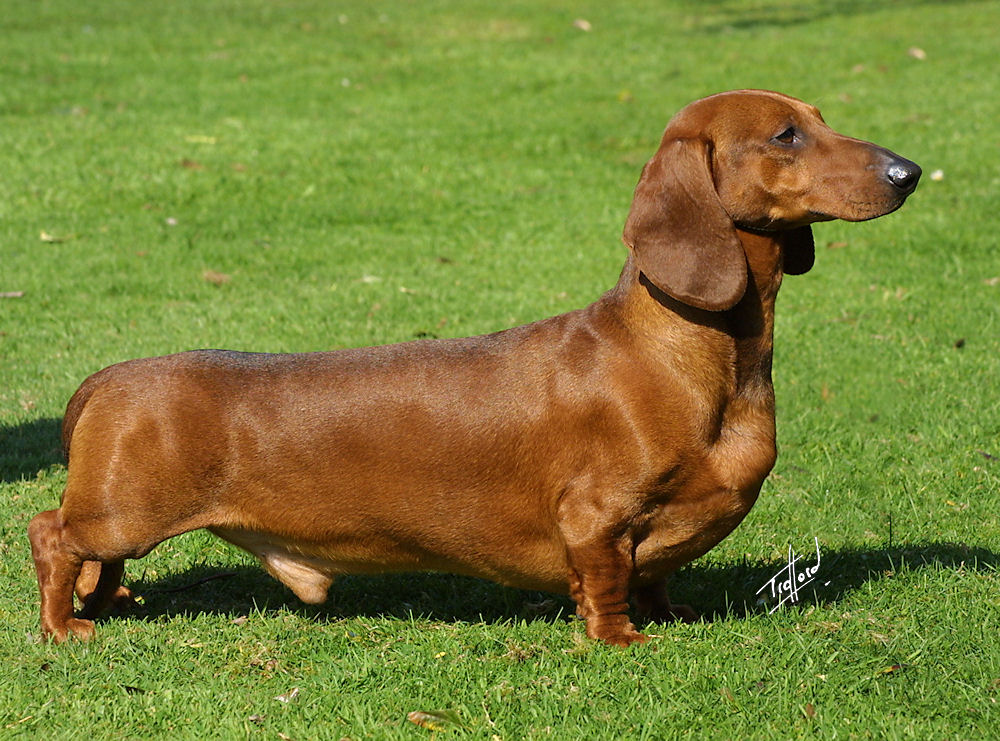
An iconic long-bodied, short-legged scent hound originally bred to hunt badgers. Bold, curious, and lively, the Dachshund comes in two sizes and three coat types and makes a spirited, devoted companion.
ℹ️
Educational only. KinStation content is reviewed by licensed veterinarians but cannot replace an in-person exam. Always consult a licensed veterinarian or board-certified specialist for diagnosis, treatment, or any decision affecting your pet's health.
🩺 Need expert help with your dachshund?
Connect with a specialist near you or ask a licensed vet — never substitute online guidance for hands-on care in an emergency.
From the minimum an animal needs to be kept humanely, up to the ideal setup. Bigger is almost always better — minimums are floors, not targets.
Photo coming soon
Minimum
Apartment or small home with daily walks
Apartment + 2× daily 30-min walks
A small dog adapts well to apartment living with two structured walks a day plus indoor enrichment. Crate-train for alone-time and give supervised free-roam of the household when settled.
Photo coming soon
Recommended
Home with secure yard + daily routine
House + fenced yard + 45 min daily exercise
A house with a securely fenced yard, two structured walks per day, and indoor enrichment (chews, training, puzzle feeders). Most small breeds settle well as household pets when this baseline is met. High-drive working breed — the recommended tier still demands daily structured mental work (training, scent games, herding ball, fetch with rules), not just walks.
Photo coming soon
Ideal
Household companion with varied enrichment
House + fenced yard + sport or hobby
Badger/earth hunter — earthdog trials and scent work suit the drive. — ideal is acreage or rural property paired with a daily job or canine sport: herding stock, scent detection, agility, protection sport, sledding, gundog field work, or a structured working role. Without that outlet, expect destructive behaviour, reactivity, and welfare-relevant frustration.
Life & growth stages
How this animal changes through its life — each stage often has its own care, diet and space needs.
Photo coming soon
Newborn
Newborn mammals are nursed on their mother's milk. Many are born helpless — blind, deaf, and sparsely furred (altricial, as in dogs, cats, and rodents) — while others stand and follow within hours (precocial, as in hoofed livestock).
Photo coming soon
Juvenile
After weaning, juveniles grow quickly and become increasingly active, playful, and independent. Adult coat, proportions, and (in many species) the permanent teeth come in as they approach full size.
Photo coming soon
Adult
Adults reach full body size and sexual maturity, with the species' mature coat and build. Sexual dimorphism — differences in size, mane, horns, or markings — is pronounced in some mammals and subtle in others.
Senior
Senior animals show aging signs such as graying fur, reduced activity, and a greater need for veterinary monitoring of joints, teeth, and organ function. Lifespan and the onset of old age vary widely by species and size.
Color & pattern variants
Natural variants occur in the wild; selectively bred (man-made) variants were developed in captivity.
**Apartment-friendly** given its size, but its long back demands care: **discourage jumping on/off furniture and stairs**, use ramps, and support the body when lifting (hold chest and hindquarters, never just the front). Needs daily moderate walks and play; avoid high-impact activity. A digger and scent-follower -- secure fencing helps.
Diet
Feed a measured small-breed diet and **keep the dog lean** -- excess weight dramatically increases the strain on the spine and the risk of disc disease. Obesity is a major welfare concern in this breed. Limit treats, and avoid letting the dog become 'bottom-heavy.' No other major breed-specific dietary needs.
Behavior & temperament
Brave, clever, and stubborn, with a loud bark for its size and a strong **prey/scent drive**. Devoted and entertaining but independent; **trainable with patience, consistency, and rewards** (housetraining can be slow). Can be **good with respectful children and other pets** but may be wary of strangers and is best supervised with very young kids and toddlers.
Health
The defining concern is **intervertebral disc disease (IVDD)** -- roughly 1 in 4 Dachshunds is affected over a lifetime due to chondrodystrophic conformation; watch for back pain, reluctance to move, or hind-limb weakness and seek prompt veterinary care. Also predisposed to **patellar luxation, obesity, dental disease, and eye conditions (PRA in some lines)**. Recommended screening: eye exams and (for breeding) IVDD-related back assessment; keep weight low.
Tips, DIY & hacks
Coat care varies: **smooth** is wash-and-go; **longhaired** needs regular brushing to prevent mats; **wirehaired** needs periodic hand-stripping. All shed moderately. Prioritize back protection (ramps, no jumping, lean body) above almost all else. Provide mental enrichment and scent games to channel the hunting instinct, and start firm, positive training and socialization early.