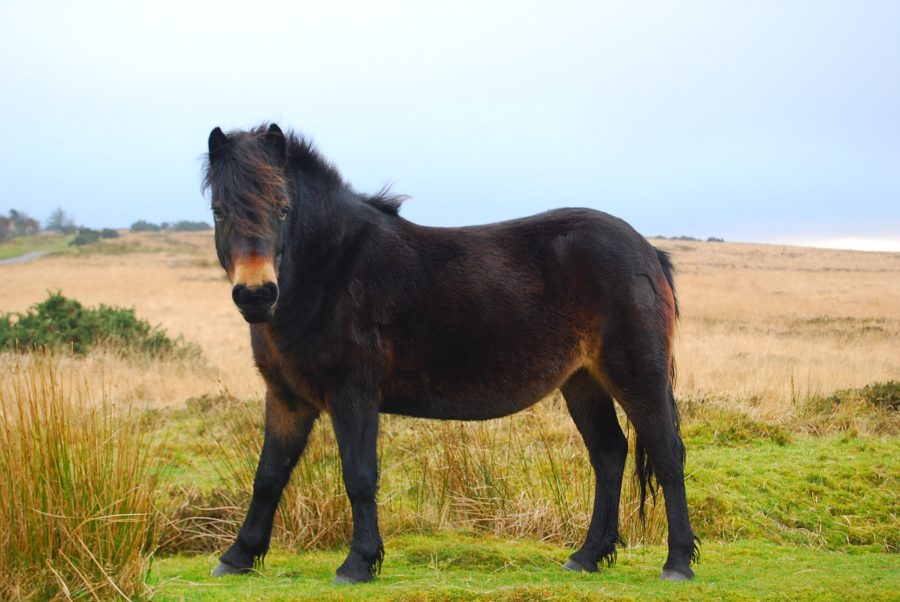
One of Britain's oldest and most primitive native ponies, from Exmoor in south-west England, recognisable by its 'mealy' oatmeal muzzle and toad-eye. It is an endangered breed used for conservation grazing, riding, and driving.
ℹ️
Educational only. KinStation content is reviewed by licensed veterinarians but cannot replace an in-person exam. Always consult a licensed veterinarian or board-certified specialist for diagnosis, treatment, or any decision affecting your pet's health.
🩺 Need expert help with your exmoor pony?
Connect with a specialist near you or ask a licensed vet — never substitute online guidance for hands-on care in an emergency.
From the minimum an animal needs to be kept humanely, up to the ideal setup. Bigger is almost always better — minimums are floors, not targets.
Photo coming soon
Minimum
Hardy pony lot + shelter + companion
Run-in shed + 1+ ac dry-lot/rough pasture + companion
Primitive/hardy ponies are bred for hill, moor, or steppe — they need shelter from wind and wet far more than a heated stall. Welfare floor: a sturdy run-in shed, at least 1 acre of rough pasture or dry-lot, hardy fencing, and a companion. Restrict lush grass to prevent laminitis. Rare / heritage breed — responsible owners keep accurate breed-society records and ideally participate in a recognised conservation programme.
Photo coming soon
Recommended
Field-kept herd on rough pasture
Run-in shed + 2–3 ac rough pasture/horse + small herd
Field-kept herd on 2–3 acres of rough pasture per pony, a stout shed, and minimal interference. These breeds are designed to live out year-round in temperate climates and are healthier for it. Hard feed is rarely needed — quality hay and a salt lick usually suffice.
Photo coming soon
Ideal
Extensive rough grazing + traditional management
5+ ac rough grazing/horse + traditional shelter + herd
Extensive rough grazing on 5+ acres per pony, traditional dry-stone or hedge shelter, a stable herd, and management aligned with the breed's native conditions (moor / steppe / mountain). Conservation-grazing programmes are a natural fit for these primitive breeds.
Life & growth stages
How this animal changes through its life — each stage often has its own care, diet and space needs.
Photo coming soon
Newborn
Newborn mammals are nursed on their mother's milk. Many are born helpless — blind, deaf, and sparsely furred (altricial, as in dogs, cats, and rodents) — while others stand and follow within hours (precocial, as in hoofed livestock).
Photo coming soon
Juvenile
After weaning, juveniles grow quickly and become increasingly active, playful, and independent. Adult coat, proportions, and (in many species) the permanent teeth come in as they approach full size.
Photo coming soon
Adult
Adults reach full body size and sexual maturity, with the species' mature coat and build. Sexual dimorphism — differences in size, mane, horns, or markings — is pronounced in some mammals and subtle in others.
Senior
Senior animals show aging signs such as graying fur, reduced activity, and a greater need for veterinary monitoring of joints, teeth, and organ function. Lifespan and the onset of old age vary widely by species and size.
Color & pattern variants
Natural variants occur in the wild; selectively bred (man-made) variants were developed in captivity.
Supremely hardy and adapted to live out year-round on open moorland with only natural or basic shelter. Needs secure fencing, generous turnout, and herd companionship. Its insulating double coat and hooded eyes make it intolerant of soft, over-managed, lush keeping, which causes obesity and laminitis.
Diet
A frugal grazer that thrives on rough, low-quality forage, gorse, and grass hay. Avoid rich pasture and hard feed; most need restricted grazing and a forage-only diet with a mineral/salt lick and fresh water. Over-feeding is the main dietary risk.
Behavior & temperament
Intelligent, alert, independent, and tough, with a strong survival instinct; semi-feral herds need patient, consistent handling to gentle. Purpose: historically a riding and light-draft/farm pony, now widely used for conservation grazing of heathland, plus children's riding, driving, and showing once trained.
Health
Exceptionally healthy and disease-resistant due to its primitive genetics. Main risks are obesity, EMS, and laminitis from inappropriate rich keeping. The small, closely managed population requires careful pedigree breeding; foals from feral herds need socialisation. The breed standard prohibits white markings.
Tips, DIY & hacks
Keep them lean on sparse forage — resist the urge to 'improve' their grazing. Inspection-graded ponies are branded/registered by the Moorland Scheme; check papers when buying. Their hardiness makes them ideal low-input conservation grazers but they still need annual worming, dentistry, and farriery.