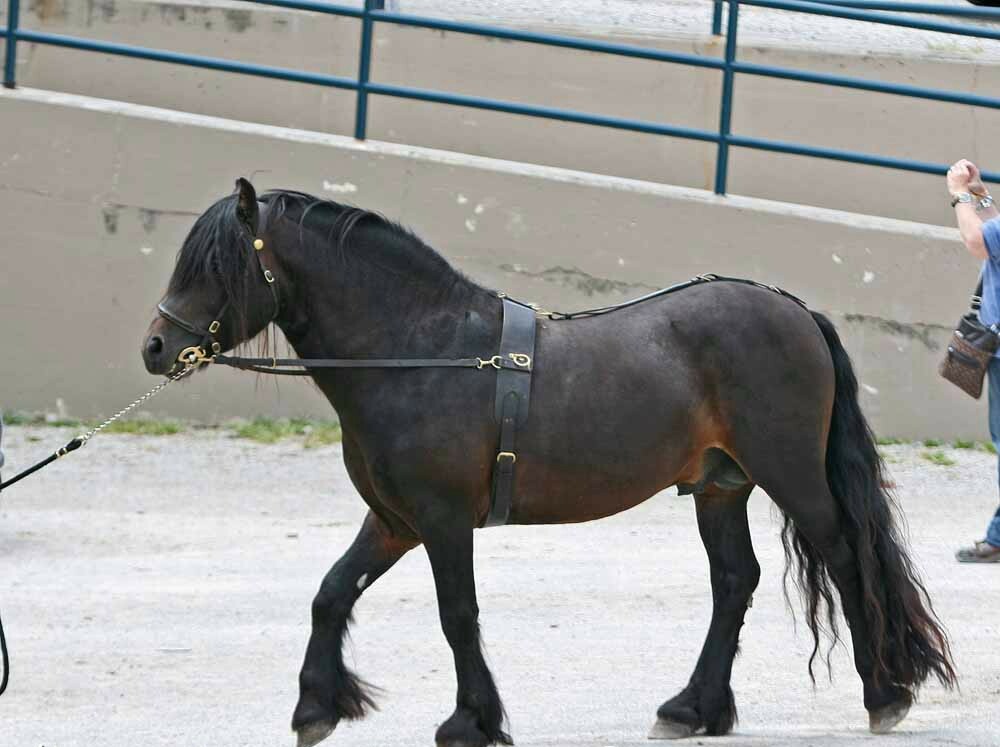
A hardy native pony from Cumbria and the fells of north-west England, closely related to the Dales and prized as an all-round family riding and driving pony. It is classed as a minority/at-risk breed.
ℹ️
Educational only. KinStation content is reviewed by licensed veterinarians but cannot replace an in-person exam. Always consult a licensed veterinarian or board-certified specialist for diagnosis, treatment, or any decision affecting your pet's health.
🩺 Need expert help with your fell pony?
Connect with a specialist near you or ask a licensed vet — never substitute online guidance for hands-on care in an emergency.
From the minimum an animal needs to be kept humanely, up to the ideal setup. Bigger is almost always better — minimums are floors, not targets.
Photo coming soon
Minimum
Stall + dry-lot turnout + companion
10×10 ft stall + 0.5-1 ac dry-lot + shed + companion
Ponies are prone to laminitis on rich grass — minimum is a managed dry-lot, NOT lush pasture. Fell Pony is a hardy British native — versatile riding and driving pony.
Grazing muzzles or restricted grazing prevent laminitis; barn for shelter; companion pony or equid.
Photo coming soon
Ideal
Rotational dry-lot + barn
Barn + 2+ ac managed pasture + herd + work role
Carefully managed grazing to prevent metabolic issues; companion herd; kid-training or driving role. Fell Pony is a hardy British native — versatile riding and driving pony.
Life & growth stages
How this animal changes through its life — each stage often has its own care, diet and space needs.
Photo coming soon
Newborn
Newborn mammals are nursed on their mother's milk. Many are born helpless — blind, deaf, and sparsely furred (altricial, as in dogs, cats, and rodents) — while others stand and follow within hours (precocial, as in hoofed livestock).
Photo coming soon
Juvenile
After weaning, juveniles grow quickly and become increasingly active, playful, and independent. Adult coat, proportions, and (in many species) the permanent teeth come in as they approach full size.
Photo coming soon
Adult
Adults reach full body size and sexual maturity, with the species' mature coat and build. Sexual dimorphism — differences in size, mane, horns, or markings — is pronounced in some mammals and subtle in others.
Senior
Senior animals show aging signs such as graying fur, reduced activity, and a greater need for veterinary monitoring of joints, teeth, and organ function. Lifespan and the onset of old age vary widely by species and size.
Color & pattern variants
Natural variants occur in the wild; selectively bred (man-made) variants were developed in captivity.
Bred on open fell, it is extremely weatherproof and thrives outdoors year-round with a field shelter. Provide secure fencing, ample turnout, and company. They cope well on rough, sparse grazing and do not need rich pasture or elaborate stabling.
Diet
Forage-based: grass, hay, or haylage. As a very thrifty easy keeper, restrict rich grazing and feed mostly grass hay to avoid obesity. Supply a mineral lick and fresh water; use a low-calorie balancer rather than cereal-based hard feed unless in hard work.
Behavior & temperament
Friendly, level-headed, intelligent, and energetic with great stamina and surefootedness. Purpose: a versatile dual-purpose pony for riding, trekking, driving, light draft, and showing; strong enough to carry adults yet kind enough for children. Trot is famously active and ground-covering.
Health
Generally hardy and long-lived. Prone to obesity, EMS, and laminitis on rich grass. Heavy leg feathering predisposes to mud fever and feather mites. Foal Immunodeficiency Syndrome (FIS) is a known fatal recessive genetic disorder in the breed — reputable breeders DNA-test to avoid producing affected foals.
Tips, DIY & hacks
Manage grazing tightly in spring/summer; a grazing muzzle helps. Keep feathers clean and dry, and inspect for mites. When buying breeding stock, confirm FIS carrier status via DNA test. Their stamina suits long treks and endurance-style leisure work.