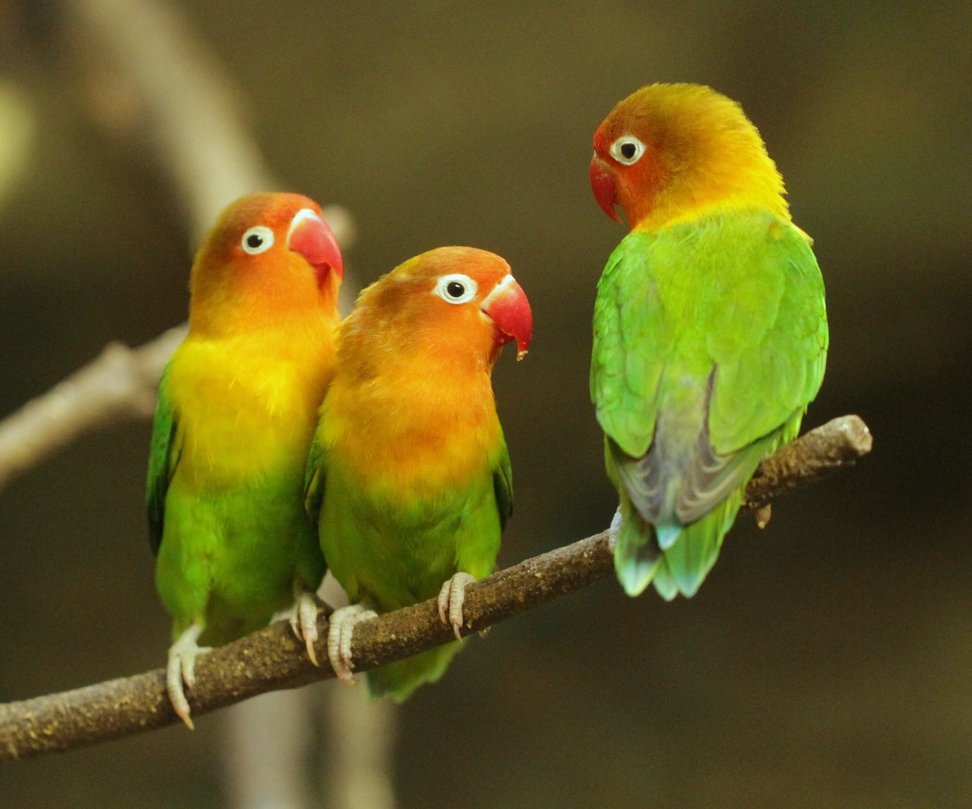
Photo: Agapornis_fischeri_-Ueno_Zoo,_Japan_-three-8a.jpg : Takashi Hososhima from Tokyo, Japan derivative work: Snowmanradio ( talk ) · CC BY-SA 2.0
A small, brilliantly colored African parrot named for explorer Gustav Fischer, known for its bold personality and strong pair bonds. One of the eye-ring lovebird species, it is a lively, busy aviary and companion bird.
ℹ️
Educational only. KinStation content is reviewed by licensed veterinarians but cannot replace an in-person exam. Always consult a licensed veterinarian or board-certified specialist for diagnosis, treatment, or any decision affecting your pet's health.
🩺 Need expert help with your fischer's lovebird?
Connect with a specialist near you or ask a licensed vet — never substitute online guidance for hands-on care in an emergency.
East Africa (north-central Tanzania, south of Lake Victoria)
Origin
Old World
Climate
⛅ Subtropical
Family
Psittaculidae
Genus
Agapornis
Part of the Lovebirds
Lovebirds (genus Agapornis) are small, stocky African parrots famous for their intense pair bonds, vivid colors, and big personalities packed into a tiny frame.
From the minimum an animal needs to be kept humanely, up to the ideal setup. Bigger is almost always better — minimums are floors, not targets.
Photo coming soon
Minimum
Pair cage + out time
≈ 24 × 18 × 24 in, ½ in bar spacing
Fischer's Lovebirds are small, social East African parrots that need a companion bird, not solo housing. A welfare minimum is a 24 × 18 × 24 in cage per pair with ½ in bar spacing, varied natural perches, multiple foraging toys, a bath dish, and 1–2 hours of supervised out-of-cage time daily.
Photo coming soon
Recommended
Flight cage / small aviary
≈ 36 × 24 × 36 in flight cage / pair
A 36 × 24 × 36 in flight cage per pair with rotating foraging toys, varied perches, daily bath, and 2+ hours of out-of-cage time keeps Fischer's Lovebirds happy. They are loud and need flock companionship — a bonded pair is the welfare norm.
Photo coming soon
Ideal
Walk-in aviary / bird room
Walk-in aviary or bird-safe room
A walk-in aviary or dedicated bird-safe room with branches, foraging stations, and bathing provides best welfare for this active species. Provide a sheltered nest area, varied seed and pellet diet, calcium, and group housing (compatible pairs only — they can be territorial during breeding).
Life & growth stages
How this animal changes through its life — each stage often has its own care, diet and space needs.
Photo coming soon
Egg
Birds develop inside a hard-shelled egg incubated by the parent(s). Egg size, shell color, and clutch size vary by species; the embryo develops over days to weeks before hatching.
Photo coming soon
Hatchling / Chick
Hatchlings are either altricial — naked, blind, and dependent on parents (typical of parrots and songbirds) — or precocial — downy, mobile, and self-feeding soon after hatching (typical of poultry and waterfowl). Down gives way to the first feathers.
Photo coming soon
Juvenile / Fledgling
Fledglings grow in their juvenile plumage and begin to fly and feed themselves, though they may still beg from parents at first. Juvenile feathering is often duller than the adult and is replaced as the bird matures.
Adult
Adults attain full body size and mature plumage, and are capable of breeding. Many species show distinct adult coloration, and in sexually dimorphic birds males and females differ in plumage, size, or markings.
(c) Tristo, some rights reserved (CC BY-NC) via iNaturalist — https://www.inaturalist.org/observations/236711155
Color & pattern variants
Natural variants occur in the wild; selectively bred (man-made) variants were developed in captivity.
Provide the largest cage practical for a small bird, with a minimum of roughly 60 x 45 x 60 cm for a pair, and ideally a flight cage or planted aviary so these athletic flyers can exercise. Horizontal bar spacing of about 1 cm lets them climb, and bar gaps should be small enough to prevent head entrapment. Offer several perches of varying natural-wood diameters, plenty of foraging and chew toys, and a shallow dish for bathing.
Fischer's lovebirds tolerate normal household temperatures (roughly 18-29 C) but must be protected from drafts, sudden chills, and temperatures below about 10 C. They are not cold-hardy; outdoor aviaries in temperate climates need frost-free, draft-free shelter and supplemental heat in winter. No UVB is strictly required indoors if diet is balanced, but access to natural or full-spectrum light supports wellbeing.
Substrate
Use newspaper or paper towels on the cage tray for easy cleaning and droppings monitoring; avoid loose substrates that can mold from spilled water or fruit. Provide cuttlebone and a mineral block separately for calcium.
Equipment & setup
House in a sturdy metal cage (minimum 24x18 inches per pair) with 1/2 inch bar spacing since lovebirds are strong chewers that escape weak cages. Offer natural wood perches of varying thickness, a shallow bath dish, plenty of chew and foraging toys, full-spectrum lighting indoors, and keep them at comfortable room temperature away from drafts.
Diet
Feed a base of a formulated pellet or a quality small-parakeet/lovebird seed mix, supplemented daily with fresh greens and vegetables such as kale, broccoli, carrot, and chopped sprouts, plus small amounts of fruit. Millet spray is a useful foraging treat. Avoid all-seed diets, which lead to obesity and fatty liver disease, and never offer avocado, chocolate, caffeine, alcohol, or salty foods.
Provide a cuttlebone or mineral block for calcium and clean, fresh water daily. Soaked or sprouted seed and chop mixes add variety and encourage natural foraging behavior.
Behavior & temperament
Fischer's lovebirds are bold, energetic, and famously feisty for their size, often acting like much larger parrots. They thrive on companionship; a single bird needs substantial daily interaction, while a bonded pair will preen, chatter, and roost tightly together. They can be territorial and nippy, especially in breeding condition, so introductions to other birds must be careful.
Enrichment is essential: rotate shreddable toys, foraging puzzles, swings, and fresh branches. They love to chew and tuck strips of paper or palm into their rump feathers (a hen behavior) to carry nesting material. Bored or lonely lovebirds may scream or feather-pluck, so a stimulating environment and routine attention are key.
Health
Common problems include obesity and fatty liver disease from seed-heavy diets, respiratory infections, psittacine beak and feather disease (PBFD), polyomavirus, and feather-plucking linked to boredom or stress. Egg-binding can affect breeding hens, so provide adequate calcium and avoid over-stimulating laying.
Prevention centers on a varied diet, clean housing, quarantine of new birds, and annual avian-vet checks. Watch for fluffed posture, tail-bobbing, nasal discharge, or appetite changes, which warrant prompt veterinary attention given how quickly small birds decline.
Tips, DIY & hacks
Fischer's lovebirds are energetic chewers and need a constant supply of destructible toys, soft wood, and shreddable paper to prevent boredom and feather-plucking. Hens famously tuck strips of paper or palm leaf into their rump feathers to carry to the nest, so offer safe shreddable material; provide a nest box only if breeding is intended, as it can trigger hormonal aggression otherwise.