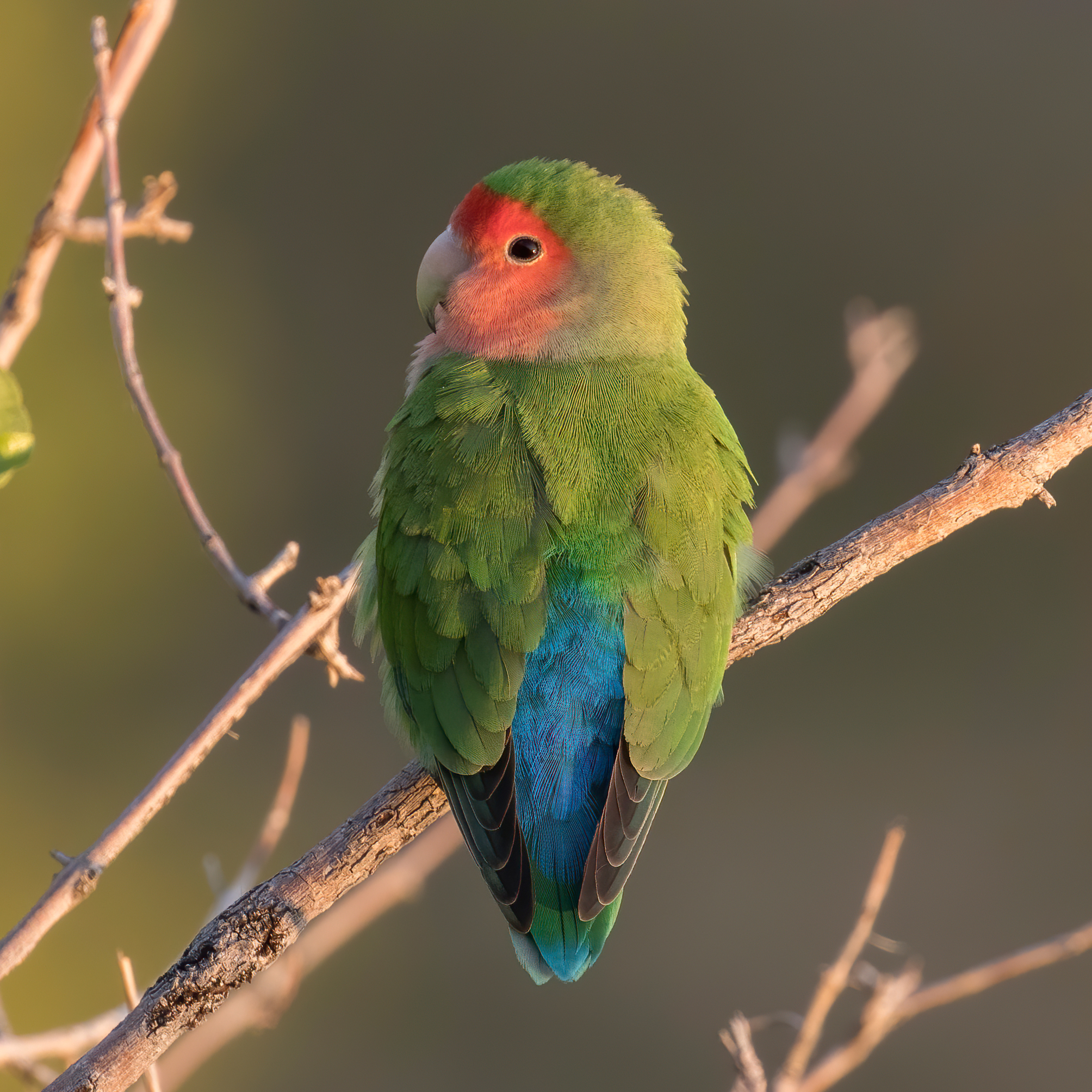
Peach-faced lovebirds are small African parrots known for their bold personalities and intense pair bonding. Despite their name, single birds need either a feathered companion or extensive daily human attention.
ℹ️
Educational only. KinStation content is reviewed by licensed veterinarians but cannot replace an in-person exam. Always consult a licensed veterinarian or board-certified specialist for diagnosis, treatment, or any decision affecting your pet's health.
🩺 Need expert help with your peach-faced lovebird?
Connect with a specialist near you or ask a licensed vet — never substitute online guidance for hands-on care in an emergency.
Lovebirds (genus Agapornis) are small, stocky African parrots famous for their intense pair bonds, vivid colors, and big personalities packed into a tiny frame.
From the minimum an animal needs to be kept humanely, up to the ideal setup. Bigger is almost always better — minimums are floors, not targets.
Photo coming soon
Minimum
Pair parrot cage
≈ 24 × 24 × 30 in, ≈ 1/2 in (12 mm) bar spacing
Peach-faced lovebirds are intensely social and ideally kept as a bonded pair, in a sturdy cage with bar spacing around 1/2 in and plenty of horizontal climbing room. They are powerful chewers, so provide hard wood and shreddable foraging toys, natural-branch perches, a bath, a cuttlebone, and room temperature 18–26 °C. A lone bird needs very heavy daily human interaction; even then, this is the smallest humane footprint with daily out-of-cage time.
Recommended
Large flight cage
≈ 36 × 24 × 36 in, ≈ 1/2 in bar spacing
A large flight cage plus daily supervised free flight gives a pair the space these active, acrobatic parrots demand. Supply abundant chewing and foraging enrichment, varied natural perches, swings, shredding material, bathing, and full-spectrum light, rotating toys to fend off boredom. Good company and ample space prevent the territoriality and feather-plucking that crop up when lovebirds are confined or lonely.
Marianna / CC BY 2.0 (Wikimedia Commons)
Photo coming soon
Ideal
Aviary / bird room
Walk-in aviary or dedicated bird room
A planted aviary or bird-safe room lets bonded lovebirds fly, climb, forage, and bathe, expressing their full energetic, social nature. An outdoor aviary needs a dry, draught-free, frost-protected shelter and predator-proofing, with constant chewing material since they destroy wood quickly. Pairs (or a carefully managed compatible group) in this kind of space achieve the best welfare.
Life & growth stages
How this animal changes through its life — each stage often has its own care, diet and space needs.
Photo coming soon
Egg
Birds develop inside a hard-shelled egg incubated by the parent(s). Egg size, shell color, and clutch size vary by species; the embryo develops over days to weeks before hatching.
Photo coming soon
Hatchling / Chick
Hatchlings are either altricial — naked, blind, and dependent on parents (typical of parrots and songbirds) — or precocial — downy, mobile, and self-feeding soon after hatching (typical of poultry and waterfowl). Down gives way to the first feathers.
Photo coming soon
Juvenile / Fledgling
Fledglings grow in their juvenile plumage and begin to fly and feed themselves, though they may still beg from parents at first. Juvenile feathering is often duller than the adult and is replaced as the bird matures.
Adult
Adults attain full body size and mature plumage, and are capable of breeding. Many species show distinct adult coloration, and in sexually dimorphic birds males and females differ in plumage, size, or markings.
(c) macjackyemas, some rights reserved (CC BY-NC) via iNaturalist — https://www.inaturalist.org/observations/93418489
Color & pattern variants
Natural variants occur in the wild; selectively bred (man-made) variants were developed in captivity.
Peach-faced lovebirds are small but extremely active parrots, so a flight cage wider than it is tall (with appropriate bar spacing) is preferable to a narrow, vertical cage. Daily supervised out-of-cage time in a bird-safe room lets them burn energy and explore. Provide multiple natural perches of varying diameters, plenty of shredding and foraging toys, and a bathing option.
A consistent light cycle with full, dark nights supports health and helps moderate hormonal behaviour. A specific lovebird quirk is their love of shredding paper and tucking strips into their rump feathers to carry as nesting material — providing safe shredding toys channels this, but offering abundant nesting material plus warmth and a cavity-like hide can inadvertently trigger chronic egg-laying in females, so manage those cues deliberately.
As with all parrots, keep them away from PTFE/Teflon cookware fumes, scented products, aerosols, and smoke, which can be rapidly fatal to birds.
Substrate
Line the cage tray with plain newspaper, paper towel, or butcher paper for easy daily cleaning and droppings monitoring; avoid loose corncob or walnut-shell litter, which can grow mold and be ingested. Keep the cage floor accessible but undecorated so spilled seed and feces are simple to remove.
Equipment & setup
Provide a strong, secure cage with horizontal bars and roughly 1/2 inch spacing for climbing, plus varied natural-wood perches of differing diameters to exercise feet. Lovebirds need no supplemental heat at normal room temperatures, but benefit from full-spectrum or UVB avian lighting on a regular day/night cycle, a sturdy stainless or ceramic water dish, and a shallow bath dish since they bathe enthusiastically.
Diet
Build the diet on a formulated pellet, supplemented with vegetables, leafy greens, sprouted seeds, and small amounts of fruit. Seed-only diets are a common cause of long-term nutritional deficiency in lovebirds, so seeds are best used as a smaller component or a training reward rather than the staple.
A cuttlebone or mineral block helps support calcium needs, which is especially relevant for hens prone to egg-laying. Offer fresh food daily and provide clean water. Foraging enrichment suits their busy temperament.
Avoid the usual parrot toxins — avocado, chocolate, caffeine, alcohol, excess salt, and onion. Transition seed-dependent birds onto pellets and fresh foods gradually, ideally with avian-veterinary guidance.
Behavior & temperament
Lovebirds are famously bonded and intensely social. The 'lovebird' name reflects strong pair bonds, but a single lovebird can bond just as fiercely to its human — at the cost of needing a great deal of daily attention. Pairs often do well together, and two hand-tame birds usually remain handleable, but an under-socialised single bird left alone can become frustrated and nippy.
They are bold, busy, and sometimes feisty for their size, and they can be territorial around their cage. Communication is a stream of chirps, chatters, and squeaks; some learn a few words, but they are not strong talkers. Watch for hormonal-season behaviour changes, including nesting drive in hens.
Their boldness is part of the charm and part of the challenge: consistent, gentle handling from early on shapes whether you get a confident companion or a cage-defensive nipper.
Health
An avian veterinarian and annual wellness exams are the foundation, since lovebirds, like all birds, conceal illness well. Weight tracking and quick attention to subtle changes catch problems early.
Documented concerns include chronic egg-laying in females (with its risks of egg binding and calcium depletion), feather plucking, respiratory infection, and psittacine beak and feather disease (PBFD), a viral disease that damages feathers and the beak and suppresses immunity. These need veterinary diagnosis; feather loss in particular has many possible causes and should be worked up rather than assumed behavioural.
Signs that warrant prompt evaluation include fluffed, lethargic posture, laboured or tail-bobbing breathing, changes in droppings, persistent egg-laying, or any feather destruction.
Tips, DIY & hacks
Peach-faced hens famously tuck shredded paper strips into their rump feathers to carry nesting material, so offer palm fronds or willow strips as enrichment. They are strong chewers, so supply a constant rotation of cheap destructible toys (paper cups, plain cardboard, untreated wood) and avoid leaving a nest box in unless intentionally breeding, as it triggers chronic egg-laying in lone hens.
Origin & history
The peach-faced (rosy-faced) lovebird, Agapornis roseicollis, is native to arid regions of southwestern Africa. It is one of the most popular lovebird species in aviculture and has been bred into a wide array of colour mutations, from the wild-type green to lutino, blue-series, and pied birds.
Feral populations descended from escaped or released pet birds have established in parts of the southwestern United States, notably around Phoenix, Arizona — a reminder that even small captive birds can naturalise in suitable climates. Pet birds are widely captive-bred and generally unrestricted, though local rules are always worth checking.
Anecdotes & owner lore
Community experience and cultural notes — not veterinary advice. Every animal is an individual; treat these as colour, not care instructions.
The most charming lovebird quirk is paper-tucking: a peach-faced hen will neatly shred strips of paper and tuck them sideways into her rump feathers to ferry them off to a 'nest,' a behaviour unique among lovebirds that owners never tire of watching. Their devotion to a mate (feathered or human) gave the whole genus its romantic name.
Keepers also trade affectionate warnings about the 'big personality in a small body' — lovebirds are bold enough to boss around birds several times their size and stubborn enough to hold a grudge over a moved toy. In Phoenix, the wild rosy-faced lovebirds at backyard feeders have become a beloved local oddity, a flash of tropical colour that escaped the pet trade and made the desert suburbs home.
Common ailments
Egg binding (dystocia) — common — A risk that rises with chronic egg-laying and calcium depletion; treated as an emergency.
Chronic / excessive egg-laying — very common — Nesting material, warmth, and a hide can trigger it; manage these cues and consult an avian vet.
Feather-destructive behavior (feather plucking) — common
Psittacine beak and feather disease (PBFD) — rare
Reviewed and signed off by: KinStation Editorial - pre-launch draft (pending DVM review)