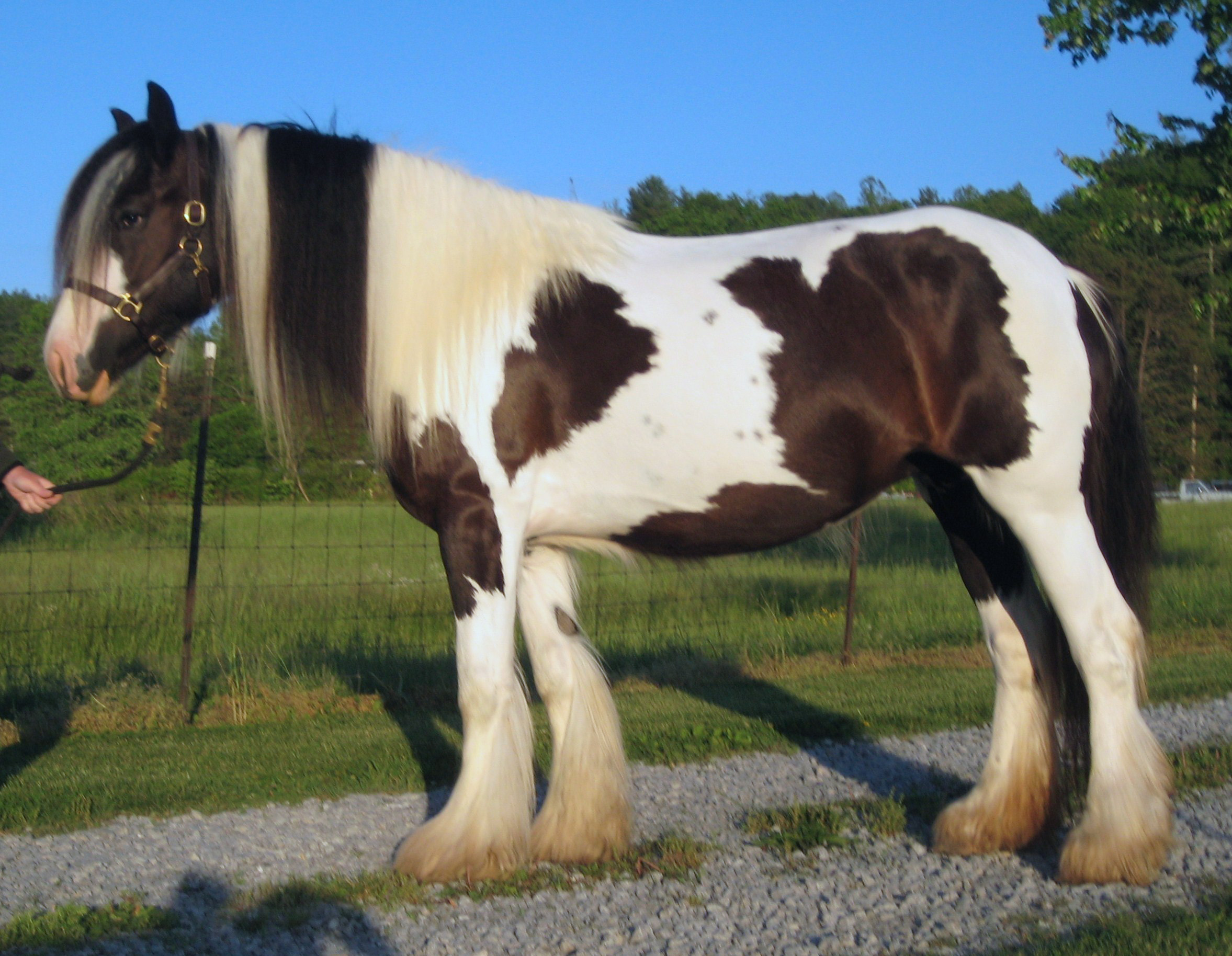
A small, powerfully built draft horse developed by Romani families in the British Isles to pull caravans, distinguished by abundant 'feathered' leg hair, a flowing mane and tail, and bold piebald/skewbald coats. Gentle and willing.
ℹ️
Educational only. KinStation content is reviewed by licensed veterinarians but cannot replace an in-person exam. Always consult a licensed veterinarian or board-certified specialist for diagnosis, treatment, or any decision affecting your pet's health.
🩺 Need expert help with your gypsy vanner?
Connect with a specialist near you or ask a licensed vet — never substitute online guidance for hands-on care in an emergency.
From the minimum an animal needs to be kept humanely, up to the ideal setup. Bigger is almost always better — minimums are floors, not targets.
Photo coming soon
Minimum
Roomy stall + pasture + shed
12×14 ft stall + 1.5 ac pasture + run-in shed
Light-draft / cob welfare floor: a roomy 12×14 ft stall (bigger frame, longer back), 1.5+ acres of pasture, a run-in shed, and an equid companion. Reinforced fencing, larger feed/water buckets, and a farrier comfortable with broader feet. Heavy feathers — daily grooming and routine trimming to prevent mites, mud fever, and scratches.
Photo coming soon
Recommended
Stall + rotated pasture + small herd
12×14 ft stall + 2–3 ac rotated pasture + shed
Roomy stall plus 2–3 acres of rotated pasture per horse and a small herd. Light drafts are easy keepers — watch grass intake to prevent laminitis, and trim feathers regularly to prevent mites/scratches in feathered breeds.
Photo coming soon
Ideal
Barn + multi-paddock + driving/working access
Barn + multi-paddock on 5+ ac/horse + driving/working access
Barn with multi-paddock rotation on 5+ acres per horse, a settled herd, and access to driving lanes, working ground, or hacking trails. Daily grooming (especially feather and mane care), regular farrier on a draft-savvy cycle, and a feed plan tuned to easy-keeper metabolism.
Life & growth stages
How this animal changes through its life — each stage often has its own care, diet and space needs.
Photo coming soon
Newborn
Newborn mammals are nursed on their mother's milk. Many are born helpless — blind, deaf, and sparsely furred (altricial, as in dogs, cats, and rodents) — while others stand and follow within hours (precocial, as in hoofed livestock).
Photo coming soon
Juvenile
After weaning, juveniles grow quickly and become increasingly active, playful, and independent. Adult coat, proportions, and (in many species) the permanent teeth come in as they approach full size.
Photo coming soon
Adult
Adults reach full body size and sexual maturity, with the species' mature coat and build. Sexual dimorphism — differences in size, mane, horns, or markings — is pronounced in some mammals and subtle in others.
Senior
Senior animals show aging signs such as graying fur, reduced activity, and a greater need for veterinary monitoring of joints, teeth, and organ function. Lifespan and the onset of old age vary widely by species and size.
Color & pattern variants
Natural variants occur in the wild; selectively bred (man-made) variants were developed in captivity.
Pasture with a run-in shelter and dry, clean footing—muddy or wet paddocks are the chief enemy of their heavily feathered legs. Provide good turnout and herd companionship. Sturdy fencing suits their strength; keep bedding clean and dry to protect feathered limbs.
Diet
Easy keepers that gain weight on modest forage; feed mostly grass hay, restrict rich pasture and grain, and monitor body condition closely. Provide a balanced mineral supplement and constant water. Over-feeding leads to obesity and laminitis in this thrifty breed.
Behavior & temperament
Bred as a draft and driving horse for caravan pulling, now popular for driving, pleasure and trail riding, and showing. Renowned for an exceptionally docile, people-loving, and trainable temperament, which makes them suitable for families despite their size and power.
Health
The heavy leg feathering predisposes them to chronic progressive lymphedema (CPL) and to 'mud fever'/pastern dermatitis and feather mites if legs stay damp and dirty. Also watch for obesity-linked laminitis. Otherwise generally hardy; choose breeders who manage CPL and limb health.
Tips, DIY & hacks
Keep feathers clean and bone-dry—rinse and thoroughly dry legs, treat mites/dermatitis early, and house on clean footing. Many owners avoid clipping feathers as it removes a protective barrier, but hygiene is essential. Buy from registries that disclose CPL status in breeding lines.