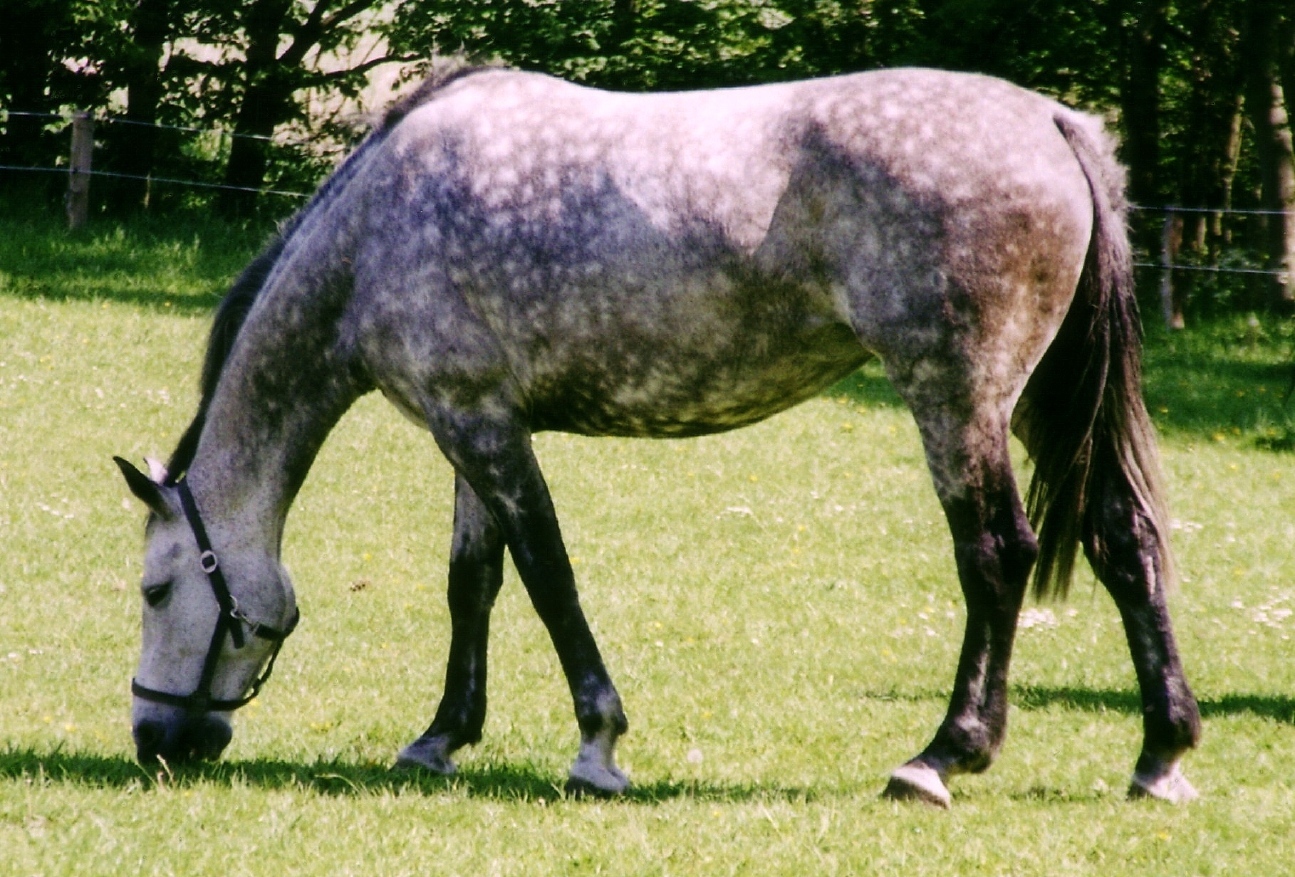
The Holsteiner is one of the oldest German warmblood breeds, prized worldwide as a show jumper and dressage horse. It is known for a powerful, elastic jump, a strong hindquarter, and a willing, trainable temperament.
ℹ️
Educational only. KinStation content is reviewed by licensed veterinarians but cannot replace an in-person exam. Always consult a licensed veterinarian or board-certified specialist for diagnosis, treatment, or any decision affecting your pet's health.
🩺 Need expert help with your holsteiner?
Connect with a specialist near you or ask a licensed vet — never substitute online guidance for hands-on care in an emergency.
From the minimum an animal needs to be kept humanely, up to the ideal setup. Bigger is almost always better — minimums are floors, not targets.
Photo coming soon
Minimum
Box stall + turnout + shed
12×12 ft stall + 1 ac turnout + run-in shed
Sport horses still need the 12×12 ft welfare-floor stall, 1+ acre of daily turnout, a shed, and a companion. Stall-only confinement causes ulcers and stereotypies even in performance horses.
Photo coming soon
Recommended
Stall + rotated pasture + working arena
12×12 ft stall + 2–3 ac rotated pasture + working arena
Stall plus 2–3 acres of rotated pasture per horse, regular turnout with a small herd, and access to a working arena for schooling. Sport horses benefit hugely from real turnout — performance and longevity both improve.
Photo coming soon
Ideal
Sport facility with varied terrain
Barn + 5+ ac/horse + arena + varied terrain access
Full sport facility: barn, 5+ acres per horse on multiple paddocks, indoor and outdoor arenas, and access to varied terrain (hills, hacking trails, cross-country fences). Companion herd plus a structured farrier, vet, physio, and training programme.
Life & growth stages
How this animal changes through its life — each stage often has its own care, diet and space needs.
Photo coming soon
Newborn
Newborn mammals are nursed on their mother's milk. Many are born helpless — blind, deaf, and sparsely furred (altricial, as in dogs, cats, and rodents) — while others stand and follow within hours (precocial, as in hoofed livestock).
Photo coming soon
Juvenile
After weaning, juveniles grow quickly and become increasingly active, playful, and independent. Adult coat, proportions, and (in many species) the permanent teeth come in as they approach full size.
Photo coming soon
Adult
Adults reach full body size and sexual maturity, with the species' mature coat and build. Sexual dimorphism — differences in size, mane, horns, or markings — is pronounced in some mammals and subtle in others.
Senior
Senior animals show aging signs such as graying fur, reduced activity, and a greater need for veterinary monitoring of joints, teeth, and organ function. Lifespan and the onset of old age vary widely by species and size.
Color & pattern variants
Natural variants occur in the wild; selectively bred (man-made) variants were developed in captivity.
Needs a proper stable yard: a roomy box stall (minimum ~3.5 x 3.5 m) with daily turnout on safe, well-fenced pasture. Like all sport horses they benefit from as much grazing and free movement as possible to protect limb and joint health; permanent stabling without turnout causes stress, stable vices, and stiffness. Provide field shelter, clean water, and good ventilation in the barn.
Diet
Forage-first: ad-lib or large quantities of good-quality grass/hay (1.5–2.5% of bodyweight daily) forms the base of the diet. Performance horses in heavy work need concentrates (grain/compound feed) or oil for extra calories, plus a vitamin/mineral and salt supplement. Feed little-and-often, always with clean water and ideally constant forage access to protect against colic and gastric ulcers.
Behavior & temperament
A purpose-bred sport horse (show jumping above all, also dressage, eventing, and driving). Holsteiners are typically intelligent, brave, and people-oriented with a strong work ethic, making them rideable for ambitious amateurs as well as professionals. They are sensitive and athletic, so they need consistent, knowledgeable handling and a real job; bored or under-worked horses can become difficult.
Health
Generally robust, but as a large athletic warmblood it is prone to sport-related orthopaedic problems: osteochondrosis (OCD) in young growing horses, degenerative joint disease/arthritis, and tendon or suspensory ligament injuries from jumping workloads. Like all horses, susceptible to colic, gastric ulcers, and laminitis if mismanaged. Buy with a pre-purchase exam and radiographs; the studbook screens stallions for heritable defects.
Tips, DIY & hacks
Start athletic work slowly and let the skeleton mature — avoid hard jumping before ~4 years to reduce OCD/joint damage. Keep a regular farrier (every 6–8 weeks) and routine vet, dental, and vaccination schedule. Maximise turnout and forage to support a sensitive gut. A consistent training routine and a confident, experienced rider get the best from this brave, sometimes hot horse.