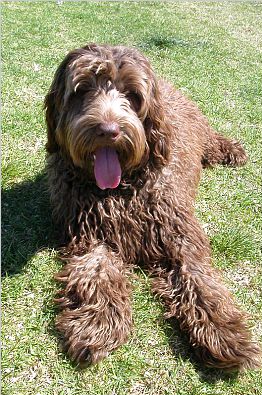
A Labrador Retriever x Poodle crossbreed originally developed in Australia as a low-shedding guide dog. Friendly, energetic, and intelligent, with variable coat and a related, more standardized Australian Labradoodle line.
ℹ️
Educational only. KinStation content is reviewed by licensed veterinarians but cannot replace an in-person exam. Always consult a licensed veterinarian or board-certified specialist for diagnosis, treatment, or any decision affecting your pet's health.
🩺 Need expert help with your labradoodle?
Connect with a specialist near you or ask a licensed vet — never substitute online guidance for hands-on care in an emergency.
From the minimum an animal needs to be kept humanely, up to the ideal setup. Bigger is almost always better — minimums are floors, not targets.
Photo coming soon
Minimum
Free-roam home (large)
House + 60-min daily walks + secure space
Crate-trained + supervised free-roam in the home. Labradoodle (Lab × Poodle) — high energy, multi-gen lines more predictable; first-gen varies widely.
Photo coming soon
Recommended
Yarded family home
Suburban home + 1/4-1/2 ac fenced yard + 90-min off-lead
Home with secure yard, daily structured exercise, household-pet status.
Photo coming soon
Ideal
Active home with a purpose
Rural home + acreage + working/sport role
Maximum welfare: space + exercise + the breed's purpose satisfied (herding, scent work, lure coursing, dock diving, agility, etc.). Labradoodle (Lab × Poodle) — high energy, multi-gen lines more predictable; first-gen varies widely.
Life & growth stages
How this animal changes through its life — each stage often has its own care, diet and space needs.
Photo coming soon
Newborn
Newborn mammals are nursed on their mother's milk. Many are born helpless — blind, deaf, and sparsely furred (altricial, as in dogs, cats, and rodents) — while others stand and follow within hours (precocial, as in hoofed livestock).
Photo coming soon
Juvenile
After weaning, juveniles grow quickly and become increasingly active, playful, and independent. Adult coat, proportions, and (in many species) the permanent teeth come in as they approach full size.
Photo coming soon
Adult
Adults reach full body size and sexual maturity, with the species' mature coat and build. Sexual dimorphism — differences in size, mane, horns, or markings — is pronounced in some mammals and subtle in others.
Senior
Senior animals show aging signs such as graying fur, reduced activity, and a greater need for veterinary monitoring of joints, teeth, and organ function. Lifespan and the onset of old age vary widely by species and size.
Color & pattern variants
Natural variants occur in the wild; selectively bred (man-made) variants were developed in captivity.
Adaptable to apartments (smaller sizes) or houses, but all sizes need ample exercise: 45-60+ minutes daily of walking, play, fetch, or swimming, plus training. Highly social and bonded to people, so prone to separation anxiety if left alone too long. Benefits from a securely fenced area to run.
Diet
Feed a complete diet measured to size and activity; both Labradors and Poodles can be food-motivated and Labs are notably prone to obesity (some carry a POMC gene variant increasing appetite), so portion control is important. Standard, deeper-chested individuals may carry modest bloat (GDV) risk; feed measured meals and avoid vigorous exercise immediately after eating.
Behavior & temperament
Friendly, sociable, intelligent, and eager to please, combining the Labrador's outgoing nature with Poodle smarts; very trainable and used in assistance and therapy work. Energetic and sometimes mouthy as youngsters, needing exercise and mental enrichment. Generally great with children and other pets when socialized. Temperament and predictability vary by generation; multigen Australian Labradoodles aim for more consistency.
Health
Can inherit issues from either parent: hip and elbow dysplasia, progressive retinal atrophy and other eye conditions, exercise-induced collapse (Labrador), and Poodle-line conditions like von Willebrand disease, Addison's disease, and sebaceous adenitis. Hybrid vigor is not guaranteed. Recommended screening: hips, elbows, eyes, and breed-relevant DNA tests (PRA, EIC) from health-tested parents.
Tips, DIY & hacks
Coat varies from hair (straight, shedding) to fleece and wool (curlier, lower-shedding); fleece/wool coats need regular brushing and clipping every 6-8 weeks to prevent matting. No Labradoodle is guaranteed allergy-safe. Clean floppy ears regularly to prevent infection. Provide structured positive training and plenty of exercise to manage their energy and intelligence.