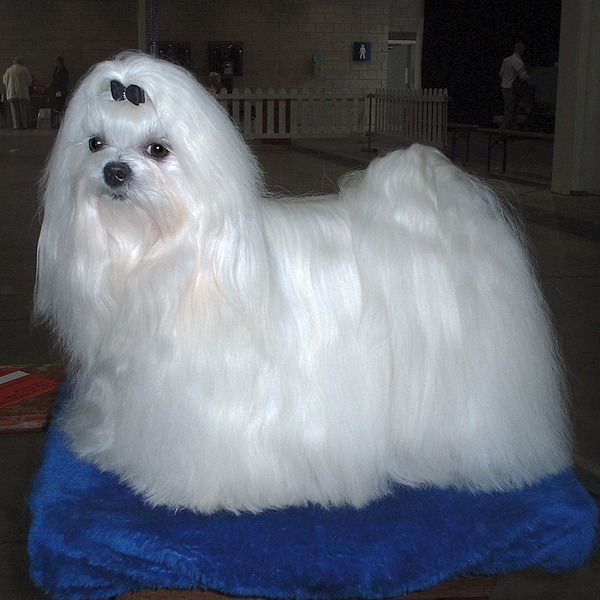
An ancient toy companion with a long, silky white coat. Gentle, affectionate and lively, the Maltese is a devoted lapdog that thrives on close human company.
ℹ️
Educational only. KinStation content is reviewed by licensed veterinarians but cannot replace an in-person exam. Always consult a licensed veterinarian or board-certified specialist for diagnosis, treatment, or any decision affecting your pet's health.
🩺 Need expert help with your maltese?
Connect with a specialist near you or ask a licensed vet — never substitute online guidance for hands-on care in an emergency.
From the minimum an animal needs to be kept humanely, up to the ideal setup. Bigger is almost always better — minimums are floors, not targets.
Photo coming soon
Minimum
Small apartment with daily walks
Apartment + 2× daily 20-min walks
A toy breed can live happily in a small apartment provided they get two short daily walks, indoor play, and supervised free-roam time. Crate-train for safe alone-time and never leave loose with unsupervised toddlers — they injure easily.
Photo coming soon
Recommended
Home with secure yard + social structure
House + small fenced yard + daily walks
A house with a securely fenced yard for safe potty/play time, daily walks, and a clear household routine. Toy breeds thrive when treated as full household pets, not handbag accessories.
Photo coming soon
Ideal
Household lap-dog with rich social life
House + fenced yard + companion-dog social pack
Closely-bonded household pet with a fenced yard, regular outings, varied training games, and human company most of the day. Toy breeds are companion animals — long isolation is their biggest welfare risk.
Life & growth stages
How this animal changes through its life — each stage often has its own care, diet and space needs.
Photo coming soon
Newborn
Newborn mammals are nursed on their mother's milk. Many are born helpless — blind, deaf, and sparsely furred (altricial, as in dogs, cats, and rodents) — while others stand and follow within hours (precocial, as in hoofed livestock).
Photo coming soon
Juvenile
After weaning, juveniles grow quickly and become increasingly active, playful, and independent. Adult coat, proportions, and (in many species) the permanent teeth come in as they approach full size.
Photo coming soon
Adult
Adults reach full body size and sexual maturity, with the species' mature coat and build. Sexual dimorphism — differences in size, mane, horns, or markings — is pronounced in some mammals and subtle in others.
Senior
Senior animals show aging signs such as graying fur, reduced activity, and a greater need for veterinary monitoring of joints, teeth, and organ function. Lifespan and the onset of old age vary widely by species and size.
Color & pattern variants
Natural variants occur in the wild; selectively bred (man-made) variants were developed in captivity.
Perfect apartment and lap companion — tiny, indoor-oriented and adaptable. Needs only light daily exercise: short walks and indoor play. Sensitive to cold and heat given small size and single coat; protect from extremes. Dislikes long periods alone and is prone to separation anxiety.
Diet
Feed a quality toy-breed diet in small, measured meals; toy breeds can be prone to hypoglycaemia as young puppies, so frequent small feedings help. Prioritise dental-friendly feeding and routine dental care — small breeds are very prone to periodontal disease. Avoid overfeeding, as excess weight strains a delicate frame.
Behavior & temperament
Gentle, affectionate, playful and fearless for its size, forming intense bonds with its owners. Intelligent and trainable with positive methods, though house-training can take patience and some bark readily as watchdogs. Moderate energy. Good with gentle older children and other pets; supervise around young children due to the dog's fragility, not temperament.
Health
Predispositions include patellar luxation, dental disease, portosystemic (liver) shunts, tracheal collapse, hypoglycaemia in puppies, and eye conditions with tear-staining. Open fontanelle and luxating patellas occur in some lines. Recommended screening: patella evaluation, dental and cardiac checks, and liver/bile-acid testing if shunt is suspected. Choose breeders avoiding extreme tininess ('teacup'), which worsens fragility and health risk.
Tips, DIY & hacks
The long white single coat is low-shedding but high-maintenance — daily brushing if kept long, or a short 'puppy cut' for easier care. Clean facial hair and tear-stains daily to manage staining around the eyes. Keep up regular dental brushing. Be patient with house-training and avoid encouraging excessive barking. Handle gently given the fragile frame.