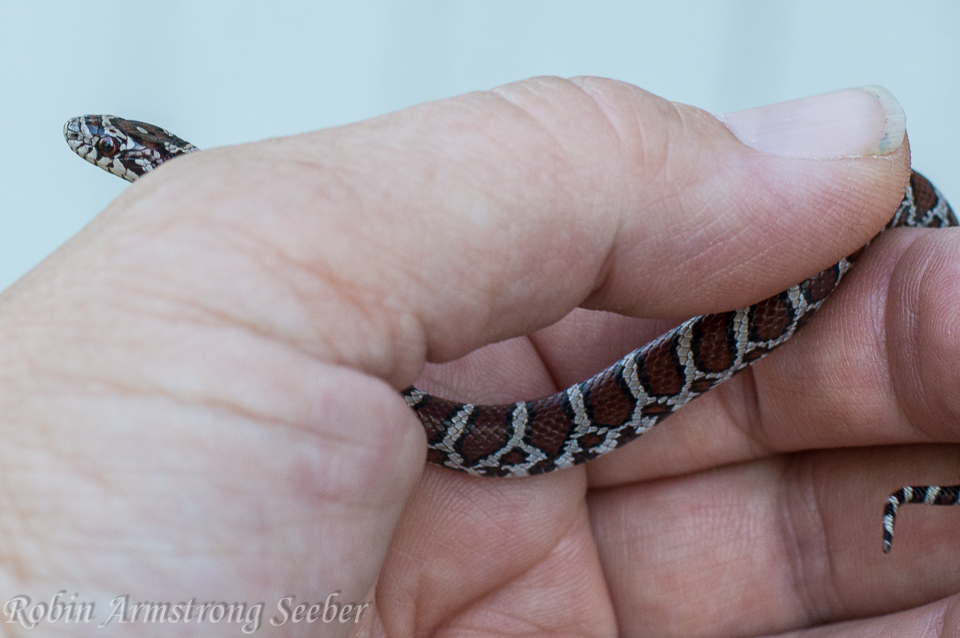
Photo: The original uploader was BillC at English Wikipedia . · CC BY-SA 3.0
Milk snakes are slender colubrids native to North and Central America, famous for red-black-yellow banding that resembles the venomous coral snake. They are docile, hardy, and well-suited to intermediate keepers.
ℹ️
Educational only. KinStation content is reviewed by licensed veterinarians but cannot replace an in-person exam. Always consult a licensed veterinarian or board-certified specialist for diagnosis, treatment, or any decision affecting your pet's health.
🩺 Need expert help with your milk snake?
Connect with a specialist near you or ask a licensed vet — never substitute online guidance for hands-on care in an emergency.
Subspecies vary widely — typically 2–4 feet total length.
Lifespan
12–20 years
Social needs
solo
Native region
Americas (southeastern Canada through North and Central America into northern South America)
Origin
New World
Climate
🌍 Varied
Family
Colubridae
Genus
Lampropeltis
Part of the Colubrid snakes
Colubrids are the largest and most diverse snake family, encompassing most popular non-constricting and mildly constricting pet snakes. They range from hardy beginner species to specialized insectivores, and are generally non-venomous and manageable in captivity.
From the minimum an animal needs to be kept humanely, up to the ideal setup. Bigger is almost always better — minimums are floors, not targets.
Photo coming soon
Minimum
Adult terrarium
Floor length ≥ snake's length (≈ 40-gal breeder)
An adult needs an enclosure whose floor length and width together equal at least the snake's total length, which for most subspecies means a 36 × 18 inch (40-gallon-breeder) footprint as a floor. Provide aspen or cypress substrate for burrowing, secure tight-fitting hides on both ends (this is a shy, escape-prone species), a gradient of 27–30 °C warm to 21–24 °C cool, moderate humidity around 40–60%, and always house singly.
Photo coming soon
Recommended
Adult vivarium
4 × 2 ft floor (≈ 48 × 24 in)
A 4 × 2 ft floor enclosure suits the larger subspecies and lets this nervous, secretive snake roam between multiple hides, cork bark, and clutter for security. Maintain a warm end of 27–30 °C, a cool end near 21–24 °C, moderate humidity with a humid hide for shedding, low-level UVB, and a lockable lid since milk snakes are determined escape artists.
Photo coming soon
Ideal
Naturalistic bioactive build
6 × 2 × 2 ft bioactive (largest subspecies)
A 6 × 2 ft (or longer) bioactive enclosure with a digging substrate layer, clean-up crew, live plants, dense leaf litter, and climbing branches lets this active forager hunt, hide, and thermoregulate naturally. Pair a full thermal gradient (basking ~30 °C, cool ~21 °C) with full-spectrum UVB, abundant ground cover for confidence, and a humid retreat for the best welfare outcome.
Life & growth stages
How this animal changes through its life — each stage often has its own care, diet and space needs.
Photo coming soon
Egg / Neonate
Most reptiles lay leathery- or hard-shelled eggs incubated by ambient warmth, though some snakes and lizards give live birth. Incubation temperature can influence sex and development in many species.
Photo coming soon
Hatchling
Hatchlings emerge as fully formed miniatures of the adult, often using an egg tooth to slit the shell. They are independent from birth but small and vulnerable, and may show brighter or different juvenile patterning.
Photo coming soon
Juvenile
Juveniles grow steadily, shedding their skin periodically as they enlarge. Coloration and proportions shift toward the adult form, and growth rate depends heavily on temperature, diet, and basking/UVB access.
Adult
Adults reach the species' full length and mass and become sexually mature. Many reptiles show sex differences in size, coloration, or features (such as larger heads, hemipenal bulges, or femoral pores), and continue to shed throughout life.
Color & pattern variants
Natural variants occur in the wild; selectively bred (man-made) variants were developed in captivity.
Milk snakes are slender, secretive colubrids, and a front-opening enclosure around 36×18 inches of floor space suits a single adult of most subspecies; larger subspecies need more room. They are good climbers and active foragers, so a few sturdy branches add usable space, but ground-level security comes first. As with most snakes, escape-proofing is essential.
Multiple hides on the warm and cool ends are particularly important for this shy species, which feels exposed without enough cover and may stress or refuse food in a sparse enclosure. A thermal gradient with a warm basking area and a cooler side lets the snake thermoregulate, and a fine substrate such as aspen or cypress mulch holds a comfortable ambient humidity.
A water dish large enough for an occasional soak supports hydration and shedding, and low-level UVB on a daytime cycle is increasingly offered in modern care. Keeping humidity in a moderate range helps avoid the stuck sheds milk snakes can get if the air is too dry.
Substrate
Use a substrate that holds a light burrow and a moderate humidity gradient: aspen shavings, cypress mulch, or a coco-husk/aspen blend work well at 2-3 inches deep so this secretive colubrid can hide beneath it. Avoid cedar and pine, which release toxic oils, and spot-clean soiled bedding promptly to prevent scale rot.
Equipment & setup
Provide a secure, escape-proof enclosure (milk snakes are strong, persistent escapers) with belly heat from an under-tank heater or low-watt heat panel on a thermostat, giving a warm side of about 84-88F and a cool side near 72-78F. No UVB is required, though a low-level LED day cycle is fine; supply a water bowl large enough to soak and at least two tight hides, one per thermal zone.
Diet
Milk snakes eat appropriately sized whole prey, typically frozen-thawed mice or (for larger animals) small rats, on a schedule set by age and body condition. Frozen-thawed prey is the standard, safer alternative to live rodents.
An important husbandry point flows from their natural diet: milk snakes (like other kingsnakes in the genus Lampropeltis) are ophiophagous — they eat other snakes in the wild. That makes cohabitation genuinely dangerous, because a milk snake may eat a cagemate. They are therefore always housed singly, and feeding is done individually.
Fresh water is always available. Periodic food refusal around shedding or seasonal cool-downs is normal in a healthy adult, while chronic refusal with weight loss is a reason to consult a vet. Regurgitation after handling too soon post-feeding is avoided by leaving the snake undisturbed for a day or two after meals.
Behavior & temperament
Milk snakes are solitary and primarily crepuscular to nocturnal, spending daylight hours hidden. Captive-bred individuals are typically calm and tractable, though they can be a bit more active and "flighty" than some other beginner-friendly colubrids; defensive responses tend toward musking, rattling the tail, and trying to flee rather than biting. Handling is kept brief, with the body fully supported.
Their striking red-black-yellow (or red-black-white) banding is a textbook case of Batesian mimicry: the harmless milk snake resembles the venomous coral snake closely enough that predators give it a wide berth. The familiar folk rhyme ("red touches yellow, kill a fellow; red touches black, friend of Jack") describes North American coral snakes versus their mimics, but it is not reliable in Central and South America, where banding patterns differ — so it is a piece of natural-history color, not a field-safe identification rule.
Day to day they are alert, exploratory animals that make good use of hides and tunnels. Their shy streak means a well-furnished enclosure with plenty of cover brings out more natural, relaxed behavior.
Health
Common milk snake health concerns include respiratory infection, external parasites (mites), regurgitation (often from handling too soon after feeding or from temperatures that are too low to digest), and stuck shed in overly dry conditions. These are general patterns to discuss with a veterinarian.
Prevention is mostly about a correct gradient, adequate humidity and hides, sensible feeding and post-feeding rest, and quarantine of new arrivals. Watching sheds, weight, and appetite over time is the best early-warning system.
Signs that warrant a reptile-experienced veterinarian include wheezing or open-mouth breathing, visible mites, repeated regurgitation, retained shed (especially eye caps), and persistent food refusal with weight loss. Annual wellness exams are advised given the species' long potential lifespan.
Tips, DIY & hacks
These snakes feel safest when snug, so cheap DIY hides from plastic deli cups or upturned flowerpots with a cut entrance work as well as store-bought caves. Always feed in a separate tub or use feeding tongs since milk snakes have a strong feeding response, and quarantine new arrivals for at least 60 days to screen for mites and respiratory issues.
Origin & history
Lampropeltis triangulum is one of the most wide-ranging snakes in the Americas, historically described with many subspecies from southeastern Canada through the United States and Central America into northern South America — a sprawling complex that taxonomists have repeatedly revised, with several former subspecies elevated to full species. This range underlies the enormous variation in size and coloration seen in the hobby.
The genus name Lampropeltis means "shiny shield," referencing the smooth, glossy scales. The common name comes from an old, biologically impossible folk belief that the snakes sucked milk from cows' udders — a myth that arose because milk snakes frequent barns in pursuit of rodents. Popular subspecies and lines in the trade include the Pueblan, Honduran, Sinaloan, Nelson's, and eastern milk snakes.
Anecdotes & owner lore
Community experience and cultural notes — not veterinary advice. Every animal is an individual; treat these as colour, not care instructions.
Few snakes come wrapped in as much folklore as the milk snake. The name itself is a tall tale: farmers who found these snakes lurking in barns and noticed a cow giving less milk concocted the story that the snake had been nursing — never mind that no snake can suck, and that a cow would object loudly to a mouthful of needle teeth. The snake was really there for the rats.
The coral-snake resemblance is the other great milk snake story. The mnemonic rhyme is part of American backyard lore, and the mimicry is striking enough that harmless milk snakes are killed every year by people who mistake them for venomous coral snakes. Keepers, by contrast, prize exactly those bold tricolor bands, and breeders have spent decades intensifying the reds and whites of subspecies like the Sinaloan and Honduran into living candy-cane patterns. There's a certain delight among owners in keeping a "deadly-looking" snake that is, in reality, a shy barn-dwelling mouser.
Common ailments
Respiratory infection — common
Snake mites (external parasites) — common
Retained shed (dysecdysis) — common — More likely when ambient humidity runs too low for this species.
Regurgitation — common — Often prevented by leaving the snake undisturbed for a day or two after meals and keeping the warm side warm enough to digest.
Reviewed and signed off by: KinStation Editorial - pre-launch draft (pending DVM review)