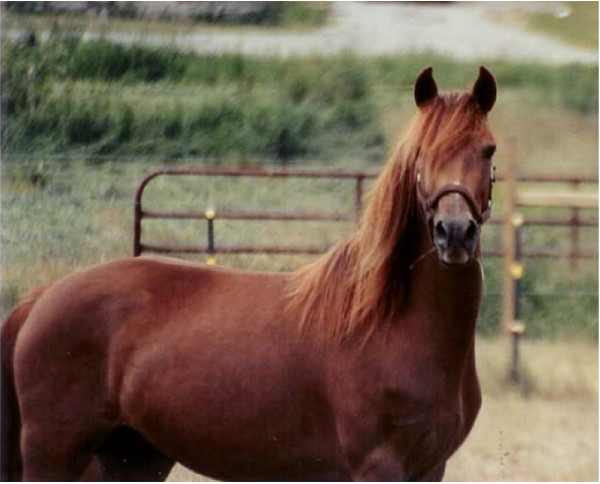
One of America's earliest breeds, descended from a single prepotent foundation stallion named Figure (later Justin Morgan) in late-1700s Vermont. Compact, muscular, and remarkably versatile, the Morgan is known for its proud carriage and amiable disposition.
ℹ️
Educational only. KinStation content is reviewed by licensed veterinarians but cannot replace an in-person exam. Always consult a licensed veterinarian or board-certified specialist for diagnosis, treatment, or any decision affecting your pet's health.
🩺 Need expert help with your morgan?
Connect with a specialist near you or ask a licensed vet — never substitute online guidance for hands-on care in an emergency.
From the minimum an animal needs to be kept humanely, up to the ideal setup. Bigger is almost always better — minimums are floors, not targets.
Photo coming soon
Minimum
Stall + daily turnout + companion
12×12 ft stall + 1 ac pasture + run-in shed + companion equid
Equids are herd animals — solo housing is a welfare violation. Minimum: stall + daily turnout + at least one equid companion. Morgan is the original American versatile breed — riding, driving, ranch work.
Barn + 5+ ac per horse + indoor/outdoor arena + herd
Multi-paddock rotation on 5+ ac per horse, arena access, herd-mate companions, structured training. Morgan is the original American versatile breed — riding, driving, ranch work.
Life & growth stages
How this animal changes through its life — each stage often has its own care, diet and space needs.
Photo coming soon
Newborn
Newborn mammals are nursed on their mother's milk. Many are born helpless — blind, deaf, and sparsely furred (altricial, as in dogs, cats, and rodents) — while others stand and follow within hours (precocial, as in hoofed livestock).
Photo coming soon
Juvenile
After weaning, juveniles grow quickly and become increasingly active, playful, and independent. Adult coat, proportions, and (in many species) the permanent teeth come in as they approach full size.
Photo coming soon
Adult
Adults reach full body size and sexual maturity, with the species' mature coat and build. Sexual dimorphism — differences in size, mane, horns, or markings — is pronounced in some mammals and subtle in others.
Senior
Senior animals show aging signs such as graying fur, reduced activity, and a greater need for veterinary monitoring of joints, teeth, and organ function. Lifespan and the onset of old age vary widely by species and size.
Color & pattern variants
Natural variants occur in the wild; selectively bred (man-made) variants were developed in captivity.
An easy keeper that does well on pasture with a run-in shelter or in stabling with daily turnout. Standard 3.6 x 3.6 m stalls suffice. Hardy across climates with good fencing and adequate grazing; restrict access to rich pasture to manage their tendency to gain weight.
Diet
Thrives on a simple forage-based diet of grass and hay, often needing little or no grain. As classic easy keepers they gain weight readily, so concentrates should be minimal and lush grazing limited to avoid obesity and laminitis. Provide a ration balancer for nutrients, salt, and constant fresh water.
Behavior & temperament
A true all-purpose breed: driving, saddle seat, dressage, Western, trail, endurance, and family riding. The temperament is its hallmark — alert and animated yet exceptionally gentle, people-oriented, willing, and trainable, making it well suited to beginners and children. Sociable and bonds closely with handlers and herdmates.
Health
Generally robust and long-lived with few breed-specific diseases. The main concern is metabolic: as easy keepers they are prone to obesity, equine metabolic syndrome, and laminitis if overfed. Some lines carry type-1 PSSM. Otherwise sound, with good feet and notable longevity.
Tips, DIY & hacks
Resist overfeeding — a grazing muzzle or restricted turnout helps these thrifty horses stay lean and laminitis-free. Their forward, animated nature pairs with a genuinely kind disposition, so they suit novice owners willing to provide consistent handling. Excellent crossover horse for families wanting both driving and riding from one animal.