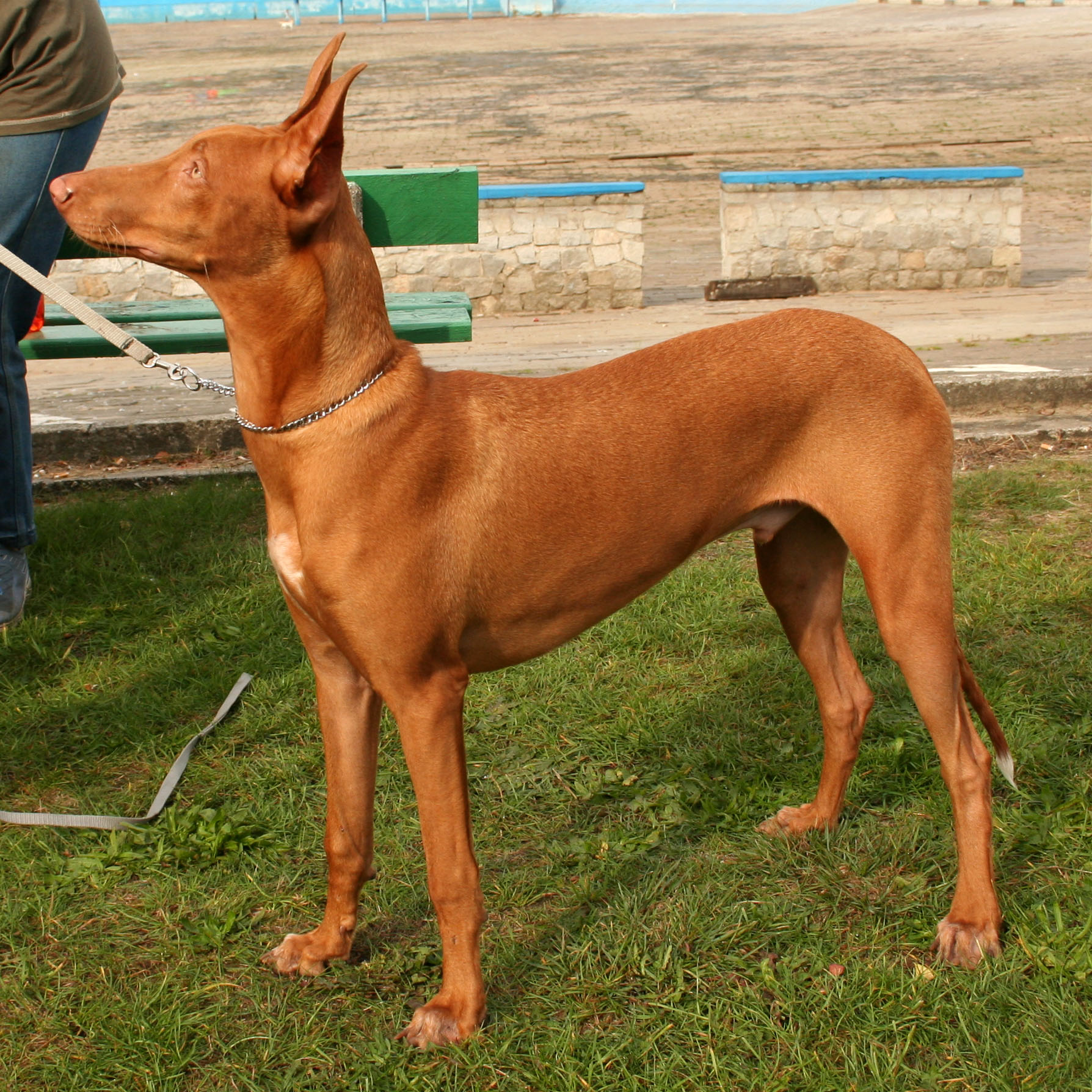
The national dog of Malta, a graceful, athletic rabbit-hunting hound of primitive type, famous for 'blushing' — its nose and ears flush rose when excited. Sleek, elegant and warm to the touch. Despite the name and looks, it is not descended from ancient Egyptian dogs.
ℹ️
Educational only. KinStation content is reviewed by licensed veterinarians but cannot replace an in-person exam. Always consult a licensed veterinarian or board-certified specialist for diagnosis, treatment, or any decision affecting your pet's health.
🩺 Need expert help with your pharaoh hound?
Connect with a specialist near you or ask a licensed vet — never substitute online guidance for hands-on care in an emergency.
From the minimum an animal needs to be kept humanely, up to the ideal setup. Bigger is almost always better — minimums are floors, not targets.
Photo coming soon
Minimum
Home with daily structured exercise
Apartment/house + 60 min daily exercise
Medium dogs need at least an hour of varied daily exercise — leashed walks plus off-lead play or training. Apartment living is workable only if exercise commitments are met every day; crate-train and allow supervised free-roam at home.
Photo coming soon
Recommended
Home with fenced yard + training time
House + fenced yard + 60–90 min varied exercise
A home with a securely fenced yard, daily walks plus off-lead play, and ongoing training keeps a medium dog mentally satisfied. Add a sport or hobby (fetch, scent games, agility intro) for breeds with extra drive.
Sighthounds need safe, fully-fenced space at least a third of an acre for full-speed sprinting — a single 30-second run can be the highlight of their day. Lure coursing or straight-track racing channels their drive; never let off-lead in unsecured areas as recall fails at sight of fast-moving prey.
Life & growth stages
How this animal changes through its life — each stage often has its own care, diet and space needs.
Photo coming soon
Newborn
Newborn mammals are nursed on their mother's milk. Many are born helpless — blind, deaf, and sparsely furred (altricial, as in dogs, cats, and rodents) — while others stand and follow within hours (precocial, as in hoofed livestock).
Photo coming soon
Juvenile
After weaning, juveniles grow quickly and become increasingly active, playful, and independent. Adult coat, proportions, and (in many species) the permanent teeth come in as they approach full size.
Photo coming soon
Adult
Adults reach full body size and sexual maturity, with the species' mature coat and build. Sexual dimorphism — differences in size, mane, horns, or markings — is pronounced in some mammals and subtle in others.
Senior
Senior animals show aging signs such as graying fur, reduced activity, and a greater need for veterinary monitoring of joints, teeth, and organ function. Lifespan and the onset of old age vary widely by species and size.
Color & pattern variants
Natural variants occur in the wild; selectively bred (man-made) variants were developed in captivity.
Best suited to a home with a securely, high-fenced yard, as the breed is an exceptional jumper and chaser with strong prey drive. Can adapt to apartments if given daily off-lead sprinting in a safe enclosed space plus brisk walks; needs 30-60 minutes of vigorous exercise daily. Coat offers little insulation — needs a coat in cold/wet weather and indoor living.
Diet
Feed a balanced diet matched to this lean, athletic build; the breed should be kept slim with ribs easily felt. No specific bloat predisposition. Some sighthound-type dogs are lean naturally — avoid overfeeding to 'fill out' the frame. As with many lean hounds, discuss anesthesia protocols with your vet, as low body fat affects drug handling.
Behavior & temperament
Affectionate, playful and intelligent but independent and sometimes aloof with strangers. Sensitive — responds to gentle, positive, reward-based training and dislikes harsh methods. High prey drive and chase instinct; recall is unreliable around small running animals. Generally good with children and other dogs; supervise around cats and small pets.
Health
A generally healthy, naturally bred breed with few exaggerated-conformation problems. Watch for patellar luxation and hip issues. As a lean, low-body-fat hound, use care with anesthesia (discuss protocols with your vet). Thin skin sunburns and tears easily. Recommended screening: hip and patella evaluation and an eye exam per breed-club guidance.
Tips, DIY & hacks
Grooming is minimal — the short, fine, glossy coat needs only occasional brushing and sheds lightly. Protect from cold and from sunburn on thin skin/pale areas. Keep all exercise on lead or in fully fenced areas due to chase drive and jumping ability. Provide soft bedding for the lean, bony frame.