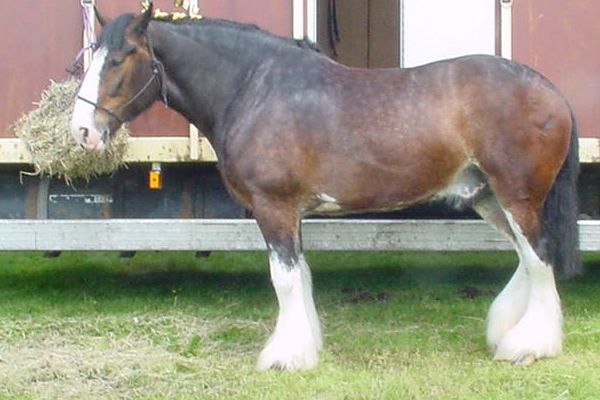
The Shire is an English draft breed and one of the largest horses in the world, historically used for heavy hauling, ploughing, and brewery delivery. Immensely strong yet calm and docile, with feathered legs and a placid 'gentle giant' nature.
ℹ️
Educational only. KinStation content is reviewed by licensed veterinarians but cannot replace an in-person exam. Always consult a licensed veterinarian or board-certified specialist for diagnosis, treatment, or any decision affecting your pet's health.
🩺 Need expert help with your shire?
Connect with a specialist near you or ask a licensed vet — never substitute online guidance for hands-on care in an emergency.
From the minimum an animal needs to be kept humanely, up to the ideal setup. Bigger is almost always better — minimums are floors, not targets.
Photo coming soon
Minimum
Oversized stall + pasture + reinforced shed
14×14 ft stall + 2 ac pasture + reinforced run-in shed
Heavy-draft welfare floor: an oversized 14×14 ft (or 14×16 ft) stall, at least 2 acres of pasture, a reinforced run-in shed sized for an 800–1000 kg animal, and an equid companion. Heavy-duty fencing and a draft-experienced farrier for plate-sized hooves. Heavy feathers — daily grooming and routine trimming to prevent mites, mud fever, and scratches. Tallest of the draft breeds — taller doorways and reinforced fittings.
Photo coming soon
Recommended
Stall + rotated pasture + draft-rated facilities
14×14 ft stall + 3–4 ac rotated pasture + shed
Oversized stall, 3–4 acres of rotated pasture per horse, a small herd, and draft-rated facilities — wider aisles, taller doorways, oversized cross-ties, and heavy buckets. Easy-keeper metabolism plus heavy frame means careful grazing and feed management to prevent laminitis and EPSM.
Photo coming soon
Ideal
Draft barn + working land + herd
Draft barn + 5+ ac/horse + working / driving land
Purpose-built draft barn with multi-paddock rotation on 5+ acres per horse, a settled herd, and access to working or driving land. Draft-specialist farrier on a regular cycle, conditioning work to keep these massive frames sound, and feathered-breed skin care.
Life & growth stages
How this animal changes through its life — each stage often has its own care, diet and space needs.
Photo coming soon
Newborn
Newborn mammals are nursed on their mother's milk. Many are born helpless — blind, deaf, and sparsely furred (altricial, as in dogs, cats, and rodents) — while others stand and follow within hours (precocial, as in hoofed livestock).
Photo coming soon
Juvenile
After weaning, juveniles grow quickly and become increasingly active, playful, and independent. Adult coat, proportions, and (in many species) the permanent teeth come in as they approach full size.
Photo coming soon
Adult
Adults reach full body size and sexual maturity, with the species' mature coat and build. Sexual dimorphism — differences in size, mane, horns, or markings — is pronounced in some mammals and subtle in others.
Senior
Senior animals show aging signs such as graying fur, reduced activity, and a greater need for veterinary monitoring of joints, teeth, and organ function. Lifespan and the onset of old age vary widely by species and size.
Color & pattern variants
Natural variants occur in the wild; selectively bred (man-made) variants were developed in captivity.
Needs ample pasture, robust reinforced fencing, and extra-large stabling — a 14x14 ft (4.3x4.3 m) or bigger stall with high ceilings and wide doors. Provide a run-in shelter and dry, well-drained footing; the heavy white feathering makes clean, mud-free ground important to prevent leg skin disease.
Diet
Substantial forage of good hay or pasture (1.5-2.5% of body weight) supplemented with concentrates matched to their large frame and workload. Avoid overfeeding to obesity despite their size; provide a salt/mineral source and very large volumes of constant fresh water typical of draft horses.
Behavior & temperament
Purpose: heavy draft and agricultural work, ploughing, logging, carriage and show hitches, brewery dray teams, parades, and crossbreeding to add size and bone to sport horses. Temperament is exceptionally calm, gentle, willing, and patient, making the breed easy to handle despite extraordinary pulling power.
Health
The feathered lower legs are prone to chronic progressive lymphedema (CPL), pastern dermatitis ('scratches'/mud fever), and feather mites, which require ongoing management. As a giant breed they face joint and limb stress, and the breed is considered at-risk/vulnerable by conservation bodies due to declining numbers. Routine specialist farrier and dental care are essential.
Tips, DIY & hacks
Keep the feathered legs clean, dry, and regularly inspected; clip if CPL or mites become a problem. Plan for oversized tack, larger feed and bedding costs, and a farrier experienced with massive hooves. Supporting registered breeding helps conserve this vulnerable breed; their docility suits them well to handlers new to drafts who can manage the scale.