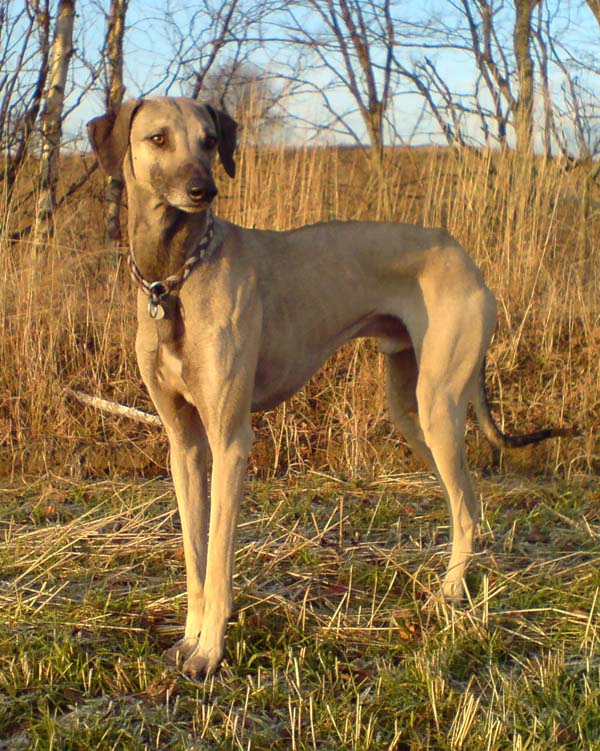
An ancient North African sighthound prized by Berber peoples for hunting, the Sloughi is elegant, lean, and reserved, combining great speed with a sensitive, deeply loyal temperament.
ℹ️
Educational only. KinStation content is reviewed by licensed veterinarians but cannot replace an in-person exam. Always consult a licensed veterinarian or board-certified specialist for diagnosis, treatment, or any decision affecting your pet's health.
🩺 Need expert help with your sloughi?
Connect with a specialist near you or ask a licensed vet — never substitute online guidance for hands-on care in an emergency.
From the minimum an animal needs to be kept humanely, up to the ideal setup. Bigger is almost always better — minimums are floors, not targets.
Photo coming soon
Minimum
House with yard + serious daily exercise
House + secure yard + 60–90 min exercise
A large dog can adjust to apartment life only with an athletic owner; most do better in a house with a secure yard and 60–90 minutes of structured exercise daily. Crate-train and supervise free-roam until reliably mannered.
Photo coming soon
Recommended
Suburban home + ¼-acre fence + 90 min exercise
House + ¼-acre fenced yard + 90 min exercise
A suburban property with a quarter-acre or larger securely fenced yard, 90 minutes of daily exercise split across walks and off-lead time, and consistent training. Most large breeds peak in this setting.
Sighthounds need safe, fully-fenced space at least a third of an acre for full-speed sprinting — a single 30-second run can be the highlight of their day. Lure coursing or straight-track racing channels their drive; never let off-lead in unsecured areas as recall fails at sight of fast-moving prey.
Life & growth stages
How this animal changes through its life — each stage often has its own care, diet and space needs.
Photo coming soon
Newborn
Newborn mammals are nursed on their mother's milk. Many are born helpless — blind, deaf, and sparsely furred (altricial, as in dogs, cats, and rodents) — while others stand and follow within hours (precocial, as in hoofed livestock).
Photo coming soon
Juvenile
After weaning, juveniles grow quickly and become increasingly active, playful, and independent. Adult coat, proportions, and (in many species) the permanent teeth come in as they approach full size.
Photo coming soon
Adult
Adults reach full body size and sexual maturity, with the species' mature coat and build. Sexual dimorphism — differences in size, mane, horns, or markings — is pronounced in some mammals and subtle in others.
Senior
Senior animals show aging signs such as graying fur, reduced activity, and a greater need for veterinary monitoring of joints, teeth, and organ function. Lifespan and the onset of old age vary widely by species and size.
Color & pattern variants
Natural variants occur in the wild; selectively bred (man-made) variants were developed in captivity.
Best in a home with secure, high fencing and access to a safe area to run at full gallop; this is a coursing hound with strong prey drive that must never be off-leash in unfenced spaces. Despite athleticism, it is calm and quiet indoors and can adapt to apartments if given vigorous daily exercise (sprints, long walks, lure coursing). Provide soft bedding for its lean, low-fat frame and warmth in cold climates.
Diet
Feed a quality diet that maintains a lean, athletic body with ribs lightly visible, as appropriate for a sighthound; do not over-condition. As a deep-chested breed it carries some risk of gastric dilatation-volvulus (bloat) - feed measured meals and avoid heavy exercise immediately before or after eating. Sighthounds can be sensitive to certain anesthetics, so inform your vet.
Behavior & temperament
Sensitive, dignified, and intensely loyal to its family while aloof and reserved with strangers. Intelligent but independent; responds to gentle, positive, patient training rather than harsh correction. High prey drive toward small running animals. Generally good with respectful children and can live with other dogs, especially other sighthounds; supervise around small pets.
Health
A robust, naturally healthy breed with few inherited disorders. Reported concerns include progressive retinal atrophy (PRA) and sensitivity to anesthesia typical of lean sighthounds; some bloat risk from the deep chest. Recommended screening: DNA test for PRA where available and an ophthalmologist eye exam. Use sighthound-appropriate anesthesia protocols.
Tips, DIY & hacks
The short, fine, smooth coat is very low-maintenance: occasional brushing and minimal bathing; low shedding. Provide coats or indoor warmth in cold weather and padded resting spots to protect bony prominences. Socialize early and teach a reliable recall, but always exercise in secure areas because the chase instinct can override training.