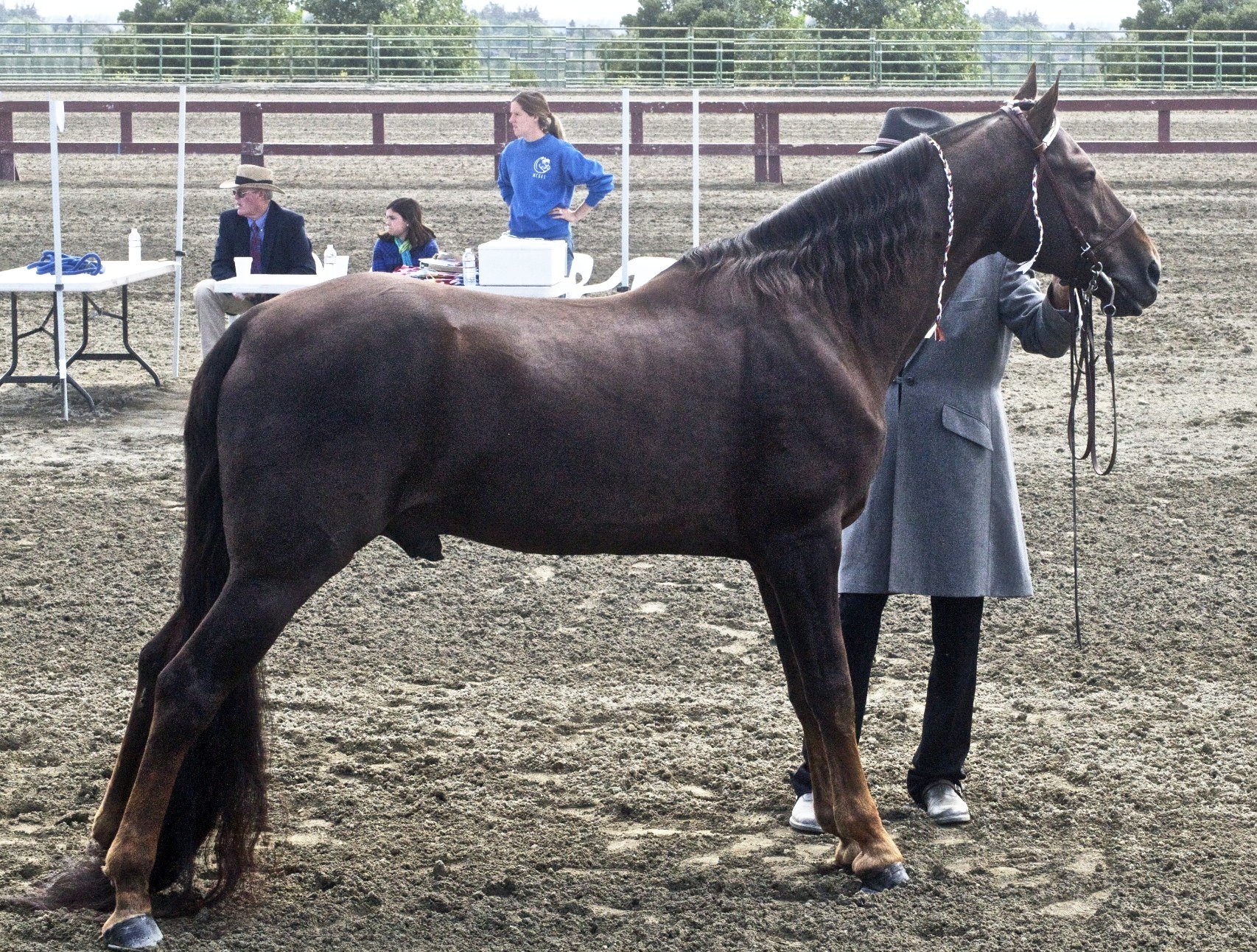
A gaited breed from the U.S. South, developed for plantation owners who needed a smooth, comfortable ride over long distances. Famous for its unique four-beat 'running walk' and calm, gentle nature, it is a favorite trail and pleasure mount.
ℹ️
Educational only. KinStation content is reviewed by licensed veterinarians but cannot replace an in-person exam. Always consult a licensed veterinarian or board-certified specialist for diagnosis, treatment, or any decision affecting your pet's health.
🩺 Need expert help with your tennessee walking horse?
Connect with a specialist near you or ask a licensed vet — never substitute online guidance for hands-on care in an emergency.
From the minimum an animal needs to be kept humanely, up to the ideal setup. Bigger is almost always better — minimums are floors, not targets.
Photo coming soon
Minimum
Stall + daily turnout + companion
12×12 ft stall + 1 ac pasture + run-in shed + companion equid
Equids are herd animals — solo housing is a welfare violation. Minimum: stall + daily turnout + at least one equid companion. Tennessee Walker is a gaited US riding breed — smooth running walk. Note: 'soring' practices are illegal and abusive; check provenance.
Barn + 5+ ac per horse + indoor/outdoor arena + herd
Multi-paddock rotation on 5+ ac per horse, arena access, herd-mate companions, structured training. Tennessee Walker is a gaited US riding breed — smooth running walk. Note: 'soring' practices are illegal and abusive; check provenance.
Life & growth stages
How this animal changes through its life — each stage often has its own care, diet and space needs.
Photo coming soon
Newborn
Newborn mammals are nursed on their mother's milk. Many are born helpless — blind, deaf, and sparsely furred (altricial, as in dogs, cats, and rodents) — while others stand and follow within hours (precocial, as in hoofed livestock).
Photo coming soon
Juvenile
After weaning, juveniles grow quickly and become increasingly active, playful, and independent. Adult coat, proportions, and (in many species) the permanent teeth come in as they approach full size.
Photo coming soon
Adult
Adults reach full body size and sexual maturity, with the species' mature coat and build. Sexual dimorphism — differences in size, mane, horns, or markings — is pronounced in some mammals and subtle in others.
Senior
Senior animals show aging signs such as graying fur, reduced activity, and a greater need for veterinary monitoring of joints, teeth, and organ function. Lifespan and the onset of old age vary widely by species and size.
Color & pattern variants
Natural variants occur in the wild; selectively bred (man-made) variants were developed in captivity.
Adaptable and hardy: pasture with a run-in shelter or stabling with daily turnout both suit it. A standard 3.6 x 3.6 m stall is adequate. Good fencing and ample grazing keep this tractable breed healthy; tolerates a range of climates well.
Diet
Forage-based feeding on quality grass and hay meets most needs, with concentrates added only to match workload. Provide a balanced vitamin/mineral supplement, salt, and constant fresh water. Monitor body condition and grazing to avoid excess weight in less-worked horses.
Behavior & temperament
Bred for smooth, all-day riding comfort; today a premier trail, pleasure, endurance, and show horse, also used for ranch and English/Western riding. The naturally inherited running walk and flat walk give a gliding, bounce-free ride. Temperament is docile, calm, and willing — excellent for beginners, older, or less-confident riders. Herd-oriented and friendly.
Health
Physically a sound, long-lived breed. The dominant welfare issue is human-caused: 'soring' — the illegal, painful practice of applying caustic chemicals or weighted/stacked shoes (the 'Big Lick') to exaggerate the gait in some show lines. This is widely condemned and prohibited under the U.S. Horse Protection Act. Choose flat-shod or barefoot, sound-trained horses. Otherwise few heritable disease concerns.
Tips, DIY & hacks
Strongly favor naturally gaited, flat-shod or barefoot horses and avoid bloodlines and trainers associated with soring or stacked 'performance' shoes. The smooth running walk makes these horses ideal for riders with back or joint issues. Their gentle temperament suits novices; standard forage management and routine farriery keep them sound for many years.