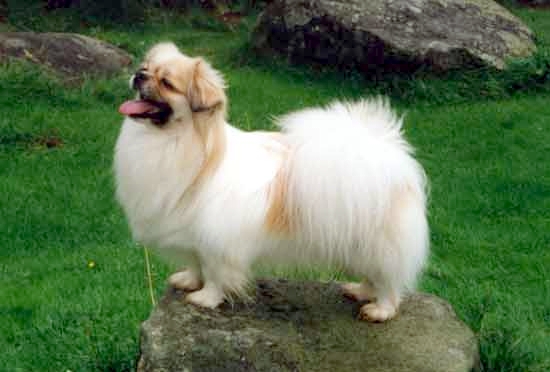
A small, assertive companion dog historically kept in Tibetan monasteries as a watchful 'little lion' and bed-warmer. Affectionate and intelligent with an independent, cat-like streak. Despite the name, it is not a true spaniel.
ℹ️
Educational only. KinStation content is reviewed by licensed veterinarians but cannot replace an in-person exam. Always consult a licensed veterinarian or board-certified specialist for diagnosis, treatment, or any decision affecting your pet's health.
🩺 Need expert help with your tibetan spaniel?
Connect with a specialist near you or ask a licensed vet — never substitute online guidance for hands-on care in an emergency.
From the minimum an animal needs to be kept humanely, up to the ideal setup. Bigger is almost always better — minimums are floors, not targets.
Photo coming soon
Minimum
Small apartment with daily walks
Apartment + 2× daily 20-min walks
A toy breed can live happily in a small apartment provided they get two short daily walks, indoor play, and supervised free-roam time. Crate-train for safe alone-time and never leave loose with unsupervised toddlers — they injure easily.
Photo coming soon
Recommended
Home with secure yard + social structure
House + small fenced yard + daily walks
A house with a securely fenced yard for safe potty/play time, daily walks, and a clear household routine. Toy breeds thrive when treated as full household pets, not handbag accessories.
Photo coming soon
Ideal
Household lap-dog with rich social life
House + fenced yard + companion-dog social pack
Closely-bonded household pet with a fenced yard, regular outings, varied training games, and human company most of the day. Toy breeds are companion animals — long isolation is their biggest welfare risk.
Life & growth stages
How this animal changes through its life — each stage often has its own care, diet and space needs.
Photo coming soon
Newborn
Newborn mammals are nursed on their mother's milk. Many are born helpless — blind, deaf, and sparsely furred (altricial, as in dogs, cats, and rodents) — while others stand and follow within hours (precocial, as in hoofed livestock).
Photo coming soon
Juvenile
After weaning, juveniles grow quickly and become increasingly active, playful, and independent. Adult coat, proportions, and (in many species) the permanent teeth come in as they approach full size.
Photo coming soon
Adult
Adults reach full body size and sexual maturity, with the species' mature coat and build. Sexual dimorphism — differences in size, mane, horns, or markings — is pronounced in some mammals and subtle in others.
Senior
Senior animals show aging signs such as graying fur, reduced activity, and a greater need for veterinary monitoring of joints, teeth, and organ function. Lifespan and the onset of old age vary widely by species and size.
Color & pattern variants
Natural variants occur in the wild; selectively bred (man-made) variants were developed in captivity.
Excellent apartment and house companion. Low to moderate exercise needs — short daily walks plus play and a sunny perch to survey their domain (they love high vantage points). Enjoys being a lap dog but is more active and agile than many toy companions. Sensitive to heat given the moderate coat, so avoid overexertion in warm weather.
Diet
Feed a small-breed complete diet in measured portions; the breed is prone to weight gain, which stresses the back and joints. No special breed dietary requirements — focus on portion control and dental-friendly feeding given small-breed dental crowding.
Behavior & temperament
Confident, alert, affectionate, and self-possessed, with a strong watchdog instinct and a quick bark to announce visitors. Intelligent but independent-minded — trainable with positive, patient methods rather than repetitive drills. Generally good with gentle children, other dogs, and cats; can be aloof with strangers. Bonds closely with family and dislikes being left alone for long stretches.
Health
A reasonably healthy breed with a mildly shortened muzzle (not severely brachycephalic, but watch for snoring/airway and heat tolerance). Concerns include progressive retinal atrophy (PRA — DNA test available), patellar luxation, and occasional portosystemic liver shunt and cherry eye/entropion. Recommended screening: annual eye exams and PRA DNA testing, plus patella evaluation.
Tips, DIY & hacks
Silky double coat with feathering and a plumed tail needs brushing a couple of times a week (more during seasonal sheds) and is fairly low-maintenance with no clipping required. Keep facial folds and eyes clean. Reward-based training and early socialization bring out the best in this clever, slightly stubborn companion. A good first dog for owners who appreciate an independent personality.