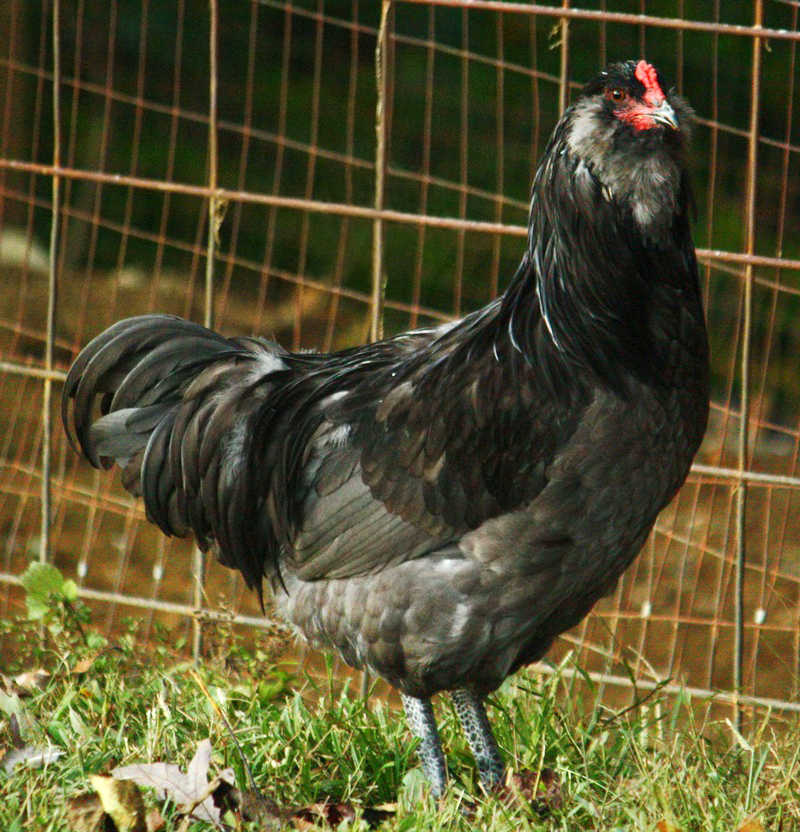
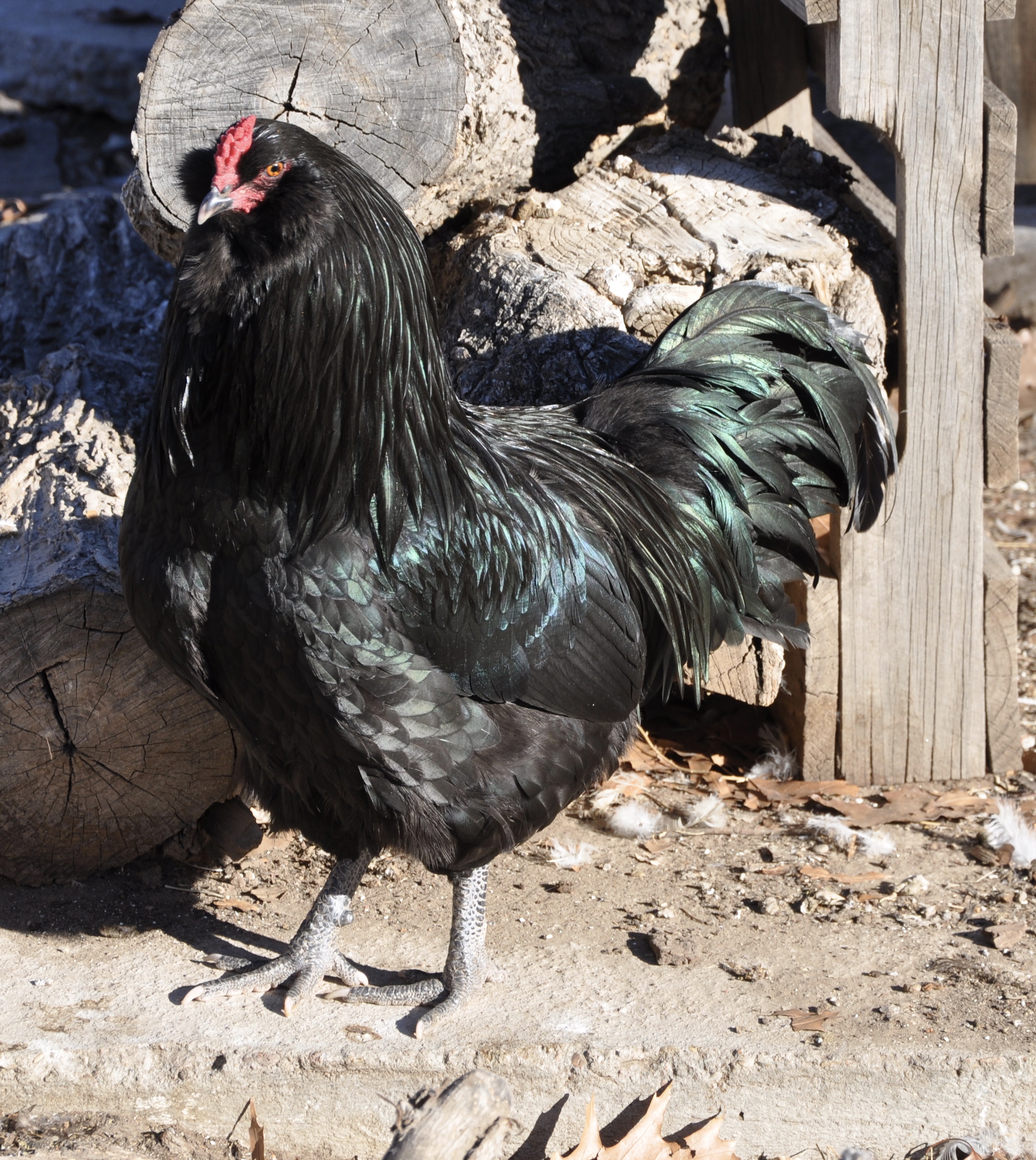
An American breed developed from blue-egg-laying Araucana stock and standardised in the 1980s, distinguished by a pea comb, muffs and beard, slate legs, and most famously its true blue eggs. Hardy, friendly, and cold-tolerant, it is a popular backyard layer often confused with the tailless Araucana and with hatchery 'Easter Eggers'.
ℹ️
Educational only. KinStation content is reviewed by licensed veterinarians but cannot replace an in-person exam. Always consult a licensed veterinarian or board-certified specialist for diagnosis, treatment, or any decision affecting your pet's health.
🩺 Need expert help with your ameraucana?
Connect with a specialist near you or ask a licensed vet — never substitute online guidance for hands-on care in an emergency.
Standard: cock ~2.7 kg (6 lb), hen ~2.3 kg (5 lb); bantam ~0.7-0.85 kg. Compact body with pea comb, muffs and beard, slate-blue legs, and a tail carried upright
Lifespan
7–8 years
Social needs
group
Native region
United States
Family
Phasianidae
Genus
Gallus
Part of the Chicken breeds
Recognized chicken breeds — selectively bred for type, purpose, and appearance.
From the minimum an animal needs to be kept humanely, up to the ideal setup. Bigger is almost always better — minimums are floors, not targets.
Photo coming soon
Minimum
Coop + secure run
4 sq ft coop + 8 sq ft run per bird
Standard Ameraucanas (5–6 lb, blue-egg layers) need at least 4 sq ft of coop floor and 8 sq ft of run per bird, with one nest box per 4 hens and a roost at least 2 ft high. Predator-proof hardware-cloth run; their pea comb is cold-hardy but their muff/beard can ice over.
Photo coming soon
Recommended
Larger coop with deep run
5 sq ft coop + 15 sq ft run per bird + dust bath
A walk-in coop with deep-litter pine shavings, a covered run with branches and clutter for foraging, and a dust-bath box (sand + DE). Ameraucanas are alert and prefer high perches — provide ladder roosts. Mixed-age flocks need a hide so juveniles escape pecking.
Photo coming soon
Ideal
Free-range with secure night coop
Free-range yard + 6 sq ft coop per bird
Free-range or paddock-rotation access during daylight, locked into a predator-proof coop at dusk. Ameraucanas are excellent foragers and largely self-feed on bugs and grass — supplement with layer pellets and oyster shell. Best welfare and bluest eggs.
Life & growth stages
How this animal changes through its life — each stage often has its own care, diet and space needs.
Photo coming soon
Egg
Birds develop inside a hard-shelled egg incubated by the parent(s). Egg size, shell color, and clutch size vary by species; the embryo develops over days to weeks before hatching.
Photo coming soon
Hatchling / Chick
Hatchlings are either altricial — naked, blind, and dependent on parents (typical of parrots and songbirds) — or precocial — downy, mobile, and self-feeding soon after hatching (typical of poultry and waterfowl). Down gives way to the first feathers.
Photo coming soon
Juvenile / Fledgling
Fledglings grow in their juvenile plumage and begin to fly and feed themselves, though they may still beg from parents at first. Juvenile feathering is often duller than the adult and is replaced as the bird matures.
Adult
Adults attain full body size and mature plumage, and are capable of breeding. Many species show distinct adult coloration, and in sexually dimorphic birds males and females differ in plumage, size, or markings.
(c) D. N., some rights reserved (CC BY-NC) via iNaturalist — https://www.inaturalist.org/observations/312084723
Color & pattern variants
Natural variants occur in the wild; selectively bred (man-made) variants were developed in captivity.
A standard coop with nest boxes and a run or free-range access suits the Ameraucana well; it is an active, capable forager that enjoys ranging but also tolerates confinement reasonably. The pea comb and muffed face make it excellent for cold climates, with little comb to frostbite. Provide perches, dry bedding, and secure fencing. In very wet weather keep the beard and muffs from caking, and ensure good shade in heat.
Diet
Feed a complete layer ration (~16% protein) for hens in lay, with starter and grower feeds for growing stock and free-choice oyster shell and grit. Active foragers, they use pasture and insects well. Egg-shell colour (blue) is genetic and not diet-dependent, so standard balanced nutrition is all that is required.
Behavior & temperament
Generally friendly, calm, and curious, Ameraucanas are good-natured backyard birds, though some individuals are a touch reserved; well-socialised birds handle readily. Kept mainly as an ornamental and novelty layer for their true blue eggs: hens lay roughly 150-200 medium blue eggs a year. Broodiness is variable but generally low to moderate. The muffed, bearded face and pea comb give them a distinctive 'owlish' look.
Health
A hardy, generally healthy breed. Unlike the parent Araucana, the Ameraucana lacks the lethal ear-tuft gene, so it does not carry the associated in-shell chick mortality, a deliberate improvement in its development. The pea comb confers good frostbite resistance. Routine care applies: monitor for lice and mites (check the muffs and beard), worms, and respiratory issues, and practise good biosecurity. Buy from breeders following the APA standard to avoid mislabelled Easter Eggers.
Tips, DIY & hacks
True Ameraucanas come in defined APA colour varieties, lay blue (not green or pink) eggs, and have slate legs, a pea comb, and muffs/beard; birds sold as 'Ameraucana/Americana' at feed stores are usually crossbred Easter Eggers, so buy from reputable breeders if breed purity matters. Their cold tolerance makes them a strong northern-climate choice. Keep the beard and muffs clean and check that area for mites. They are forgiving, beginner-friendly layers that add colour to the egg basket.